June 30 2026
 2 mins min read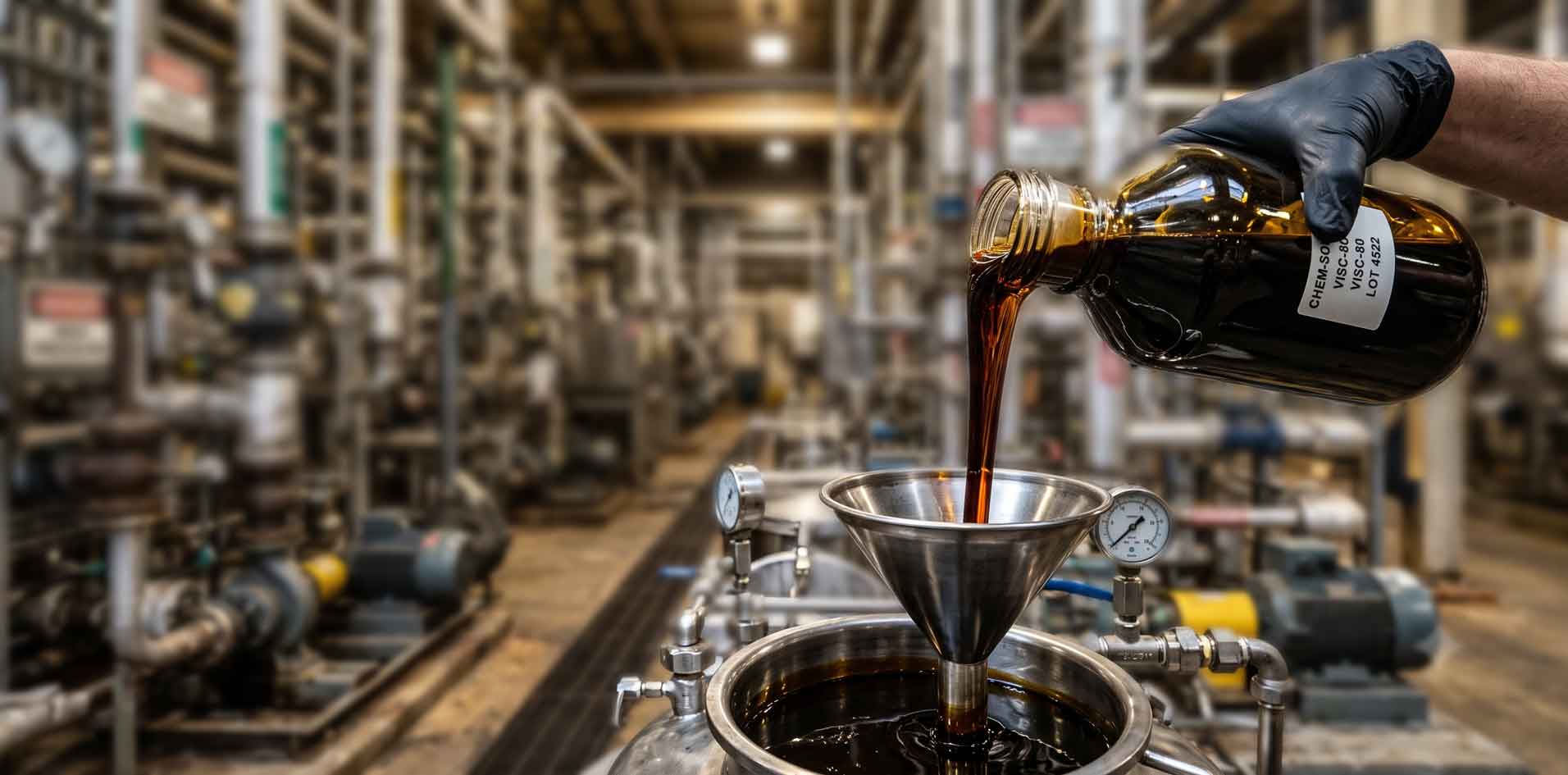
When specifying a pumping system, there is one fluid property that can completely disrupt your calculations if ignored: viscosity.
While water is the universal baseline for pump performance curves, industrial processes rarely pump just water. Whether you are dealing with thick sludges, polymer dosing, or heavy oils, failing to properly account for viscosity during pump selection will inevitably lead to underperformance, excessive component wear, and premature system failure.
Why Is Viscosity So Important To Pump Choice?
Viscosity significantly increases friction losses, which directly impacts the power and torque requirements of your system.
When a fluid is thick and resistant to movement, the pump requires substantially more mechanical energy to push it through the pipework. If you select a pump based purely on its “water performance,” the motor is likely to trip or burn out, flow rates will plummet, and internal components will suffer from extreme mechanical stress. Getting the viscosity profile right up front is the only way to protect your site’s reliability, safety, and long-term operating costs.
What Exactly Is Viscosity?
At its simplest, viscosity is a measure of a fluid’s resistance to flow (or internal friction).
- Low-viscosity fluids (like water, solvents, or alcohols) flow freely and offer very little resistance.
- High-viscosity fluids (like molasses, heavy gear oil, or wastewater sludge) are thick, sluggish, and require greater force to move.
Dynamic vs. Kinematic Viscosity
When evaluating fluids for a project, you will encounter two distinct types of viscosity:
- Dynamic (Absolute) Viscosity (cP): Measured in Centipoise, this represents the fluid’s internal resistance to shear forces.
- Kinematic Viscosity (cSt): Measured in Centistokes, this represents the fluid’s resistance to flow under the influence of gravity.
The relationship between the two is directly governed by the fluid’s Specific Gravity (SG) via the formula:
Kinematic Viscosity (cSt)=Dynamic Viscosity (cP) /Specific Gravity (SG)
The Non-Newtonian Wildcard
It is vital to note that some fluids do not have a fixed viscosity. Many fluids, such as molasses, are heavily influenced by temperature and some are what’s called non-Newtonian fluids. Unlike water, the viscosity of non-Newtonian fluids can increase or decrease under mechanical shear stress (such as the rotation of an impeller or rapid flow against a pipe wall).
- Thixotropic fluids (like drilling muds or gels) thin out and flow more easily under stress.
- Dilatant fluids (like high-concentration starch-based slurries) thicken up when force is applied.
For successful pumping of these complex fluids, a system is required that reduces shear stress and friction, with a pump that keeps velocity and acceleration forces to a minimum.
What Pump Is Best for Highly Viscous Fluids?
When fluids get thick, Positive Displacement (PD) pumps are universally the best choice. Unlike centrifugal pumps, PD pumps capture a fixed volume of fluid and physically force it through the discharge line. In fact, many PD pumps actually become more volumetrically efficient as viscosity increases because the thicker fluid reduces internal slippage (or “back-flow”) inside the pump casing.
Choosing the right type of PD pump is a delicate trade-off that depends heavily on fluid properties – such as solids size, shear sensitivity, and abrasiveness – alongside your duty requirements (head pressure, flow rate, run-time, and dry-running risks).
1. Progressive Cavity (PC) Pumps
Excellent for low-shear, low-pulsation duties. The gentle, axial movement of the rotor within the elastomeric stator protects shear-sensitive fluids from breaking down, while delivering a highly predictable, smooth flow.
2. Peristaltic (Hose) Pumps
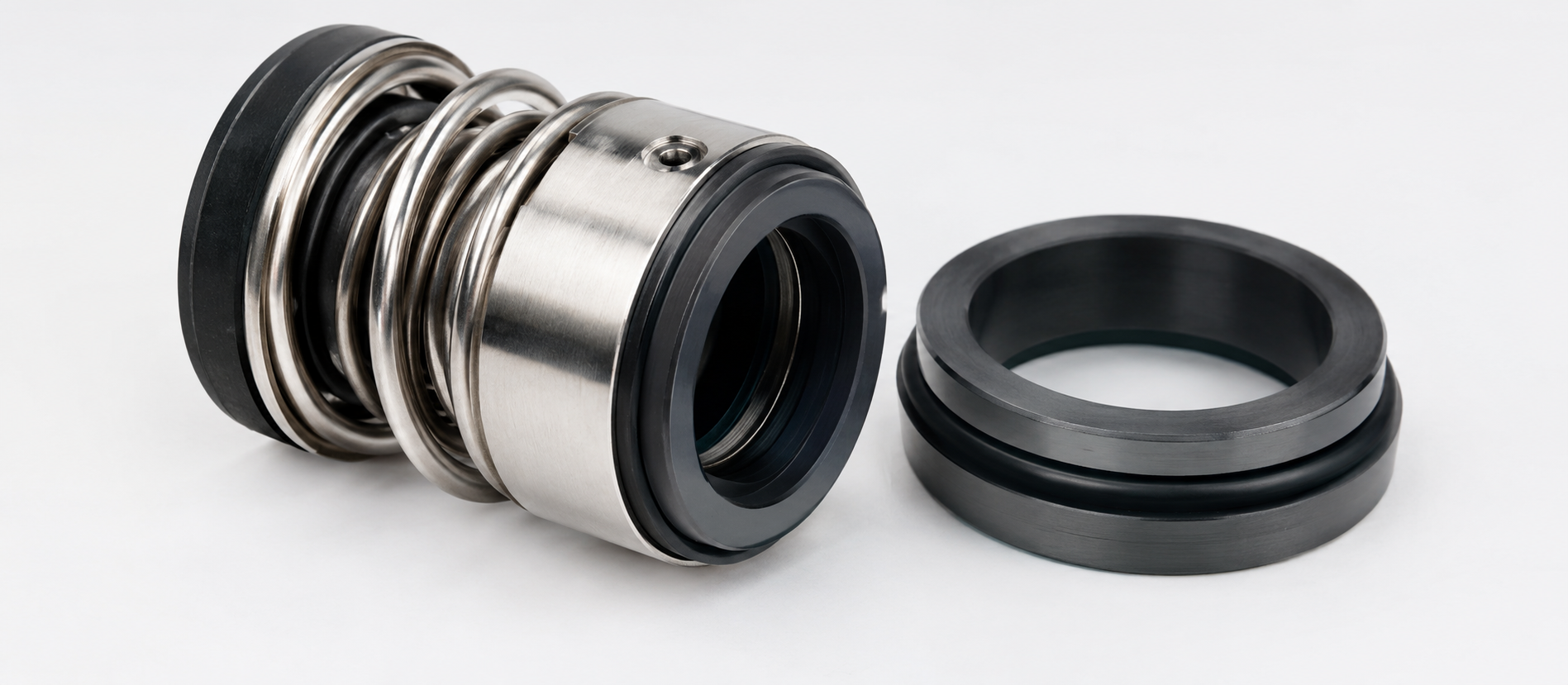
The premier choice for highly abrasive fluids and applications where there is a high risk of dry-running. Because the fluid is entirely contained within a robust rubber hose, there are no mechanical seals or valves to clog or wear out from grit and solids.
3. Rotary Lobe Pumps
Highly regarded for hygienic processing and transferring thick fluids containing large, delicate solids. Their operating principle relies on non-contacting, synchronised lobes.
- Best used for: High-viscosity food pastes, cosmetics, polymers, and wastewater sludges with a consistently high viscosity.
- Limitations: Because the lobes do not touch and internal clearances are slightly wider, their volumetric efficiency drops significantly on thin, water-like liquids due to internal slip. They also feature complex timing gears and dual mechanical seals, meaning maintenance costs can be higher if used with abrasive materials.
4. Gear Pumps (Internal and External)
The tight internal clearances of these pumps make them highly effective at handling clean, viscous liquids under high pressure.
- Best used for: Clean oils, fuels, resins, and polymers. They provide an exceptionally smooth, pulse-free flow and can handle exceptionally high temperatures when designed for this.
- Limitations: Due to their incredibly tight internal clearances and meshing metal teeth, gear pumps have zero tolerance for solids or abrasives, which cause rapid, catastrophic wear. They are also highly sensitive to dry running, as they rely on the pumped fluid itself for internal lubrication and cooling.
Important Drive Note: Viscous fluids always demand a larger, more robust drive system. Even if a pump can physically handle a thick fluid, the motor and shaft must be oversized to overcome the high startup and running torque requirements.
What About Centrifugal Pumps?
Centrifugal pumps are the absolute mainstay of high-volume pumping for low-viscosity fluids like water and light, water-borne slurries. However, their performance is extremely sensitive to increases in viscosity.
As a liquid thickens, the frictional drag on a centrifugal pump’s spinning impeller increases exponentially. This causes a dramatic drop-off in delivered flow, a sharp reduction in total head, and a massive spike in power consumption.
If a centrifugal pump must be used for a medium-viscosity application, it is vital to calculate viscosity correction factors (typically using Hydraulic Institute standards). These calculations down-rate the pump’s standard water performance curve to ensure the selection of an adequately sized impeller, casing, and motor configuration to deliver your actual target duty point.
Get Expert Advice for Your Site
Selecting a pump for highly viscous, abrasive, or non-Newtonian fluids is never a one-size-fits-all equation. A small miscalculation in viscosity can lead to thousands of pounds in lost production and repair bills.
If you are planning a challenging installation or trying to optimise a troublesome process line, don’t guess the specification. Contact the pump engineering experts at Atlantic Pumps today on 0800 118 2500 to get site-specific, duty-matched advice for your application.
We also take a sustainable approach to our work and are committed to reducing energy waste from pumps. Our expert knowledge allows us to reduce energy usage by 20% on the average site!
Call us today on 0800 118 2500 for more information.