April 29 2026
 3 min read
Stop Food Waste Day is an annual initiative that reminds us that about one-third of all food produced globally is wasted. The campaign tackles this global issue by raising consumer awareness, sharing tips and educational advice with the public.
At Atlantic Pumps, we know that wastage can happen for many reasons – at any stage of the food ‘life-cycle’. We spend a lot of time at the “gritty” end of industrial processes, removing barriers to effective food handling and ‘waste’ recovery. The philosophy is simple: Sustainability through pump efficiency and longevity.
Atlantic Pumps supports the fight against food waste by helping process managers remove common causes of spoilage in liquids handling: factory downtime, contamination, and dosing accuracy. Additionally, we serve companies processing ‘end-of-life’ food for energy recovery and nutrient recycling – completing the circular loop to avoid waste entirely.
Reducing Process Waste via Pump Reliability
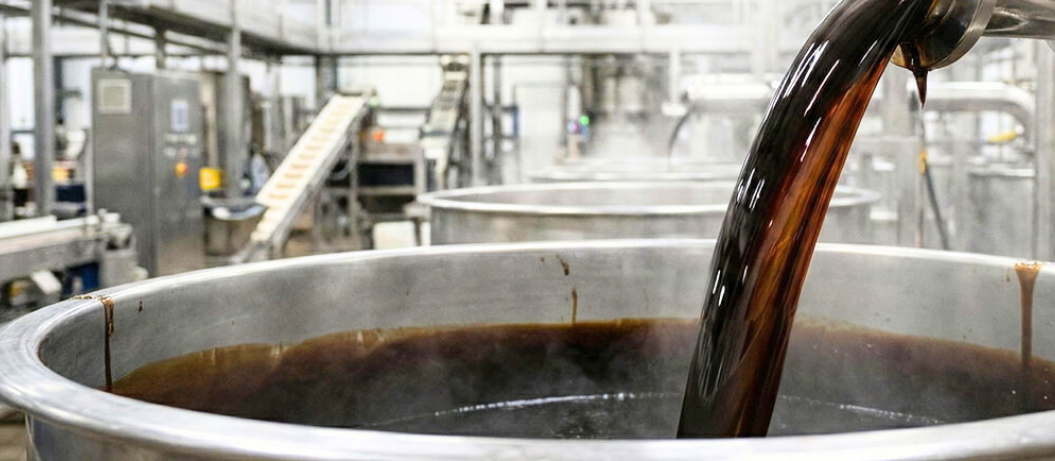
In a food processing plant, “waste” often happens because of equipment failure. If a pump handling a fruit pulp line fails, that entire batch might have to be discarded due to temperature changes or hygiene risks.
-
Sustainable Pumping: We focus on Life Cycle Cost (LCC). By using pumps that don’t clog and are easy to maintain (e.g. wear-resistant centrifugal pumps and large-diameter ‘hose’ pumps), we reduce the amount of product loss due to unplanned downtime.
- The Grit Factor: We coined the term “GritEx”—the cost of energy and wasted parts when a pump isn’t suited for the job. Avoiding this “tax” means less metal waste and reduced energy consumption.
- Leakage and contamination: Pumps in food factories need to be leak-proof to prevent liquid product loss and external contaminants – such as lubrication oil – seeping into the pump chamber. Various types of industrial pumps are available in food-grade materials, leak-free mechanical seals, and with clean-in-place (CIP) capability.
Turning Waste into Energy (The Circular Economy)
One of the most effective ways to “stop” food waste is to ensure that what can’t be eaten is used to create energy. Atlantic Pumps is heavily involved in the Anaerobic Digestion (AD) and Biogas sectors.
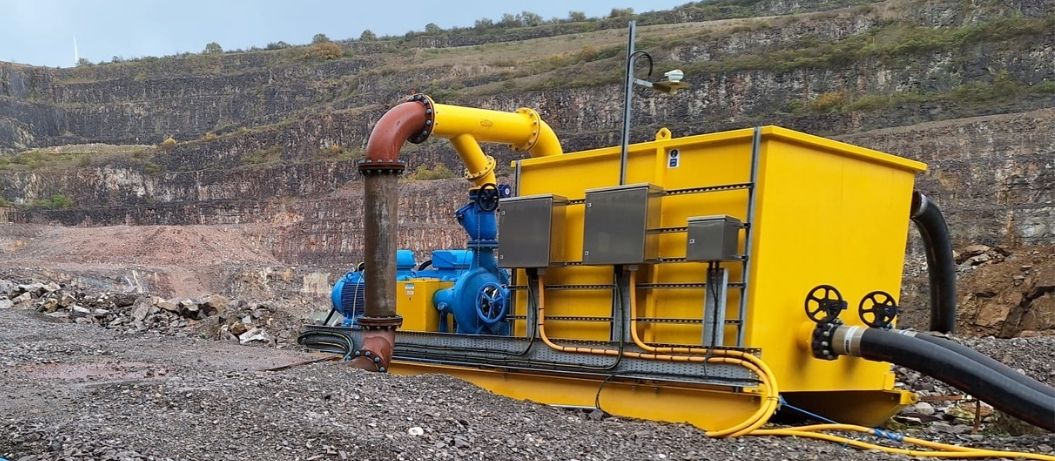
- The Challenge: Food waste is often abrasive (think of grit, eggshells, or fruit stones) and viscous (thick pastes and slurries). Standard pumps often clog or wear out in weeks.
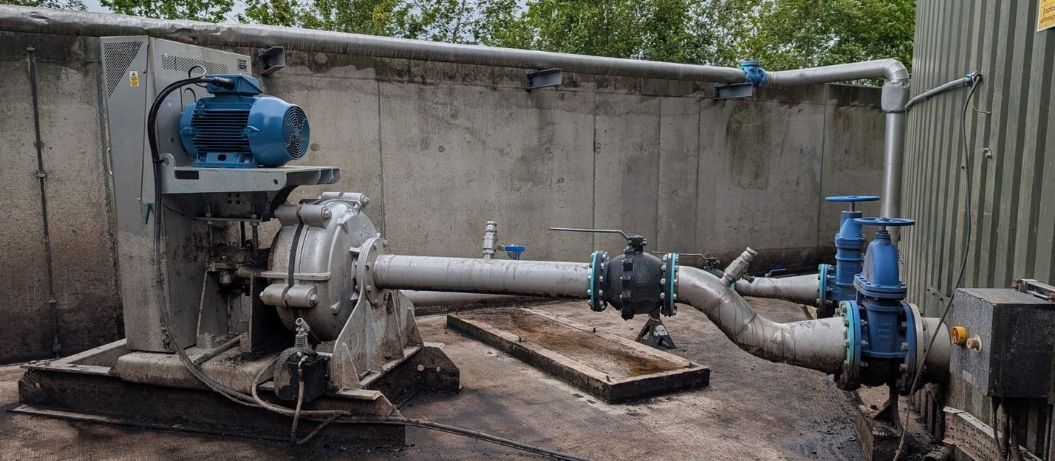
- The Solution: We provide heavy-duty Peristaltic Pumps and Progressive Cavity Pumps. These are designed to handle “rag” and “grit”—the nasty bits in food waste that are the usual causes of downtime. By keeping AD plants running reliably, we ensure food waste is efficiently converted into green electricity rather than rotting in a landfill and producing methane.
Handling Challenging By-products
Not all food waste is “trash.” Many “waste” streams are actually valuable by-products (like animal fats or vegetable pulps) if they can be moved cleanly.
-
Hygienic Handling: Use Food-Grade Peristaltic Hosing and closed-loop pumping systems. This prevents contamination, ensuring that by-products remain clean enough to be used for animal feed or other secondary products rather than being sent to disposal.
- Solids/liquid separation: Resource recovery and value preservation relies on effective separation and segregation. Start this early on in the process to reduce storage, transport and wear-related costs downstream. EnviroHub settlement tanks and flocculant treatment systems remove preliminary solids, reducing the treatment burden from the outset.
How Process Managers Can Support “Stop Food Waste Day”
If you’re running a plant, here’s a practical “expert’s checklist” to align with the initiative:
-
Audit Your Sumps: Is your waste-handling pump frequently clogging? Every time you pull a pump to unblock it, you’re losing time and potentially spilling product.
-
Look at the “Thick Stuff”: If you’re adding water to a waste stream just to make it “pumpable,” you’re wasting water and increasing the volume of waste you have to pay to transport. Our peristaltic pumps can move high-solids sludge with minimal water addition.
-
Monitor Energy: Inefficient pumping is a hidden “waste.” A pump running off its “Best Efficiency Point” (BEP) – often due to excessive wear or poor pump choice – is wasting electricity, another form of resource waste that is avoidable.
The Takeaway: At Atlantic Pumps, we believe that the “Stop Food Waste” mission is boosted by better engineering. By making it easier, cleaner, and cheaper to process food waste, we make “resource recovery” the path of least resistance for every factory manager.
Let’s work together to take your waste reduction and value-recovery to the next level. Talk to us about your process pump challenges today.
We also take a sustainable approach to our work and are committed to reducing energy waste from pumps. Our expert knowledge allows us to reduce energy usage by 20% on the average site!
Call us today on 0800 118 2500 for more information.