 0800 118 2500
 24th November 2026
 4 min read
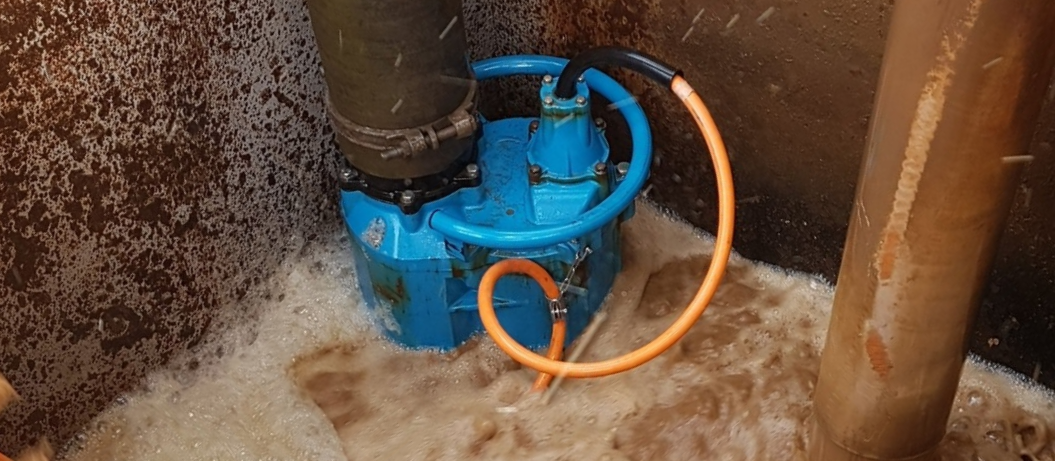
The pump is running, the sump is clearing and the plant is producing, so it is easy to assume everything is fine. But a centrifugal pump can be running, yet quietly draining money through wasted power and premature wear. It could also be accelerating towards an early breakdown, leading to – potentially the biggest cost of all – lost production. The usual culprit is operating away from its best efficiency point (BEP).
What is the BEP?
Every centrifugal pump has a flow rate, at a given speed, where it runs most efficiently. That is the BEP. Here the flow through the impeller and volute is at its smoothest, and the loads on the shaft, bearings and seals are at their lowest. Move the duty point left (less flow) or right (more flow) and those loads climb. As a rule of thumb, many manufacturers recommend staying within roughly 70–120% of BEP flow for clean fluids, while abrasive slurry duties usually call for a tighter window. Always check the published curve for your specific pump, and reach out to Atlantic Pumps for application-specific questions.
Running left of the curve: low flow
A throttled valve, an oversized pump or a low-flow period all push the duty point to the left, potentially leading to issues on multiple fronts:
- Radial thrust rises. Pressure around the impeller becomes uneven, loading the shaft and bearings. The resulting shaft deflection is a leading cause of early seal and bearing failure.
- Internal recirculation can develop. Liquid starts to cycles back through the impeller, leading to turbulence, noise and localised erosion.
- Heat may build at sufficiently low flow. Less flow carries away less of the heat energy. Excessive heat stresses seals, and causes expansion of the rotating parts which can lead to abrasion and binding.
- Solids settle. On slurry duties, reduced flow can drop pipeline velocity to the point where sand and grit settle out of suspension, which is how lines often block.
- Running right of the curve: high flow
A pump pushed out to the right of its BEP is moving more than it was designed to. Velocities inside the pump and pipework rise – and in abrasive duties wear climbs steeply with velocity. The NPSH the pump requires also increases, increasing the risk of cavitation, and the motor can overload.
In quarries this often arises from a large pump working on a short discharge run or low-head system, or one fitted with a different impeller without the duty being rechecked.
Why quarry pumps are at risk
Quarry duties rarely stand still. Rainfall changes dewatering demand, sump level shifts the static head as it drains, washplant feed varies with the face, and pipelines are extended as the site moves or new floors are excavated. Each change slides the duty point along the pump curve. Add abrasive grit, sand and large hard solids, and a modest move off the BEP does far more damage than it would in clean water. SlurryPro centrifugal pumps are built for exactly this kind of quarry slurry, but even a well-specified pump cannot outrun a poorly matched duty.
An illustrative example
The figures below are illustrative, provided as a simple example. They compare two pumping arrangements delivering the same duty: one well matched, with the pump operating close to its BEP, and one poorly matched, with the pump operating well away from it during most of its operational time.
Assumptions: 200 m³/h at 30 m head (about 16.4 kW hydraulic power, clean-water equivalent); 5,000 running hours a year; electricity at 25p/kWh; pump efficiency of 70% at the BEP against 50% off it; a £6,000 wear parts set plus £750 fitting labour per change; a washplant producing 150 t/h at £8/t contribution.
| Cost area | Basis | Extra cost per year |
|---|---|---|
| Energy | 23.4 kW vs 32.7 kW for the same duty, over 5,000 hours | £11,700 |
| Wear parts and labour | Wet-end life halves, from 5,000 hours to 2,500 hours | £6,750 |
| Unplanned downtime | One extra 8-hour stoppage at 150 t/h and £8/t | £9,600 |
| TOTAL EXTRA COST PER YEAR | ≈ £28,000 | |
Energy is the most eye-catching line, at about 40% of the total here. The other 60% lands in maintenance budgets and production reports, where it is harder to trace back to the duty point. Input your own electricity price, running hours and tonnage value and the numbers will move, but the pattern holds: running off the BEP costs far more than it first appears.
How to tell if you are off the BEP
Possible warning signs include valves throttled well back to hold flow, a gravelly rumble or raised vibration, hot seal housings, seals, bearings and wear parts failing earlier than they should, and repeated pipeline blockages.
1. TDH needs to account for suction and discharge conditions, including elevation and velocity differences where applicable.
To confirm, calculate the total dynamic head (TDH) and flow, note the pump speed and impeller configuration, and plot the reading on the pump curve. TDH needs to account for suction and discharge conditions, including elevation and velocity differences, where applicable.
Where the point lands relative to the BEP shows how well matched the pump configuration is, although bear in mind that slurry data requires a modification.
Sludge and Slurry Pumping
Manufacturer pump performance curves are generally based on clean water. When pumping slurry, factors such as specific gravity, solids concentration and particle size need to be considered, as these influence power requirements and can affect pump head and efficiency. Appropriate corrections should be applied when comparing actual operating conditions with the manufacturer’s performance curve.
What to do about it
The fix depends on the cause: resizing or trimming the impeller, adding a variable speed drive, or restaging pumps. We cover the thinking in Oversizing — The Most Expensive Mistake in Pump Selection and Sizing Centrifugal Pumps for Variable Flow, so we won’t repeat it here. The first step is always knowing where your pumps are actually operating.
Find out where your pumps are draining your budgets
Request a site pump efficiency audit for your quarry. Visits range from a walk-through where potential issues can be identified for further investigation, to an engineer’s formal condition report and pump energy analysis. Get in touch online or call 0800 118 2500.
- Uncategorized
- Mining and Quarrying
- Heavy industry and Manufacturing