 0800 118 2500
 10th November 2026
 4 min read
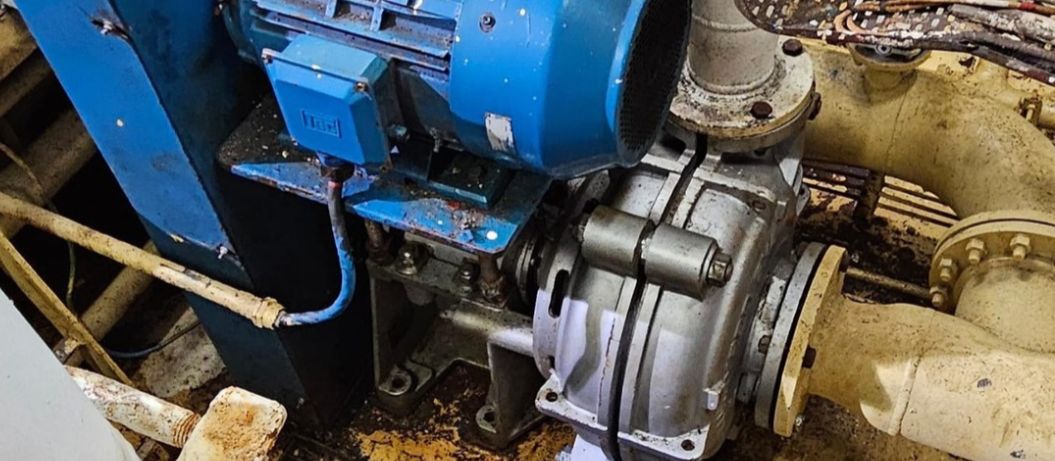
When an industrial pump begins to give serious trouble or fails completely, what do you do – refurbish the existing unit or replace it with a new asset?
No doubt you’re under pressure to fix the situation, but it is an important decision – actually, a window of opportunity. As somebody once said, “Never let a good crisis go to waste.”
When pump failure occurs, you have at least 3 options:
- Replace like-for-like (the lazy option, guaranteed to give you what you got)
- Repair (can be wise resource management, best all-round decision – or kicking the can down the road)
- Replace with a better-suited asset (potentially time consuming to assess risk & reward, likely more cost upfront – but golden opportunity to modernise)
Want a quick solution? Phone us for a fast appraisal of your options. We can often supply new pumps or replacement parts within 24 hours.
Atlantic Pumps supply spare parts, stock modern, efficient and robust pumps, and refurbish many industrial pumps. We understand that downtime, operational costs, and production pressures require a rapid response. Whatever is best for your situation, you can count on us for simplicity, speed, and ongoing reliability.
A historical rule-of-thumb is “If a repair costs more than 75% of the cost of a new one, then go new.” However, in today’s environmental and commercial reality, it is a bit more nuanced than that.
Your decision likely comes down to 3 factors: downtime, availability, and pump condition.
Downtime: Is it Important, Very Important or Critical? How much does a stopped process cost your site? If unplanned downtime costs thousands of pounds a day in lost production, waiting weeks for a specialist repair isn’t going to cut it. When downtime is critical, replacement is often the safest route—provided the replacement is available immediately.
Hiring a pump is another option to consider. This could tide you over while you assess the situation and even provide the opportunity to test a particular pump before making a purchase.
Availability of Parts and Pumps: A refurbishment is only cost-effective if you can actually get the correct wear parts quickly. Older pumps or those from manufacturers abroad can leave you waiting weeks for a simple impeller or stator. We understand that reducing downtime relies on rapid and cost effective parts availability, so we hold good stocks of commonly needed spares, both genuine and compatible after-market alternatives.
If your current pump is notoriously difficult to source spares for, replacing it with a widely supported brand is a strategic commercial move. When downtime can cost thousands of pounds an hour or risk compliance breaches, having a supplier who stocks and supplies pumps and parts on very short lead times is a necessity.
Pump History & Process: Has the pump given you good service over the years, or is it a reoccurring headache? Do you know what caused the failure, and are you confident it is a one-off or unavoidable issue? One part has failed, but what and when will be the next?
Many pump issues stem from further along the system – yet manifest at the pump. A refurb or like-for-like replacement won’t address system issues such as head restriction or fluid issues such as shear-sensitivity or abrasion. Walk the line, test if the fluid thickens in a high-speed mixer, perform a post-mortem on the failed pump to really understand what’s going on. Feel free to send us photos of worn or broken parts – you can WhatsApp us on 7537 149 180
Buying a New Pump
A good purchasing decision is shaped by lifetime cost or payback time, not upfront cost alone. Until the figures around energy, maintenance and lifetime expectation are clear, procurement managers will have a difficult time signing off your request for a “better pump”.
The Total Lifetime Cost Equation
The initial purchase price of a new pump or the invoice for a refurbishment is only a fraction of the total cost of ownership. Evaluate the energy costs, spare parts consumption, and the financial impact of lost production (or value added by improved quality) over the asset’s lifespan. The major cost, and one that has been going upward over the years, is energy. Based on a pump lifespan of 15 years, a pump that needs replacing today would have been selected when electricity costs were less than half of today’s prices (7p vs 17p/kWh). Diesel costs have increased four-fold for industrial sites in this time, leading many sites to switch to electric pumps for that reason alone.
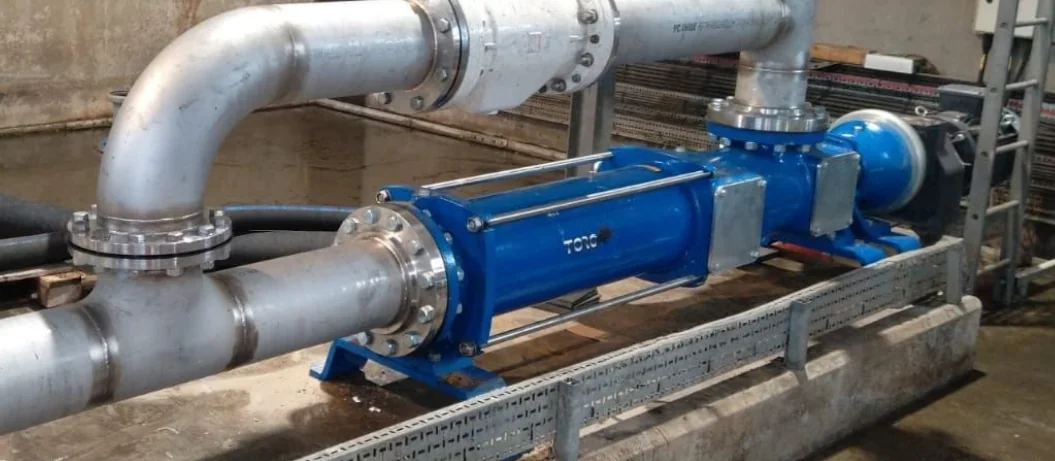
Thankfully, pump manufacturers have improved efficiency, and we regularly replace power-hungry pumps with ones that draw much less power. For example, replacing an inefficient, high-maintenance lobe pump with a more robust Toro T-series progressive cavity pump is saving a site over £10k a year on energy costs – and even more on maintenance.
The Payback Time Equation
The advantage you have of replacing a pump on an existing duty is data. You may have a formal records or simply firsthand knowledge – maintenance time, wear patterns, flow-rate, duty cycles, cost of downtime, energy consumption, MTBF (main time between failure). If an alternative pump or modern upgrade can be shown to move the needle, you can forecast the cost savings (and potentially a value addition). This allows you to estimate payback return, eg. a new pump costing 10k and saving 1k per month will have a payback time of 10 months. The savings after the payback period go straight back to strengthening the business. If the new asset will enable increased output or higher quality, you can add this value to the savings benefit.
(New cost – Repair)/(Savings + Added Value)= ROI
Upgrading for Longer Life If a pump has failed prematurely, simply refurbishing it or replacing it with the exact same model is asking for more of the same. Understanding why it failed is key to improvement; it could be an abrasive duty, the system head or fluid properties could have changed, or it was simply the wrong type of pump (or poor component specification) for the application.
Consider upgrading your wear parts. Replacing a standard packed gland setup with a mechanical seal can yield cost savings from the reduction in maintenance, the elimination of quench water requirements, and the prevention of ongoing leakage. Rubber or high-chrome parts can last longer, depending on the size of abrasive solids. Sacrificial liners can reduce wear costs in abrasive flows, different geometry impellers affect flow, pressure, and wear – as does rotation speed.
Alternatively, shifting to a completely different pump type can reap benefits. Upgrading doesn’t necessarily mean going bigger; a different technology – such as positive displacement or centrifugal, peristaltic or progressive cavity – can make all the difference. In the case of centrifugal pumps, even a smaller model that better matches the system curve results in better performance and longer lifetime.
The Verdict
Refurbishing makes sense when the pump is correctly specified for the application, wear parts are readily available, and the repair will reliably return the unit to a high level of efficiency.
Replacement is the clear winner when the current pump is the wrong tool for the job, when parts are obsolete or on long lead times, or when a newer model offers performance upgrades or energy savings—factors that will improve operational and commercial resilience.
Are you faced with a failing pump or looking ahead to decrease risk and running costs? Contact our team on 0800 118 2500 to discuss your application, duty and options.

Found this article useful?
To discuss any of the points raised in this blog or to discuss a failing pump on your site, get in touch. Call our team on 0800 118 2500, email us at [email protected] or use the chat function in the bottom right hand corner of our website.
- Blog