 0800 118 2500
 17th November 2026
 4 min read
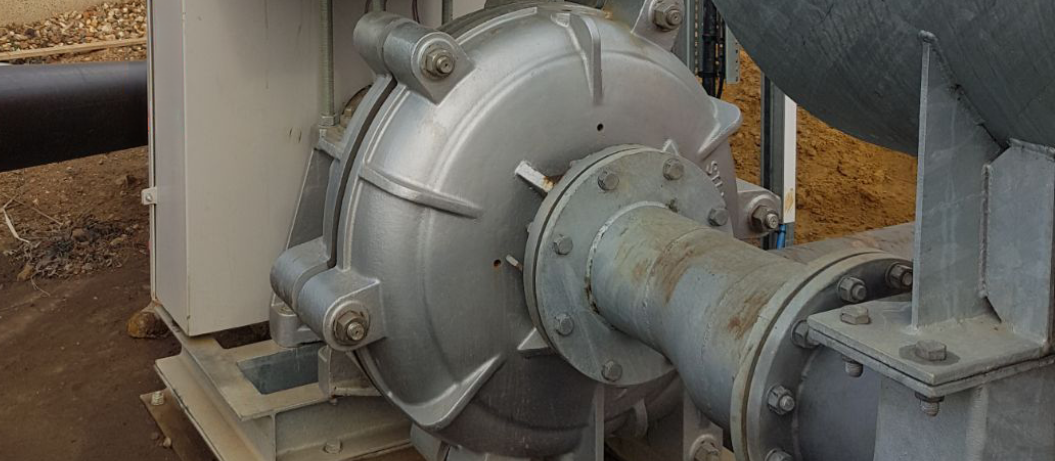
It is a common scenario across quarries, construction sites, and water treatment facilities. A site manager needs a new pump for a critical dewatering or slurry processing application. To avoid being caught short, they add a 20% margin to the normal flow rate. Then they round up the total head. By the time the specification is finalised, the pump ordered is significantly larger than the duty actually demands.
This is often seen as playing it safe. In reality, it is one of the most expensive options a pump buyer can opt for.
While a larger pump might seem like a robust insurance policy, the cost implications go way beyond the purchase price. The initial capital expenditure (CapEx) is only a fraction of the total expenditure (TOTEX). When a pump operates outside its intended parameters, the ongoing operational costs escalate rapidly.
The Cost of Ignoring the Best Efficiency Point
Centrifugal pumps are the mainstay of high volume, high head water and slurry pumps. These pumps have an inherent Best Efficiency Point (BEP) that is unique to the size and design specifications. This is the specific duty point where the relationship between flow, pressure, and energy consumption is optimal.
When a pump is oversized, it is forced to operate away from its BEP. It naturally ‘runs out’ along it’s performance curve to the right of BEP. Put simply, this means the flow-rate is too fast. Operators can correct this by throttling the discharge, but this pushes the operating point to the left of BEP, introducing a different set of issues.
Excessive Energy Consumption:
An oversized pump draws more power than necessary to achieve the higher flowrate or push against the throttling resistance. Energy expenditure often out-shadows all other factors in a manufacturing process – or within a pump’s total ownership costs.
Accelerated Abrasive Wear:
In slurries entrained with grit, operating below optimal flow velocities allows suspended solids to settle and cause line blockages.
Above optimal flow exponentially increases friction, shear, and pressure. This increases abrasive wear, energy-loss, and suction pressure requirements. We often refer to this specific maintenance burden as ‘GritEx’, as it can be significant if not addressed early in the decision-making process.
Vibration and Bearing Failure:
Running away from the BEP generates unequal hydraulic forces inside the pump casing. This can manifest as shaft deflection and vibration, potentially shortening the life of bearings and seals.
Cavitation Risks:
Oversizing will increase the Net Positive Suction Head required (NPSHr). Where the NPSH available falls below that required, the pump is at risk of rapid damage from cavitation, dry-run burnout, and vibration stress.
Prevention Better Than Cure:
Replacing damaged components is costly enough, but the resulting unplanned downtime is often far more expensive. Ensuring you have rapid access to pump spares and wear parts is a sensible precaution, but preventing that premature wear through accurate specification is foundational.
Application Matching vs. Upsizing
Different pump technologies react differently to oversizing.
Centrifugal Pumps: Rely on kinetic energy and have a bell-shaped performance curve. They have a specific BEP where the relationship between flow, pressure, and energy consumption is optimal. Operating too far to the left or right of this point causes vibration, cavitation, and wear.
Positive Displacement Pumps (PD pumps): Deliver a fixed volume of fluid per revolution, meaning their flow rate is directly proportional to their speed (RPM). They do not have a traditional BEP curve. Their sizing and efficiency focus instead on managing RPM to control wear (especially with abrasive slurries), volumetric dosing, efficiency, and managing internal slip at higher pressures.
Where Oversizing Can Save
Over-sizing a pump can make sense where a positive displacement pump is being used on abrasive or shear-sensitive media, or where high system pressure is required. By selecting a size up from the minimal standard, the speed can be tuned down without detriment. This maintains the required flow-rate at a lower, less wearing, velocity. Unlike a centrifugal type, a positive displacement pump that is rated for a higher pressure than the duty will typically outlast a ‘just enough’ pump. Remember that a pressure relief valve or similar system should be used on PD pump systems.
Accurate pump sizing relies on evaluating the precise fluid characteristics, the exact distance and elevation it needs to travel, and the specific hydraulic demands on the pump – such as high specific gravity, abrasion etc.
Site Diagnosis: Important Questions to ask for correct specification
Before guessing on a pump model, or even assuming that the one being replaced was properly specified in the first place, consider factors such as:
- What is the actual head required? Friction losses change dramatically with pipe diameter and fluid velocity. Accurate friction loss calculations include every bend, junction, accessory, and pipe surface area and roughness.
- What is the true nature of the fluid? Understanding the specific gravity, viscosity, and solids content is crucial to pump and motor sizing. Abrasive sludge and non-Newtonian fluids require a completely different hydraulic approach to treated wastewater.
- Duty fluctuations: at what duty does the pump spend most of its time? If flow requirements vary widely, select a pump design that handles the extremes while remaining near its BEP for most of its running time. There are options to manage pump flow with a VFD (variable frequency drive), multi-pump arrangements, and buffer tanks.
- What is the whole life cycle cost? Evaluate the projected energy and maintenance costs over a time period, rather than focusing solely on the initial purchase price. Comparing costs on a total lifecycle basis highlights the real winner on your optioneering list.
Getting pump selection right the first time helps mitigate risk, reduces maintenance overheads, and keeps site operations – and budgets – predictable.
Get support
Atlantic Pumps take a consultative approach to pump selection, helping customers map out their needs and understand their options. By taking a total life cycle or total ownership cost approach, Atlantic Pumps specify equipment that delivers reliable performance without inflating downstream costs.
- Technical
- Water & Wastewater
- Anaerobic Digestion and Biogas
- Recycling