October 7 2026
 5 min read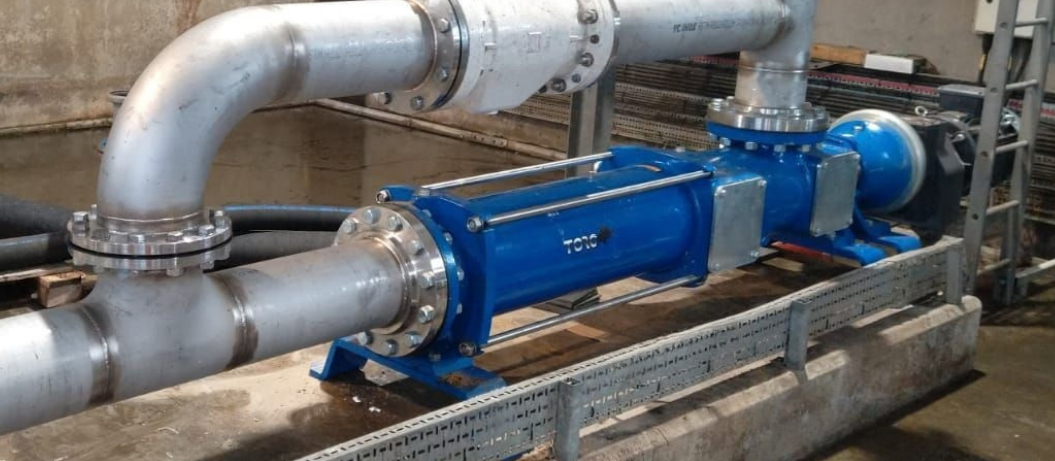
Progressive cavity (PC) pumps are widely used across demanding industrial applications, from wastewater and sewage sludge to anaerobic digestion, quarrying and mineral processing. Being positive displacement pumps, they are particularly effective for handling viscous, abrasive, and solids-laden media. As a progressive cavity (a type of screw pump), the design principle ensures a smooth, consistent, and pulsation-free flow.
However, as with virtually all positive displacement pumps, the close interference fit between the moving and stationary parts creates a natural wear point within the pump. With progressive cavity and screw pumps, this is between the metal rotor and the stationary elastomeric stator. In abrasive, viscous, or chemically aggressive applications, selecting an unsuitable rotor and stator combination can lead to accelerated wear, reduced performance, and increased maintenance – essentially, a higher total cost of ownership.
At Atlantic Pumps, we regularly help customers solve premature wear issues in existing progressive cavity pumps. In many cases, improving reliability does not require replacing the complete pump. Selecting rotor and stator materials that are better suited to the application can significantly improve service life.
Using the Toro T-Line PC pump spares range as a technical reference, this guide outlines some of the key considerations when selecting rotor materials, surface finishes and stator elastomers.
The Toro T-Line range includes rotors and stators compatible with a number of common PC pump makes. Speak to our team about compatibility with your site’s installed pumps.
1. Choosing the Right Rotor Material and Finish
The rotor is exposed to continuous mechanical contact, torsional loading and, in abrasive applications, repeated interaction with suspended solids.
The base material influences structural strength and corrosion resistance, while the surface finish or treatment can help improve resistance to abrasive wear.
AISI 1042 Carbon Steel
Heat-treated AISI 1042 carbon steel with chrome plating provides a strong, cost-effective option for many general-purpose applications. The steel provides mechanical strength, while the treated and plated surface helps improve wear resistance. It may be suitable for neutral-pH and moderately abrasive media such as treated sludge, agricultural wash water and similar process fluids.
AISI D6 Tool Steel
For more heavily abrasive duties, AISI D6 tool steel can provide increased resistance to wear. Its high chromium content and through-hardness make it suitable for applications involving highly abrasive or heavily gritted media, where long-term resistance to erosion is an important consideration.
AISI 304 Stainless Steel
AISI 304 stainless steel offers good general corrosion resistance and is commonly used with mildly aggressive fluids and industrial wastewater. Where abrasive wear is also present, an appropriate surface treatment or chrome-plated finish can provide additional protection.
AISI 316 Stainless Steel
AISI 316 stainless steel offers a higher level of corrosion resistance than 304 and is commonly selected for more chemically aggressive environments. Its molybdenum content improves resistance to pitting and chloride-related corrosion. In applications where both corrosion and abrasion are present, a 316 stainless steel rotor with a suitable wear-resistant surface finish can provide combined protection against chemical attack and physical wear. Final material selection should always take into account the actual fluid chemistry, solids content, temperature, and operating conditions.
2. Selecting the Right Stator Elastomer
The stator forms the flexible sealing surface around the rotor. Its elastomer must maintain the required interference fit while resisting chemical attack, abrasion, temperature, and mechanical stress.
An unsuitable elastomer may swell, harden, soften, tear, or degrade prematurely. In severe cases, excessive swelling can increase friction and contribute to overheating or pump failure.
Elastomer performance varies by formulation, so the following guidance should be treated as indicative rather than as a substitute for an application-specific compatibility assessment.
NBR – Nitrile Rubber
Key strengths: Good resistance to oils, greases, and general mechanical wear. A widely used general-purpose elastomer.
Typical applications: Wastewater, sewage, oily sludges, and light mineral slurries.
Generally NOT suitable for: Strong acids, ozone and certain solvents such as ketones.
Temperature limits depend on the specific compound and should be confirmed before specification.
EPDM – Ethylene Propylene Rubber
Key strengths: Good resistance to heat, steam, weathering, ozone and a broad range of chemicals.
Typical applications: Hot fluids, mild acids, alkalis and some bio-waste streams.
Generally NOT suitable for: Oils, fats, greases and hydrocarbons, which can cause significant swelling.
FKM – Fluorocarbon Elastomer
Often referred to by the trade name Viton.
Key strengths: Strong resistance to high temperatures, aggressive chemicals, solvents and fuels.
Typical applications: Chemically aggressive industrial fluids, high-temperature waste streams and petrochemical applications.
Generally NOT suitable for: Applications involving certain high-temperature water or steam conditions, or duties requiring very high dynamic tear resistance and flexibility.
HNBR – Hydrogenated Nitrile Rubber
Key strengths: Improved thermal and mechanical performance compared with standard NBR, with strong resistance to abrasion and tearing.
Typical applications: High-pressure abrasive slurries, hot oily digestate and demanding recycling applications.
Generally NOT suitable for: Highly concentrated strong acids and certain polar solvents.
NR – Natural Rubber
Key strengths: Very high elasticity, resilience, and tear resistance – particularly where large abrasive particles or repeated mechanical impacts are present.
Typical applications: Mineral slurries, sand washing, heavily gritted water, and mining tailings.
Generally unsuitable for: Oils, greases, fuels, high temperatures, and prolonged ozone exposure.
3. Matching Rotor and Stator Materials to the Application
Rotor and stator materials should be selected as a matched combination rather than considered independently.
The correct pairing can help maximise service life and mean time between failures, while an unsuitable combination may result in accelerated wear or chemical degradation.
Highly Abrasive, Low-Chemical Duty
Examples include sand and grit wash plant water.
Rotor: AISI D6 tool steel or heat-treated AISI 1042 with a suitable chrome-plated wear-resistant finish.
Stator: Natural Rubber or HNBR, depending on the specific operating conditions and fluid composition.
These materials can offer strong resistance to abrasion and repeated solid-particle impact.
Corrosive and Abrasive Duty
Examples may include certain anaerobic digestion and biogas digestate applications.
Rotor: AISI 316 stainless steel with an appropriate wear-resistant surface finish where abrasion is significant.
Stator: HNBR or NBR may be suitable where oils and greases are present, while EPDM may be considered where the chemical composition favours its compatibility.
Digestate chemistry can vary considerably, so elastomer selection should be confirmed against the actual process fluid, temperature and solids content.
High-Temperature Chemical Duty
Examples include some industrial chemical-processing applications.
Rotor: AISI 316 stainless steel.
Stator: FKM may be suitable where high-temperature and chemical resistance are the primary requirements.
Again, compatibility should be confirmed against the exact chemical, concentration, temperature and operating conditions.
Protecting Your Pump Beyond Material Selection
Choosing the correct rotor coating and stator elastomer is an important first step, but material specification alone will not prevent premature wear.
Operational conditions also have a major influence on pump life.
Even a highly wear-resistant rotor and stator combination can suffer rapid damage if the pump is run dry, operated above its recommended speed or exposed to excessive differential pressure.
For this reason, pump selection should consider both material compatibility and operating conditions, including:
- Fluid chemistry
- Temperature
- Solids concentration
- Particle size and hardness
- Viscosity
- Oil and grease content
- Pump speed
- Differential pressure
- Dry-running risk
If your site is experiencing high wear rates, reduced pump life or frequent rebuilds, the Atlantic Pumps technical team can assess the fluid, duty conditions and existing equipment to help identify a more suitable rotor and stator combination.
Contact Atlantic Pumps on 0800 118 2500 to discuss Toro T-Line components, compatibility with your installed PC pumps, or options for improving wear life in abrasive and challenging applications.
We also take a sustainable approach to our work and are committed to reducing energy waste from pumps. Our expert knowledge allows us to reduce energy usage by 20% on the average site!
Call us today on 0800 118 2500 for more information.