September 24 2026
 3 min read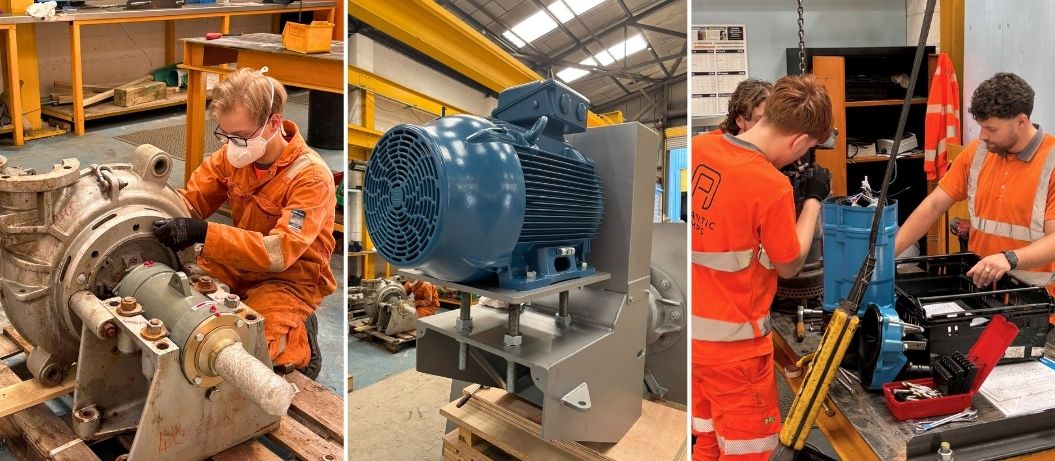
Today marks National Manufacturing Day, a nationwide celebration spearheaded by Make UK to showcase the sheer breadth, ingenuity, and modern engineering driving Britain’s manufacturing sector. Across factories, foundries, chemical plants, and recycling facilities, people are opening their doors to show what makes industry tick.
Yet, behind the high-tech CNC machines, robotic assembly cells, and sleek end products sits an infrastructure that rarely makes the headlines.
We are talking, of course, about industrial pumps.
Whether conveying abrasive ceramic slips, dosing reagents into chemical batches, circulating cooling fluids, or moving heavy waste slurries through aggregate and mineral processing lines, pumps are truly the heartbeat of any manufacturing plant. When they stop, production stops.
So, to celebrate Manufacturing Day, let’s take a look at the factory floor from a pump engineer’s perspective: why modern British manufacturing relies on robust fluid transfer, and how process managers can keep their lines running efficiently, sustainably, and reliably.
The Hidden Bottleneck: When Fluid Handling Halts Production
Factory process managers obsess over maximum uptime, continuous improvement, Mean Time Between Maintenance, Overall Equipment Effectiveness (OEE)—and rightly so. Every minute of lost takt time eats into plant margins.
Many manufacturing lines operate a duty-standby principle on critical pump stations, where one pump is in operation while the other is in idle mode. This allows maintenance and inspections during full production – and acts like a final backup should something big happen.
Unplanned downtime is costly—often up to ten times more expensive than scheduled maintenance once you account for lost shifts, scrapped batches, and emergency parts shipping. Keeping British manufacturing competitive on a global scale means shifting from reactive fire-fighting to engineering-led proactive reliability.
Three Pumping Lessons Every Manufacturing Plant Manager Should Know
Drawing from decades of troubleshooting pumping applications across UK industry, here are three practical principles to boost plant reliability and lower energy costs:
1. Size Pumps Carefully: Beware the “Bigger is Safer” and “Smaller is Cheaper” Myths
In manufacturing design, engineering margins are standard practice. But oversizing a centrifugal pump “just in case” is one of the most common causes of chronic failure. On the other hand, a purchasing manager might be tempted to buy the cheapest pump – not thinking that energy waste and replacement parts can amount to 8 or more times the original CAP-Ex.
When a pump is oversized, operators are forced to throttle discharge valves or run it well below its Best Efficiency Point (BEP). Under-sizing a pump (often by not accounting for system friction losses) takes the performance the other way from the BEP. Operating too far from BEP creates severe internal recirculation, vibration, and unbalanced radial thrust on the shaft, heat and mechanical deflection – destroying their design life.
The fix: Audit your duty points. If your process demands variable throughput, pair a correctly sized pump with a Variable Speed Drive (VSD) rather than throttling a massive, inefficient unit.
2. Match Pump Mechanics to Media Realities
Manufacturing involves an extraordinarily diverse range of fluids—from shear-sensitive ingredients to heavy, high-viscosity pastes and abrasive slurries. Trying to force a generic centrifugal pump to handle viscous or shear-sensitive fluids leads to clogging, excessive wear, or ruined product.
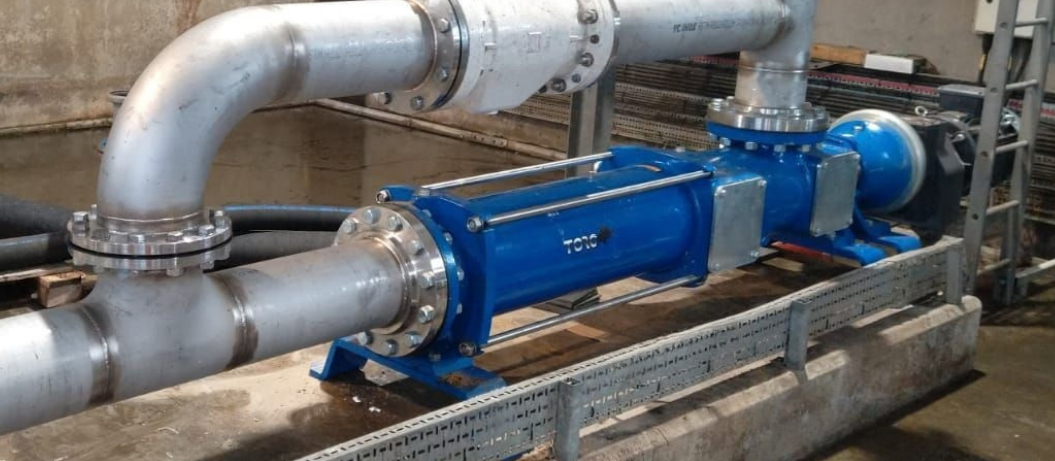
- Viscous, shear-sensitive, or metering duties: Positive displacement technologies excel here. Progressive Cavity (PC) pumps and heavy-duty peristaltic hose pumps provide gentle, low-shear, non-slip delivery with predictable flow, regardless of line pressure fluctuations.
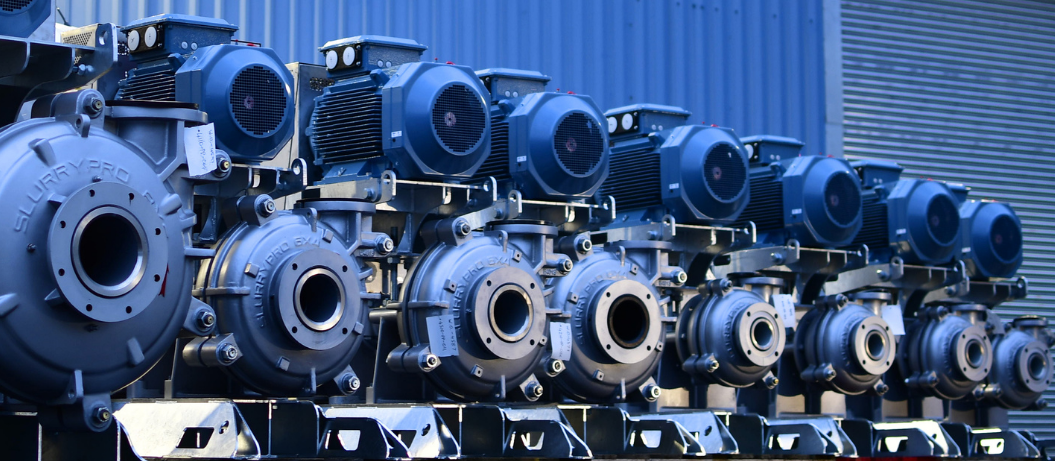
- Heavy, abrasive slurries: Require purpose-engineered slurry pumps with wear-resistant high-chrome or elastomer linings, matched to slurry solids’ size and specific gravity.
- Corrosive or hazardous chemistry: Call for seal-less designs such as magnetic drive or peristaltic pumps where fluid is completely isolated within a heavy-duty reinforced hose, eliminating mechanical seal failure paths altogether.
3. Shift from “Run to Failure” to Condition Monitoring
One of the hallmarks of modern advanced manufacturing is data-driven maintenance. Your pumps shouldn’t be left behind.
Rather than running an asset until it seizes, establish simple baseline metrics during commissioning:
- Normal operating motor current (amps)
- Bearing housing operating temperature
- Baseline vibration levels
- Suction and discharge pressure readings
A steady rise in motor current or casing temperature is your early warning sign—often pointing to internal scale build-up, pipe friction increases, or rollers pinching hoses too tightly. Catching this early allows a planned, 30-minute wear-part swap instead of a catastrophic 12-hour breakdown.
Pumping into a Sustainable, Efficient Future
Manufacturing Day isn’t just about celebrating where industry is today; it’s about where we are heading tomorrow. With rising industrial energy tariffs and ambitious Net Zero targets, fluid management represents one of the largest untapped opportunities for energy cost and carbon savings.
Pumps account for a massive share of total industrial electrical consumption. By right-sizing pumps, reducing friction-wear, recovering process wash water, and replacing inefficient, worn equipment with modern low-energy designs, manufacturers can dramatically slash plant energy and resource consumption.
At Atlantic Pumps, our mission is simple: we help manufacturers eliminate downtime, reduce energy waste, and maintain total control over their toughest fluid-handling processes.
Happy National Manufacturing Day to all the makers, engineers, and plant operators driving British industry forward.
Need to optimise fluid handling on your manufacturing site or replace an unreliable, high-maintenance pump? Talk to our technical team today on 0800 118 2500 or drop us a message to discuss your process application.
We also take a sustainable approach to our work and are committed to reducing energy waste from pumps. Our expert knowledge allows us to reduce energy usage by 20% on the average site!
Call us today on 0800 118 2500 for more information.