September 18 2026
 6 min read
As World Water Monitoring Day and World Rivers Day arrive, we look at how England’s water utility sector is driving positive change across entire catchment basins.
The state of our rivers is largely a reflection of human activity upstream
Rivers in sparsely populated regions (i.e. Scotland and mid-Wales) naturally balance the nutrient inputs and outputs – and of course suffer much less from persistent pollutants such as micro-plastics and PFAS. Although natural weathering releases rock-bound metallic minerals, this process is usually slow enough for the river ecology to adapt and thrive in.
By contrast, heavily urbanised catchments alter this equilibrium. In industrial heartlands and high-density population corridors, the sheer volume of domestic, commercial, and surface run-off outpaces the natural carrying capacity of receiving watercourses. Meeting this challenge goes far beyond meeting baseline regulatory baselines; it demands an integrated engineering and behavioural approach that combines community awareness, proactive source control, and flexible treatment processes with reliable performance.
Across the country, regional water companies are rolling out ambitious capital schemes, real-time catchment monitoring, and nature-based solutions to safeguard inland waters, support aquatic biodiversity, and build resilient ecological corridors.
For process engineers, engineering managers, and capital delivery teams, the challenge of river water quality is multifaceted. As the built-environment expands and the climate gets more extreme, stormwater surges have become more intense. Shrinking farmland requires growing more in less space, making it essential that agricultural nutrient runoff is prevented. Tackling these demands a blend of robust civil engineering, responsive fluid-handling infrastructure, and proactive environmental stewardship across different companies and industries.
Here is how some of England’s water companies are driving tangible progress across their catchment basins.
United Utilities: High-Capacity Stormwater Storage for the River Mersey
In the North West, United Utilities has broken ground on a £5 million underground stormwater storage scheme at Mayfield Drive in Birkenhead, forming part of an overarching £13.5 billion regional investment programme to upgrade water infrastructure and enhance more than 500 km of rivers and coastal waters.
- The Engineering Challenge: Heavy rainfall causes sudden spikes in surface run-off, overwhelming combined sewer systems and triggering storm overflows to discharge diluted effluent into the River Mersey.
- The Infrastructure Solution: Installation of a subterranean tank capable of capturing over 504,000 litres of excess storm flow—the equivalent of 3,000 bathtubs—buffering capacity until the treatment works can manage the load.
- Ecological & Community Win: Directly mitigates overflow frequency into the Mersey basin while creating a new community orchard. The provision of amenities for sport, heritage and nature enjoyment alongside the water supply and wastewater treatment is something that is easily taken for granted.
Severn Trent: Nature-Based Corridors and Habitat Connectivity
Severn Trent’s landmark Great Big Nature Boost and Unlocking Biodiversity programmes illustrate how water companies are targeting the biology of the catchment alongside mechanical interventions.
Strategic Catchment Partnerships: Catchment-scale environmental management is transforming raw water protection across England. Through proactive landowner initiatives such as Severn Trent’s programme STEPS (Severn Trent Environmental Protection Scheme), water companies collaborate directly with farmers across dozens of priority catchments. By funding arable buffer strips, enhanced slurry containment, and riverbank fencing, these partnerships reduce diffuse nitrate and pesticide run-off at the source.
Partnering with organisations like the Canal & River Trust, the Severn Trent Great Big Nature Boost initiative goes beyond water; it is enhancing 335 km of canal margin across the West Midlands to create connected wildlife habitats.
Practical Ecological Interventions:
- Establishing 33 km of new and restored aquatic margins to filter run-off and create spawning grounds.
- Restoring 82 hectares of reedbeds and wetlands to serve as natural bio-filters.
- Reconnecting fragmented habitats for species including otters, kingfishers, and water voles. These indicator species will provide further information of water quality via structured citizen-science surveys and other monitoring programmes.
The Natural Capital Philosophy: Severn Trent has committed to delivering at least 15% Biodiversity Net Gain (BNG) on all major capital projects—surpassing statutory targets and embedding nature-led design directly into engineering workflows.
Anglian Water: Source-Level Protection and Real-Time Water Monitoring
In the low-lying, intensively farmed terrain of the East of England, Anglian Water’s catchment strategy highlights the power of prevention over end-of-pipe treatment.
- Catchment to Coast Strategy: Through initiatives like the CamEO Catchment Partnership (co-hosted with the Rivers Trust), Anglian Water deploys specialist catchment advisers to work directly with landowners, agricultural operators, and industrial users.
- Data-Driven Monitoring: Anglian Water uses upstream sensor grids and spatial GIS mapping to identify diffuse pollution zones, tracking pesticide and nitrate markers before they reach groundwaters or open tributaries.
- Process Efficiency: By reducing raw nutrient loads at the source, process engineers lower the chemical dosage, sludge volumes, and energy demands of regional water recycling centres, reducing carbon footprints while maintaining clean discharges.
South West Water: Award-Winning Upstream Thinking
South West Water’s pioneering Upstream Thinking initiative demonstrates that land-management investment delivers higher reliability and cost-efficiency than relying solely on chemical dosing and heavy mechanical filtration.
Catchment Based Stewardship
- Collaborative approach: Working in close partnership with the Westcountry Rivers Trust and local Wildlife Trusts, the scheme covers 11 major river catchments across Devon and Cornwall.
- Interventions at Scale:
– Upland Mire & Peatland Restoration: Re-wetting Exmoor and Dartmoor peat bogs to slow the flow of floodwaters naturally, lock up carbon, and buffer seasonal river flows.
– Agricultural Buffering: Assisting farmers with clean-and-dirty water separation, slurry infrastructure, and riverbank fencing to eliminate soil, silt, and fertiliser ingress into headwaters. - Engineering Impact: Raw river abstraction quality is dramatically stabilised. Water entering treatment assets exhibits lower turbidity, fewer spikes in organics, and fewer abrasive silts—easing the mechanical wear on pumps, mixers, and filtration membranes downstream.
What This Means for Us & Our Rivers
We all stand to benefit from healthier rivers and resilient water supplies. The work and initiatives pursued by water companies, community groups, industries and individuals reflect a fundamental reality: river health is a catchment-wide responsibility, and we all have a part to play.
As the largest-ever capital delivery frameworks progress through the remainder of the decade, it is forecasted that the £10–12 billion investment specifically targeting storm overflow reductions will cut annual overflow spills by up to 140,000 a year (300k in 2025). As a comparison, the water industry spent £3.1 billion in the 2020-2025 investment period, with 42.9% (up from 27.6% in 2023) of storm overflow outlets meeting the 2050 targets in 2025. Additionally, progress was noted in the metrics used to track against 2035 targets:
| Data related to the ecological target | 2022 to 2023 | 2023 to 2024 | 2024 to 2025 |
|---|---|---|---|
| Total storm overflows covered by the ecological target | 4,919 | 4,929 | 4,865 |
| Number of storm overflows with 10 or fewer spills (surrogate threshold) | 1,114 (22.6%) |
1,242 (25.2%) |
1,641 (33.7%) |
| Number of storm overflows still requiring improvement to meet 75% by 2035 | 2,576 (52.4%) |
2,455 (49.8%) |
2,008 (41.3%) |
| Number of storm overflows without complete EDM data | 1,353 (27.5%) |
654 (14.3%) |
313 (6.4%) |
| Number of storm overflows with complete EDM data across the year | 3,566 (72.5%) |
4,275 (86.7%) |
4,552 (93.6%) |
Early progress is difficult to track definitively due to the lag between investment and results; over 60% of the £3.1billion investment went into the Thames Tideway project, which only came online in 2026. While there’s no room for complacency, there are reasons to be confident that the progress in river quality will continue to escalate nationwide.
Water Companies as Enablers and Networkers
Catchment-wide partnerships are likely to bring further improvements, with farming and other industries stemming the flow of pollutants via uncontrolled run-off or unauthorised drain discharge. Water companies can only do so much – diffuse agricultural run-off accounts for around 40% of ecological failures. PFAs and microplastics pollution will likely require changes to detergent and cosmetic ingredients, which is starting to happen.
Legacy heavy-metal pollutants from pre-20th century mine workings are being tackled by the Mining Remediation Authority, although budgets are limited. Ironically, the resurgence in mining could prove to be a catalyst and enabler for faster mine water remediation. Cornish Metals have treated nearly 8 million cubic metres of water that accumulated in a historic tin mine, and their investment has dramatically improved the Red River. As they begin mining critical minerals again, they are doing so with proven water treatment technology and long-term sustainability embedded in.
Are you working with wastewater or commercial effluent?
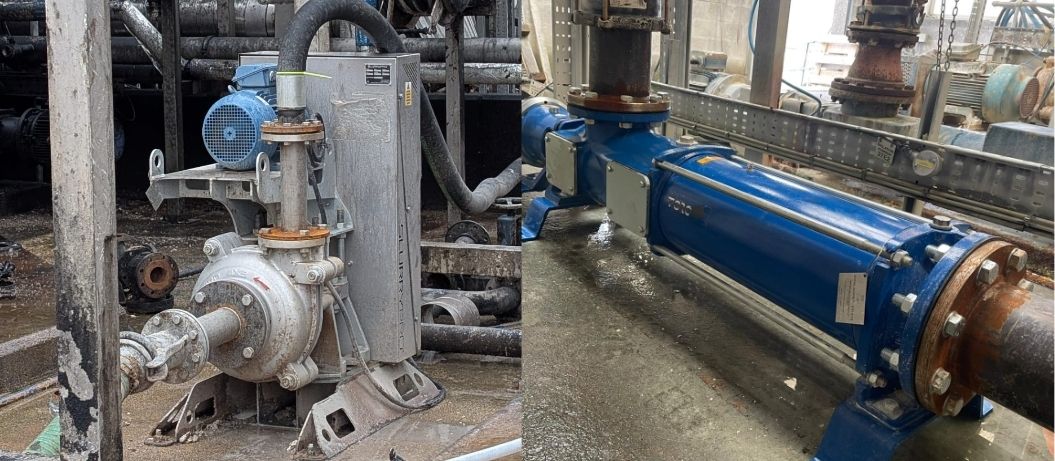
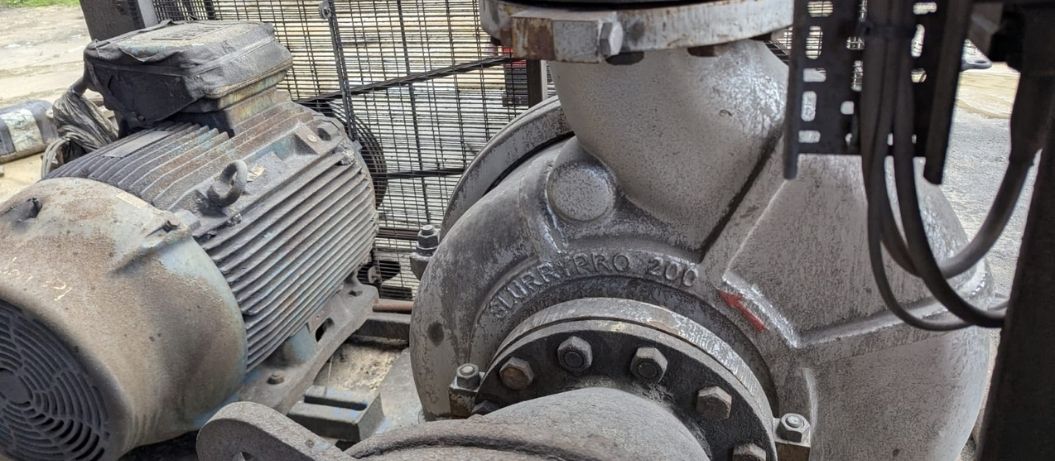
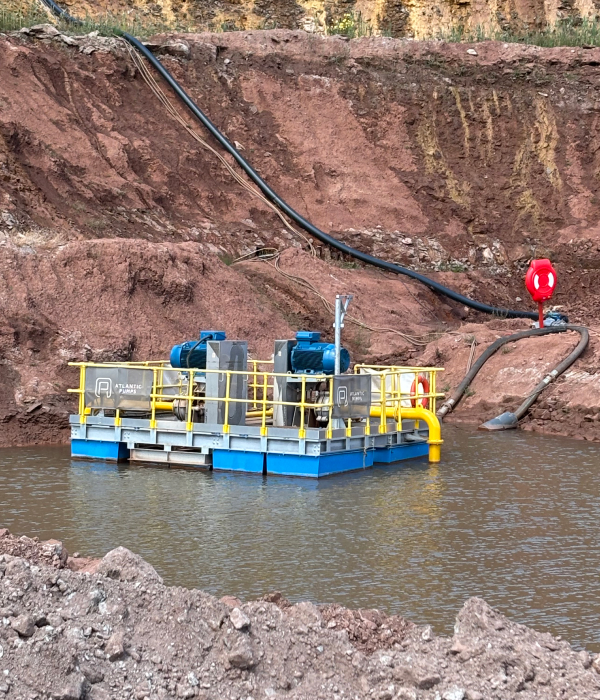
Atlantic Pumps have solutions to improve wastewater handling, onsite water recycling, and silt/grit removal. Speak to us about grit-laden slurry handling, rag-tolerant sludge and dirty water pumps, or modular treatment systems that balance pH and remove silt.
How Atlantic Pumps helps companies increase their water sustainability:
1. Speed of Execution: Rapid response times when old assets fail or surge mitigation is required during intense weather events.
2. Speed of Simplicity: Installing robust, simple pumps that maintenance teams can service or unblock quickly with minimal disruption.
3. Maximising Uptime and Capacity: Providing grit and sludge removal assets that optimise hydraulic headroom, keeping wastewater treatment works operating consistently at their permitted Flow to Full Treatment (FFT) and avoiding overspills.
4. Uncompromising Reliability: Utilising abrasive-resistant materials and dependable solids-handling equipment that operates as promised when catchment runoff brings high particulate loads.
5. Customer & Environmental Alignment: Prioritising solutions that solve the root cause rather than repeating the same old issues, delivering long-term efficiency and TOTEX cost reduction.
It takes an ambitious, purposeful, co-ordinated, and ongoing effort to protect rivers from the intense urban and industrial buildup of the past couple of centuries.
Atlantic Pumps are working with professionals and companies across wastewater treatment, civil engineering, construction, and industrial effluent producers. Get in touch with us today for proven solutions and a rapid response.
We also take a sustainable approach to our work and are committed to reducing energy waste from pumps. Our expert knowledge allows us to reduce energy usage by 20% on the average site!
Call us today on 0800 118 2500 for more information.