September 16 2026
 3 min read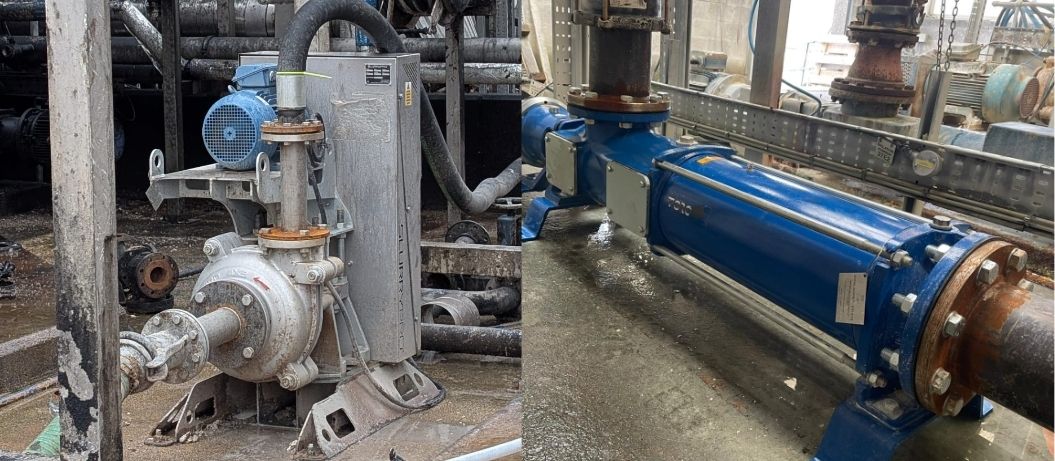
Variable flow demand is common across industrial processes. Quarry dewatering, wastewater treatment, chemical processing, food production, and manufacturing can all require pumps to handle changing flow rates throughout the day or season.
When demand varies, the choice of pump type and control method can have a significant impact on energy consumption, reliability, maintenance, and total cost of ownership.
Two major pump families dominate industrial applications: centrifugal pumps and positive displacement (PD) pumps.
Both can be used for variable demand, and both can be controlled with variable speed drives. However, they respond to changes in speed, pressure and system resistance in fundamentally different ways.
Centrifugal vs positive displacement: the fundamental difference
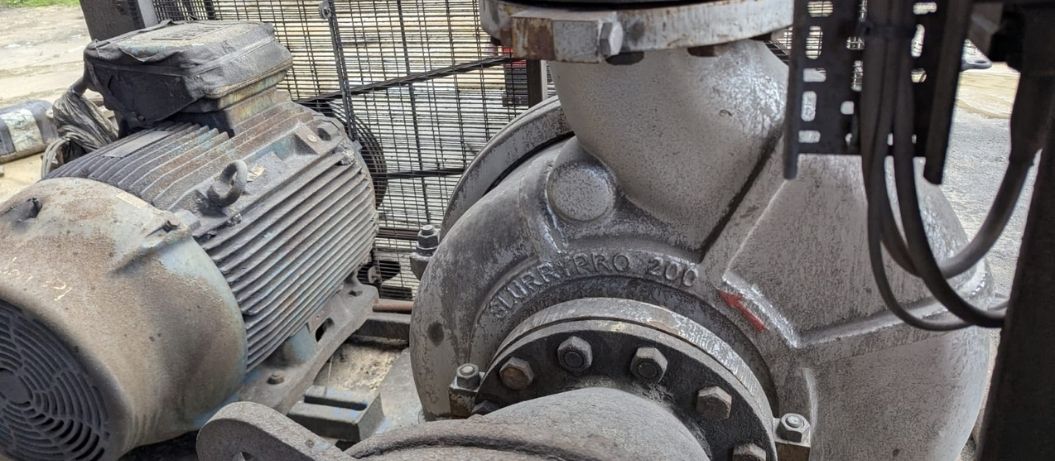
A centrifugal pump uses a rotating impeller to impart velocity to the fluid, which is then converted into pressure. The delivered flow depends on the interaction between the pump’s performance curve and the system resistance.
A positive displacement pump, by contrast, traps and displaces a defined volume of fluid during each cycle or revolution. Flow is therefore primarily related to pump displacement and speed, although the actual delivered flow can be affected by factors such as slip, pressure, and fluid viscosity.
This distinction is important when designing a variable-demand pumping system.
Centrifugal pumps
For centrifugal pumps, changing speed changes the pump’s performance curve. A Variable Frequency Drive (VFD) can therefore be an effective way of matching pump output to changing system requirements.
Energy savings can be particularly significant where friction losses account for a large proportion of the system head.
Positive displacement pumps
For PD pumps, changing speed generally changes the displacement rate and therefore the flow rate. A VFD can provide precise flow control without relying on a throttling valve.
However, pressure protection is critical. Unlike a centrifugal pump, a PD pump can continue to displace fluid if a discharge valve is closed, potentially causing pressure to rise rapidly. Appropriate relief or pressure-limiting arrangements are therefore an essential part of the system design.
Which pump is better for variable demand?
There is no universal correct answer.
A centrifugal pump may be the natural choice where:
- Flow rates are relatively high
- Fluid viscosity is low
- Head and flow vary with system conditions
- Efficient variable-speed operation is desirable
- The application suits a centrifugal pump’s hydraulic operating range
A PD pump may be preferable where:
- Accurate or consistent flow is important
- The fluid is viscous
- High pressure is required at relatively low flow
- The application requires metering or controlled dosing
- The fluid contains characteristics better suited to a particular PD pump design
The right choice depends on the fluid, required flow and pressure, operating profile, and process requirements.
Fixed speed or variable speed?
The pump type is only part of the decision. The control strategy also matters.
For centrifugal pumps, variable speed can reduce energy consumption by reducing the speed at which the pump operates when demand falls. The potential saving depends strongly on the system curve and the proportion of static and friction head.
For PD pumps, variable speed can provide a direct way of adjusting displacement rate and therefore flow, although pressure, viscosity, slip and minimum/maximum speed limits must be considered.
Other approaches—including multiple pumps, throttling, bypassing and process buffer storage—may also be appropriate depending on the application.
Choose the pump around the application
The best pumping system is not necessarily the pump with the highest flow or pressure rating.
A good process design starts by understanding:
- The minimum, normal, and maximum flow requirements
- Operating hours at each condition
- Required discharge pressure or head
- Fluid properties
- Start-up and shutdown requirements
- Control requirements
- Available power and motor requirements
- Maintenance and lifecycle considerations
From there, the appropriate pump technology and control method can be selected.
Choosing Between the Two Pump Families: Pump Sizing
The detailed sizing considerations are different for each pump family.
For centrifugal pumps, see our guide to [Sizing Centrifugal Pumps for Variable Demand: Fixed Speed vs VFD].
For positive displacement pumps, see our guide to [Sizing Positive Displacement Pumps for Variable Demand: Fixed Speed vs Variable Speed].
Learn more about our stocked range of pumps:
Centrifugal
Clean/Clear Water Centrifugal Pumps
Positive Displacement
Industrial heavy-duty Peristaltic Pumps
Progressive Cavity & Screw Pumps
Get in touch
Atlantic Pumps focus on providing the best solution to your pumping requirements, sourcing pumps from other high-quality pump manufacturers where beneficial. Contact us today on 0800 118 2500 or via web chat to discuss your requirements.
We also take a sustainable approach to our work and are committed to reducing energy waste from pumps. Our expert knowledge allows us to reduce energy usage by 20% on the average site!
Call us today on 0800 118 2500 for more information.