 0800 118 2500
 13th October 2026
 4 min read
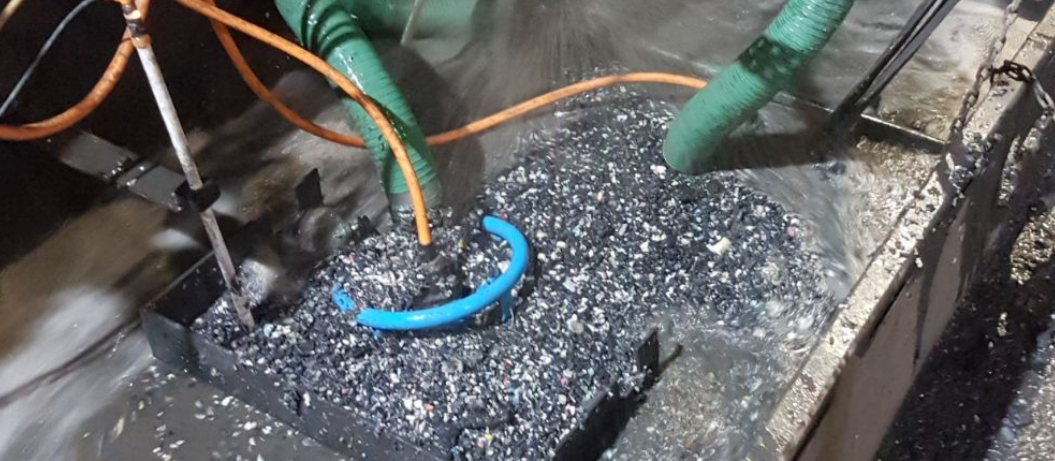
Walk into any processing plant, quarry, or wastewater treatment site, and you’ll find pumps humming at the heart of the operation. But walk into the maintenance workshop, or past the recycling skips, and you’ll quickly discover a frustrating truth: a huge percentage of premature pump failures have nothing to do with poor manufacturing or “bad luck.”
They happen because someone picked the wrong tool for the job.
Nearly every pump belongs to one of two distinct families: Centrifugal Pumps or Positive Displacement (PD) Pumps.
Both are great for moving fluid—but the physics behind how they move it are worlds apart. Using a centrifugal pump where a positive displacement pump belongs—or vice versa—is like trying to drill masonry with a wood bit. You might get a hole, but the rapid wear and energy expenditure will make you regret your ‘hack.’
Here is a practical, no-nonsense guide to understanding the core differences between the two, and how to choose the right pump for your duties.
1. The Core Mechanical Difference: Flow vs. Pressure
To make the right choice, you first need to understand what happens inside the casing and how this affects performance.
| CENTRIFUGAL PUMP Kinetic Energy to Pressure |
POSITIVE DISPLACEMENT (PD) Trapping and Displacing |
|---|---|
| Fluid accelerated by impeller | Fixed cavity captured per rotation |
| Velocity converted into head | Fluid mechanically pushed forward |
| Flow drops as pressure rises | Flow stays constant despite head |
| RPM and flow relation is linear (x1), head varies by the square of speed (x2), power scales cubically (x3) | Power scales proportionally with speed and differential pressure. |
In short, PD pumps offer better energy efficiency with heavy, viscous fluids (sludge, pastes, gels etc), and centrifugal pumps with thin fluids (light fluids, water, water-based slurries).
Centrifugal Pumps (The Sprinters)
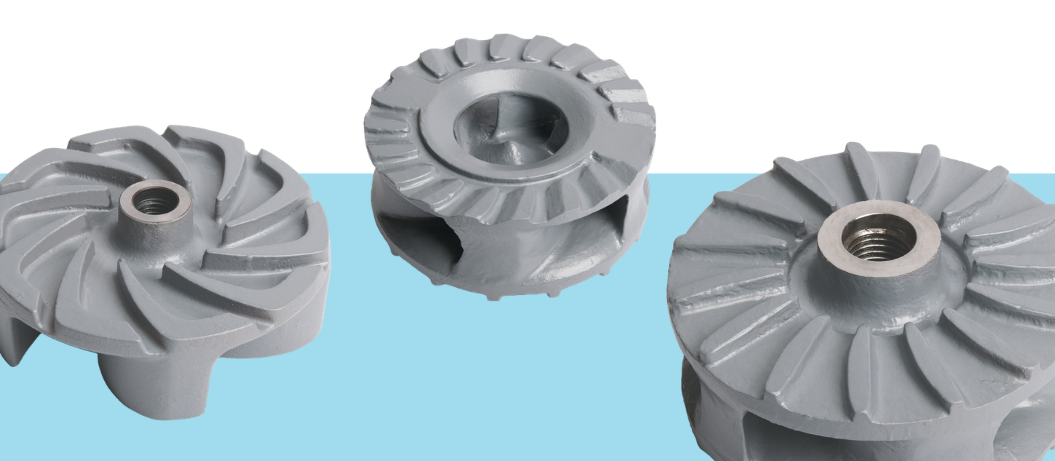
Centrifugal pumps—such as our workhorse Audex submersible dewatering units or heavy-duty slurry pumps—rely on dynamic kinetic energy. An electric motor spins an impeller at high speed, flinging the liquid outward. As the fluid leaves the impeller vanes and enters the volute casing, velocity converts into pressure.
- The Catch: Centrifugal pumps are sensitive to system pressure (head). If system resistance increases—say, due to a throttled valve or longer pipe runs—flow drops. Push past its Best Efficiency Point (BEP) toward low flow, and you risk severe radial thrust, shaft deflection, and internal recirculation damage.
Positive Displacement Pumps (The Heavy Lifters)
PD pumps move fluid mechanically by trapping a fixed volume and physically forcing it through the discharge pipe. This family has many different types, such as
- Peristaltic Hose pumps (such as the LSM range)
- Progressive Cavity (PC) pumps (such as the Toro S series)
- Ram Pumps
- Diaphragm and lobe pumps
- The Core Principle: For every rotation or stroke, the exact same volume of liquid exits the pump, regardless of the system pressure (up to the mechanical limits of the assembly, of course). They act like a conveyor belt; doubling the speed doubles the delivery.
2. Head-to-Head: Matching Pump to Duty
When process managers ask us which pump to specify, we look closely at five key process variables:
A. Viscosity: Water vs. Treacle
- Centrifugal: Centrifugal pumps excel with clean water and thin liquids (generally below 200 cSt). As viscosity climbs, friction within the impeller increases dramatically. Flow drops, head collapses, and power consumption spikes.
- Positive Displacement: Viscous media is where PD pumps thrive. Whether it is thickened sewage cake, bentonite slurry, or food pulp, a progressive cavity or peristaltic pump handles thick, non-Newtonian fluids with ease. In fact, high viscosity often improves volumetric efficiency in PD pumps by reducing internal slippage.
B. Pressure Variation & Flow Consistency
- Centrifugal: If your system back-pressure fluctuates, your flow rate will swing along the pump curve. Centrifugals are ideal for batch transfers or open-ended dewatering where steady head allows massive throughput.
- Positive Displacement: Need exact dosing or continuous chemical metering? PD pumps deliver an almost linear relationship between shaft speed (RPM) and flow rate (Q). Adding a Variable Speed Drive (VSD) makes them highly accurate metering devices.
C. Shear Sensitivity & Solids Handling
- Centrifugal: Impellers run at high speeds (typically 1,450 to 2,900 RPM). This high-shear environment can tear flocculants apart, emulsify oils in bilge water, or smash fragile crystals and aggregate.
- Positive Displacement: A peristaltic hose pump (like the LSM) or a slow-running PC pump gently squeezes fluid through a smooth passage. No high-shear vortices, no destroyed product structure. Furthermore, peristaltic pumps can pass large, ragged suspended solids without clogging because there are no valves, vanes, or seals in the flow path.
D. Suction Lift, Air Handling & Dry Running
- Centrifugal: Standard centrifugal units cannot pull a dry vacuum; they need priming or flooded suction. If air pockets enter the casing, they vapour lock. And if a mechanical seal runs dry for even a couple of minutes, the faces quickly burn out.
- Positive Displacement: Hose pumps create a genuine vacuum as the compressed rubber re-bounds, making them inherently self-priming with high suction lift capabilities. Many PD designs can run dry for short operational periods without catastrophic damage.
3. Maintenance Burden: Where Does the Wear Occur?
Every pump eventually wears; what matters is how long between replacement parts on your duty. High wear reduces performance and ramps up energy consumption.
| Factor | Centrifugal Pumps | Positive Displacement Pumps |
|---|---|---|
| Typical Wear Points | Impeller vanes, wear rings, volute lining, mechanical seals. | Hoses/tubes, stators, rotors, check valves. |
| Abrasive Slurry Handling | Excellent at moderate densities. Hard-metal alloys or rubber-lined volutes handle high-velocity grit well. | Some excel at low speeds. Slow-turning peristaltics keep abrasives isolated inside a single sacrificial wear part (the hose). Beware of pumps that rely on tight meshing tolerance. |
| Performance & Efficiency | Gradual reduction in line with wear. | Can drop rapidly on types that rely on tight tolerance between moving parts. Once internal back-slip begins, wear can escalate. |
| Seal Maintenance | Requires gland packing or mechanical seals subject to dynamic pressure and slurry ingress. Typically there is some amount of ‘weeping’ from standard seals that use the fluid for lubrication. | Seal-less advantage: Peristaltic designs have no mechanical shaft seals in contact with the product. Other PD pumps usually use mechanical seals for leak-free operation. |
| Dead-Head Risk | Fluid boils, causes vapour locking, and warps seals if operated against a shut valve. | CRITICAL HAZARD: Can burst hoses, crack casings, or burn motors. Must always feature pressure relief or bypass loops for protection. |
Safety tip: When installing high-pressure PD pumps (like an LSM roller-design peristaltic or progressive cavity pump), never skip downstream overpressure protection. Because a PD pump forces fluid forward relentlessly, dead-heading against a closed valve will cause instantaneous overpressure and hose/pipe fracture. Always fit a bypass line, rupture sensor, or overpressure switch.
4. Selection Matrix: Which One Do You Need?
To make your next equipment selection easy, match your duty to the pump type, as below:
Choose a centrifugal pump if:
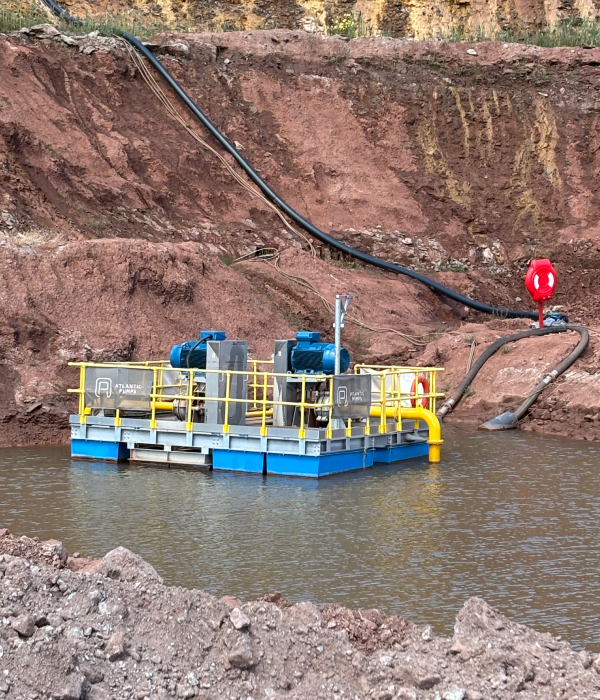
- You are transferring high volumes of low-viscosity liquid (e.g., site water, quarry dewatering, lagoon drainage).
- You need high flow rates at low-to-medium discharge pressures.
- You are pumping fine abrasive slurries through short-to-medium pipeline distances.
- Capital cost per of pumped volume is a key driver.
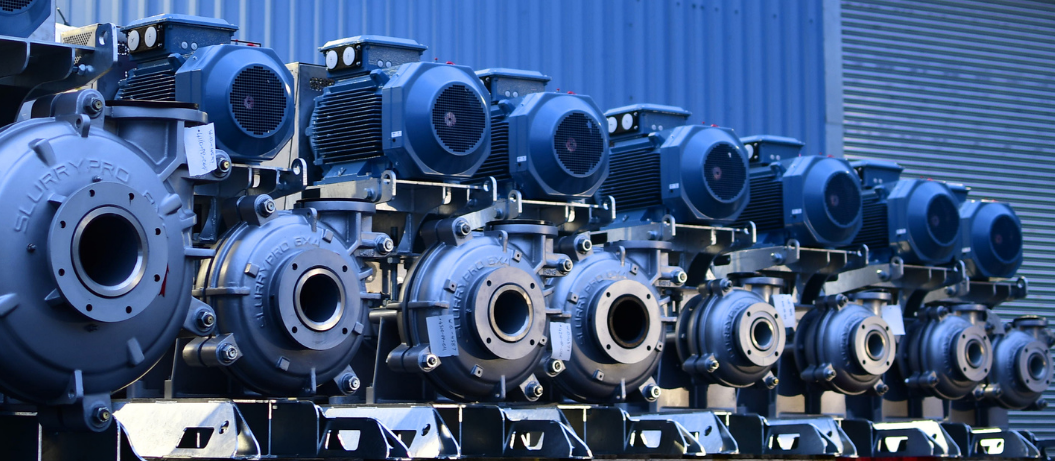
- Typical Atlantic Pumps matches: Audex submersible/dewatering pumps, SlurryPro heavy-duty centrifugal slurry ranges.
Choose a positive displacement pump if:
- Your fluid is viscous, pasty, or shear-sensitive (e.g., digestate, sludge, lime slurry, flocculants).
- You require a constant, predictable, or controllable flow rate against varying discharge head pressures.
- The application requires high suction lifts or continuous self-priming capability.
- You want to eliminate mechanical seal failures on corrosive or abrasive chemicals.
- Typical Atlantic Pumps matches: LSM heavy-duty peristaltic hose pumps, Toro progressive cavity (PC) pumps.
Get the specification right the first time
Pump reliability is not just about choosing a well-built piece of equipment; it is about matching it to the operational boundaries of hydraulic system and the fluid’s characteristics. Squeezing thick sludge through a high-speed centrifugal pump will burn out seals and choke motors, just as using a precision positive displacement pump for bulk rain runoff is an expensive, slow misapplication. Heat, chemical characteristics, solids size and type, and other factors may need factoring in.
If you’re assessing an upcoming installation, dealing with chronic seal wear, or wondering if your current pumps are running far outside their comfort zone, talk to our engineering team.
Call Atlantic Pumps on 0800 118 2500 or drop an enquiry to our technical team today to ensure you have the right pump for your process and duty.
- Technical
- Water & Wastewater
- Pre-cast & Readymix Concrete
- Mining and Quarrying
- Heavy industry and Manufacturing
- Food Processing
- Anaerobic Digestion and Biogas
- Recycling
- Oil and Gas