October 20 2026
 3 min read
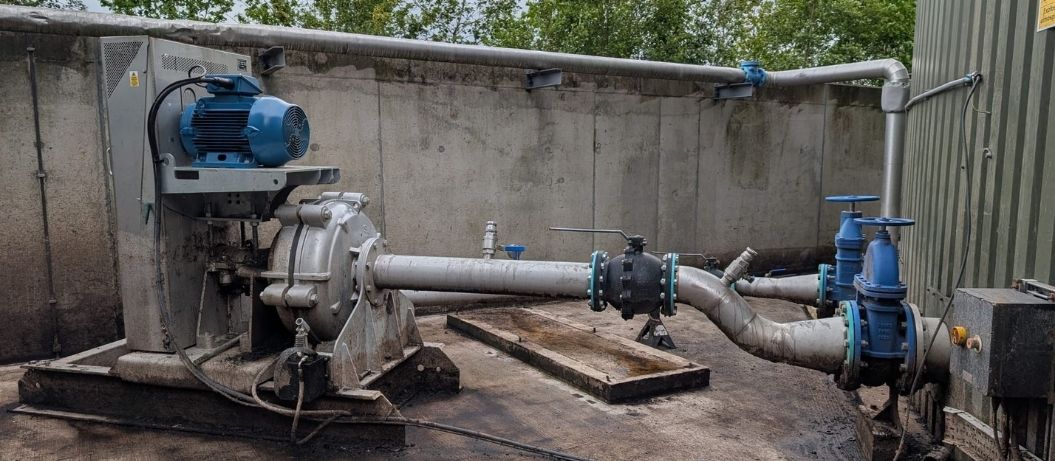
You can specify a world-class pump, but if the suction pipework starves it of head, cavitation will tear it apart from the inside out.
We frequently visit quarrying, recycling, and heavy process sites where operators assume a noisy pump is defective. In reality, the pump is simply “gasping for breath” because of avoidable pipework errors that destroy NPSHa (Net Positive Suction Head available).
Availability must always meet or exceed requirements (demand)
When NPSHa drops below the pump’s required head (NPSHr), the fluid vaporises into bubbles that violently collapse against the impeller and other internal surfaces—causing pitting, severe vibration, and mechanical seal destruction.
Look out for the five common suction piping mistakes often seen on heavy process sites:
1. Suction Lift or Length Too Great
The Error: Siting the pump too high above the source, not factoring in the minimum level that the source reaches, or excessive horizontal difference.
Why It Destroys NPSHa: For every 1m of vertical distance, the pressure loss is ~0.1 bar (1.45psi). Horizontal distance increases pipe surface friction.
The Fix: Site the pump nearer the source and where vertical suction lift is minimised. Check the head available when the source level is at its lowest and consider fitting a level-switch to stop the pump drawing the reservoir too low.
2. Concentric Reducers at the Pump Inlet
The Error: Using a concentric (cone-shaped) reducer on a horizontal suction nozzle.
Why It Destroys NPSHa: Concentric reducers allow an air/vapour pocket to accumulate at the high point of the taper. As fluid surges past, it drags slugs of air into the pump eye, inducing cavitation and fluctuating suction pressure.
The Fix: Avoid restricting the suction side if possible. If needed, install the eccentric reducer with the flat side up (“flat on top”) to give air bubbles an unobstructed path through to the pump without forming an air trap.
3. Short-Radius Elbows Bolted Directly to the Inlet
The Error: Placing an elbow immediately adjacent to the pump suction flange to save floor footprint.
Why It Destroys NPSHa: Fluid entering a bend develops an uneven velocity profile and turbulent vortices. When these uneven, high-velocity currents hit the impeller eye, local static pressure plummets well below vapour pressure.
The Fix: Maintain a straight, undisturbed pipe run of 5 to 10 pipe diameters between the last fitting and the pump suction nozzle. If space is tight, fit flow-straightening vanes or long-radius bends.
4. Undersized Pipework (Choked Velocity)
The Error: Not calculating line friction into pipe selection, especially on longer lines. While short lengths typically use the same diameter to the pump inlet, longer lengths can benefit from a wider pipe with a reducer. A narrower suction pipe will dramatically increase friction loss due to accelerated velocity.
Why It Destroys NPSHa: Pump intakes are designed to optimise velocity ahead of the impeller, but running a long suction line at that size causes excessive flow velocities. Frictional head loss increases with the square of flow velocity. Every metre of head lost to pipe friction comes directly off your NPSHa.
The Fix: Don’t be limited by the pump intake diameter; calculate pipe size to minimise friction loss, and use a wider pipe where beneficial. Upsizing pipes reduces net friction over the entire length, which can make the minor loss from a reducer acceptable. For example, using a 100mm pipe in place of 75mm reduces friction loss by 75% over 12m.
A general target for velocities is to aim between 1.0 and 1.8 m/s for clean liquids and 2 to 2.5 m/s for slurries, to prevent settling.
5. High Points in Horizontal Runs (Vapour Pockets)
The Error: Routing suction pipework that rises and dips over obstacles or structural beams before descending to the pump.
Why It Destroys NPSHa: Any high point becomes a stagnant vapour trap where entrained gas accumulates. This blockage chokes the pipeline cross-section, creates drag, and starves the pump intake.
The Fix: Suction lines should slope continuously upwards towards the pump from the sump with no dips. Where the pump is sited below a tank, there should never be a high point in the line that is above the supply level.
The Site Manager’s Reminder:
- Friction is the enemy of NPSHa.
- Keep suction runs as short, straight, and generous in diameter as site geometry permits.
- Long runs warrant a pipe friction loss calculation
- Smooth plastic for low friction, layflat and ribbed has high friction.
- Eliminate air pocket formation (High points). Correctly fitted eccentric reducers on horizontal lines, concentric for vertical.
- Position pumps as low as possible in relation to the source.
- Ensure NPSHa exceeds NPSHr at every duty point.
Struggling with mysterious cavitation, premature wear, or challenging duties across your plant?
Call our technical team on 0800 118 2500 or speak to your Atlantic Pumps engineer to audit your fluid handling setup.
We also take a sustainable approach to our work and are committed to reducing energy waste from pumps. Our expert knowledge allows us to reduce energy usage by 20% on the average site!
Call us today on 0800 118 2500 for more information.