October 2 2025
 5 min read
Water pumps are essential assets for water treatment companies, factories and processing plants, but like any equipment, they can fail. If this happens unexpectedly, it can cause downtime, increased costs, and significant disruption for your operation and your customers. Being aware of the ways that water pumps fail and recognising the early warning signs can save your facilities management and engineers time and money, and provide a smarter way of planning your maintenance resources. In this article, we outline the main causes of water pump failures, with the key indicators to look for to avoid breakdowns.
3 Things to Check When Your Pump Breaks Down:
- Mechanical issues: jammed, worn or broken impeller, blocked pipework, closed valves. Bearings, drive couplings or belts broken. Leaks (fluid leaking out or air being sucked in)
- Motor/electrical: check trip switches and the control panel. High current draw or heat from wiring or motor (if running) points to motor overload (restriction or worn impeller)
- Fluid factors: change in viscosity or density, lack of supply pressure.
Do you need to hire a pump to tide you over? See our hire fleet or call 0800 118 2500 for immediate service.
What do we mean by ‘water pump failure’?
A water pump failure occurs when a pump ceases to reach its minimum performance, often abruptly, or fails to start. Early detection of failing wear parts is crucial, as seemingly small problems, such as worn seals or impellers, can quickly escalate into a full shutdown if left unchecked. Frequent monitoring and understanding how your pump normally operates can help you identify the first signs of a failing water pump.
So, what are the most common causes of water pump failure?
Water pump failures can stem from several causes, often grouped into three main categories: mechanical, electrical, and fluid-related problems. Let’s look at each of these risk categories in more detail.

Cause one: mechanical issues
- Worn components: Bearings, seals, and impellers are subject to gradual wear with regular use. Worn bearings can produce excess vibration and noise, while seal damage commonly leads to water leaks, allowing fluid to escape or contaminants to enter. Impeller wear reduces the pump’s ability to move water efficiently, lowering pressure and output.
- Lubrication: Like other rotating machinery, many industrial-sized pumps require regular lubrication or oil top-ups.
- Misalignment: When pumps and motors aren’t properly aligned during installation or after maintenance, the resulting stress can cause premature failure of rotating elements, leading to unbalanced forces and accelerated bearing and coupling wear.
- Vibration and imbalance: Imbalanced rotating parts or loosened supports generate vibration, which can crack pump housings, loosen bolts, and further degrade internal components. Persistent vibration is a leading cause of untimely mechanical breakdowns.
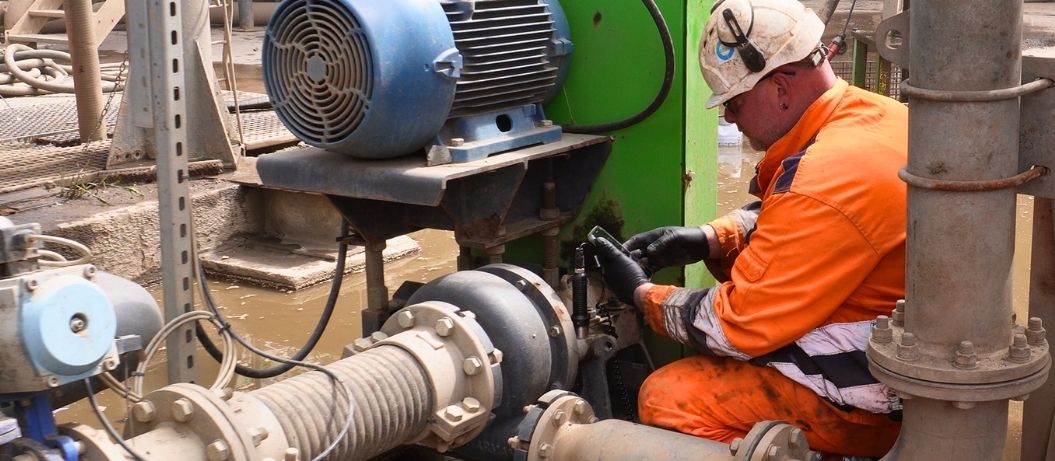
A hands-off infrared thermometer and vibration probe can help pinpoint problems on a partially running pump. Worn bearings generate heat and vibration. Heat coming from the main pump chamber could be insufficient supply pressure/dry-running or recirculating fluid (discharge blockage or too much head height).
If using a self-priming or suction-lift pump, check the inlet pipework for leaking valves or gaskets and replace if necessary.
Cause two: electrical issues
- Motor problems: A failing motor, whether due to winding insulation breakdown, worn brushes, or thermal overload, will prevent the pump from operating reliably. Overheating motors may be the result of excessive load or blocked cooling passages, and can quickly cause a full stop.
- Power supply faults: voltage irregularities, such as frequent surges, brownouts, or phase loss, strain electrical components. These issues can cause motor overheating, blown fuses, or complete pump shutdown due to tripped protection devices.
- Control system failures: if relays, sensors, or motor starters malfunction, the pump may turn on or off unexpectedly or fail to start altogether. Faulty control panels can prevent safety interlocks from activating, potentially putting the pump at risk of further damage.
Cause three: fluid-related issues
- Cavitation: Cavitation occurs when the pressure in the pump drops below the liquid’s vapour pressure, creating vapour bubbles that implode against metal surfaces. This process erodes impellers and casing surfaces, leading to pitting, efficiency loss, and—if unchecked—catastrophic damage.
- Flow: Centrifugal pumps should be run near their design point – the Best Efficiency Point (BEP), as running too far “off the curve” can shorten pump life. While positive-displacement pumps generally benefit from lowered flow rates, centrifugals can suffer more at low flow than high.
- Blockages: debris, sludge, or scale build-up within the pump or suction lines can partially or fully obstruct flow. Blockages increase pressure inside the pump and can repeatedly trip protection devices, overheat motors, and cause rapid internal wear.
- Air entrapment: air leaking into suction lines, often through faulty gaskets or poor connections, disrupts the pump’s pressure balance. This results in erratic flow, pressure drops, and, over time, can cause dry running, overheating, and internal scoring.
Did you know that around 50% of breakdown calls we receive are due to pipework issues? Essential as they are, always remember that a pump is only one component of the system. Pipework restrictions can often be quickly rectified, especially if they are the quick-connect type. Before loosening pipe joints, always check the line is de-pressurised safely.
If you’re using rubber lined pipework, check that sand is not getting under the rubber lining and causing blockages. If this is the case, the pipework will need to be relined or replaced. Our Gromatex hosing is specifically made for high-wear and abrasive fluid transfer.
If using a self-priming pump, check the inlet pipework for leaking valves or gaskets and replace if necessary.
What are the early signs of a water pump failing?
Recognising the early warning signs can help you to avoid major breakdowns. Red flags include:
- Unusual noises: grinding or squealing sounds can signal worn parts and an impending risk of failure
- Water leaks: visible leaks around seals or housing can point to seal failure
- Overheating: If the pump casing or motor is running hot, it can indicate excess friction or electrical problems
- Pressure fluctuations: inconsistent output can indicate internal wear or blockages
- Reduced flow rate: An unexpected drop in flow rate usually indicates a blockage, but can also be caused by impeller damage or air trapped in the system.
Maintenance Tips: To ensure your water pump doesn’t fail when you need it most, consider doing the following:
- Conduct regular inspections (check for wear, tear, leaks, unusual sounds, etc.)
- Ensure your pump is correctly installed, aligned and that the mounting is secure to avoid causing unnecessary stress
- Use quality parts if you need to replace components of your pump
- Take care to match your duty to a suitable, high-quality pump to ensure you are paying for a pump with an extended life span and low operating cost.
- Run the pump speed at a suitable rate for the fluid properties and design parameters. Reducing the speed can extend wear life in some circumstances, but can cause other issues such as cavitation, reduced head or flow, and pipeline blockages.
Proactive maintenance and early intervention are the key to extending the performance and longevity of your pump and to minimising disruptions to your operation. For guidance on pump maintenance tailored to your site, please contact the team at Atlantic Pumps today.
Read how Viridor slashed ongoing maintenance costs and spare part replacement needs in this case study.
We also take a sustainable approach to our work and are committed to reducing energy waste from pumps. Our expert knowledge allows us to reduce energy usage by 20% on the average site!
Call us today on 0800 118 2500 for more information.