September 8 2026
 4 min read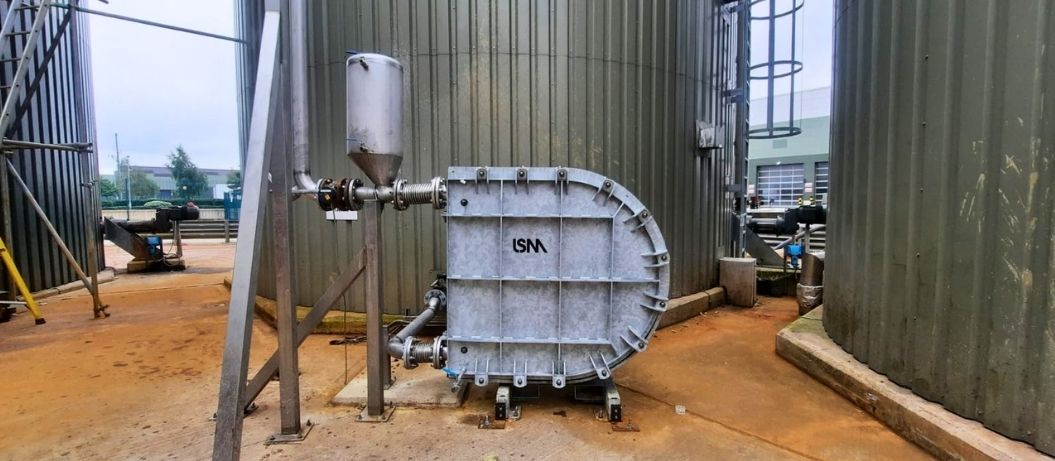
If you have ever had to climb down into a wet well, balance on a pontoon, or spend half an hour fiddling with priming funnels just to get a centrifugal pump running, you will know the value of a self-priming unit.
In quarrying, recycling, and heavy industrial processing, suction-lift applications are everywhere. Yet the term “self-priming” often leads to misunderstandings on site. Operators sometimes expect a pump to pull liquid from a sump when the chamber is completely dry, while others think they can pump entrained air indefinitely or fix problematic suction lines.
Understanding the internal mechanics of a self-priming pump—and its realistic physical limits—can save your plant hours of downtime and thousands in premature maintenance costs.
The Fundamental Challenge: Centrifugal Pumps Hate Air
Normal centrifugal pumps cannot move air. Liquid is relatively dense and nearly incompressible; when an impeller spins, the energy imparted creates a low-pressure zone at the impeller eye, drawing more liquid up the suction line.
Air, by comparison, has virtually no mass compared to water. A standard impeller spinning in air generates barely any pressure differential, certainly nowhere near enough to pull liquid up a pipe against atmospheric pressure. If air gets into a standard centrifugal casing, the pump becomes air-bound, ceases flow, and quickly overheats.
A self-priming pump overcomes this by mechanically generating its own liquid seal to clear the air.
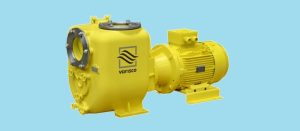
How They Actually Work: The Separation Chamber
The single most critical rule of self-priming centrifugal pumps is this: they are only self-priming after the initial manual prime.
Before first commissioning, the pump casing must be filled with liquid through the priming port. A built-in reservoir or chamber holds this fluid, even when the pump stops or when the suction pipe drains down.
The self-priming cycle operates across three distinct phases:
- Agitation and Entrainment: When the drive starts, the impeller spins within the liquid trapped in the lower casing. It acts like a high-speed blender, mixing this liquid with the air present in the suction pipework. This creates a frothy, air-liquid mixture that the impeller can begin to circulate.
- Separation: The impeller drives this mixture into a large separation chamber (often an enlarged volute or upper casing). Because the liquid is far denser than the air, gravity causes the liquid to drop out of suspension, while the air bubbles escape out through the open discharge line.
- Recirculation: The de-aerated, heavier liquid drains back down via an internal recirculation port to the impeller eye. There, it mixes with more air drawn from the suction line.
This continuous cycle gradually vacuums all the air out of the suction pipework. When the intake line is all water, full prime is achieved, recirculation stops, and the unit functions like an ordinary centrifugal pump. When the pumping duty is stopped, the reservoir stops all the intake water returning to the pit, retaining enough to restart the priming process again.
Where Self-Priming Pumps Shine
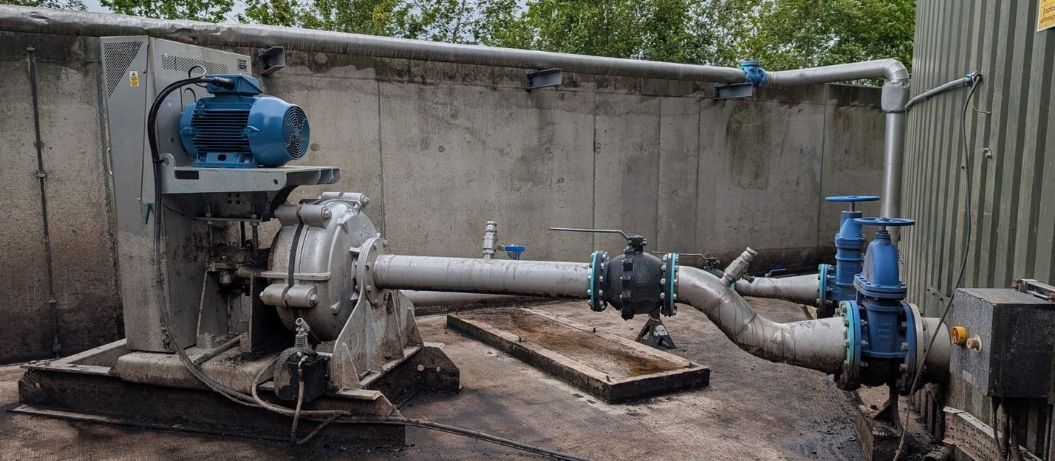
- Above-Ground Ease of Maintenance: Unlike submersibles (such as our Audex dewatering range), a self-priming pump sits cleanly on dry ground. Your maintenance crew can inspect seals, adjust wear plates, or clear clogs without retrieving heavy gear from the bottom of a sump or effluent lagoon.
- Snore Handling: In sump dewatering, fluid inflows fluctuate. Standard pumps lock up when they suck air. Self-priming pumps handle “snoring” conditions comfortably: if the fluid level drops and air enters the line, the pump naturally re-primes as soon as the level recovers.
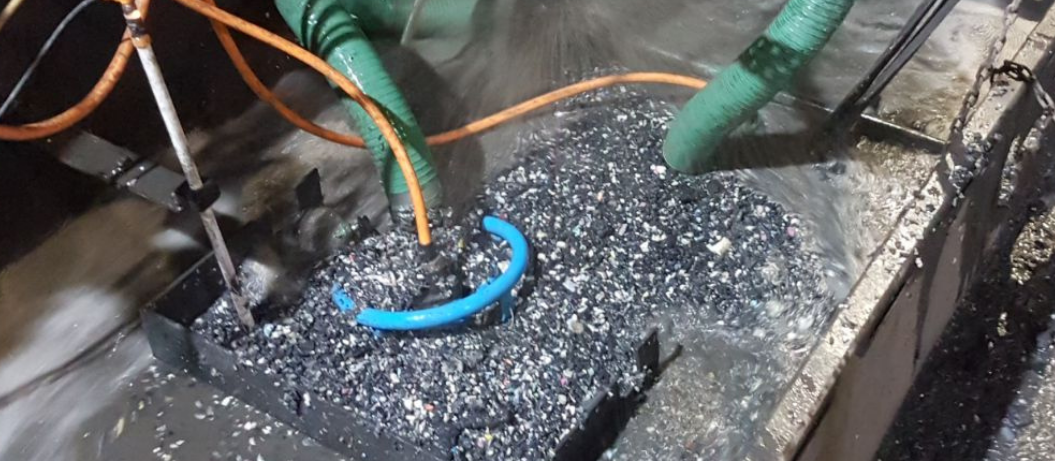
- Solids and Sludge Processing: Many industrial self-priming models feature semi-open impellers and generous internal clearances, allowing them to pass abrasive solids, gravel, and organic matter without blocking.
The Limitations: Real-World Physics Still Apply
- Atmospheric Limits on Lift: Physics still apply. At sea level, atmospheric pressure (1 bar) theoretically supports a water column of roughly 10.3 metres. In practical industrial conditions, factoring in friction losses, fluid temperature, and vaporisation, practical suction lift maxes out at 6 to 7.5 metres. Operating close to this limit significantly risks cavitation.
- Lower Hydraulic Efficiency: The enlarged casing, internal separation chamber, and recirculation passages create hydraulic drag. A self-priming pump is inherently less efficient at duty point than an equivalent standard end-suction pump.
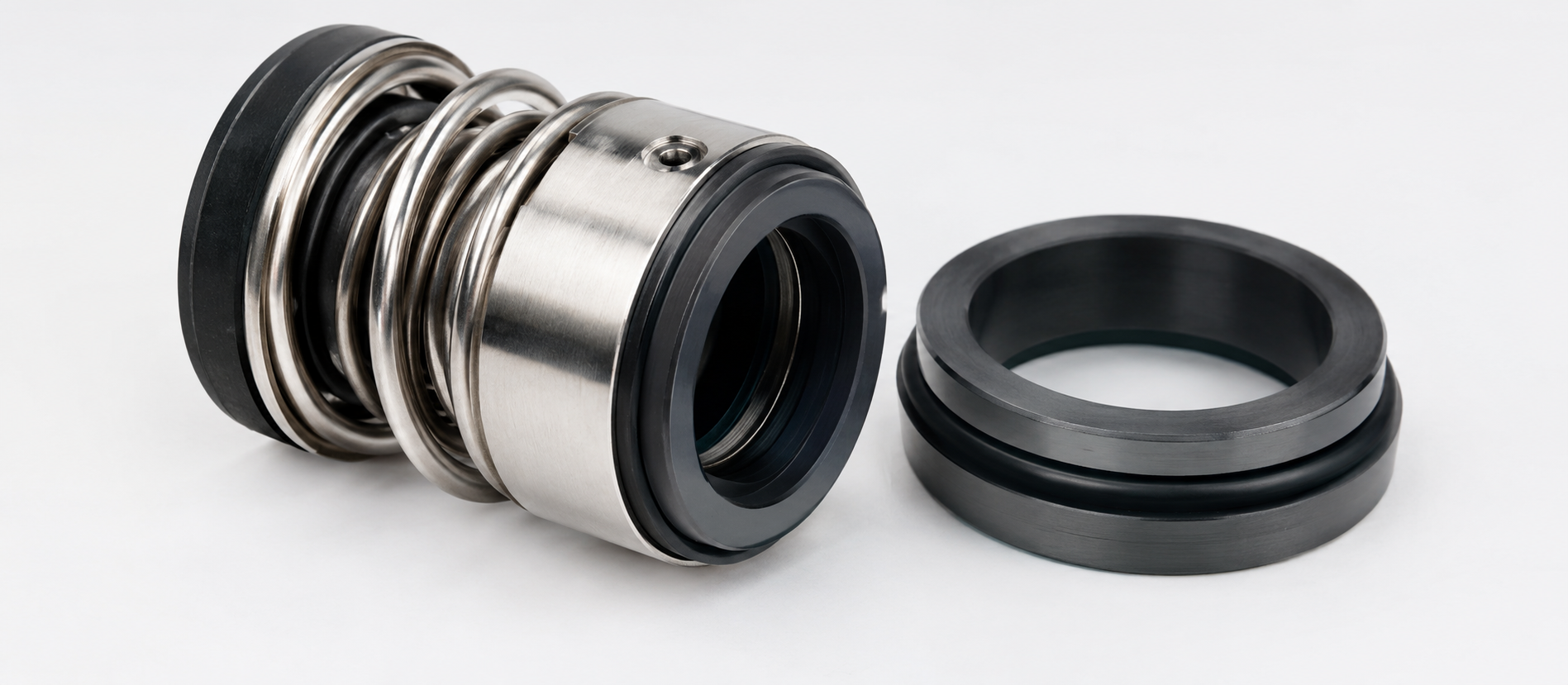
- Priming Cycle Heat Build-Up: While purging air, the fluid within the casing circulates without being replaced by cooler supply fluid. If you have an exceptionally long suction pipe or a leaky flange, the pump will spin churn-water for too long, boiling the internal liquid and potentially damaging the mechanical seal.
Workarounds: Making Standard Pumps Work on Suction Lift
Seff-priming on a centrifugal pump is a definite time and trouble saver on many applications. However, some duties might prioritise energy efficiency over long shifts, your budget might not extend to switching out your existing centrifugal pumps, or the size of pump you need isn’t available as a self-primer. If so, there are several practical modifications can enable standard pumps to handle suction-lift duties:
- Foot Valves: A spring-loaded non-return valve installed at the bottom of the suction hose keeps the pipe filled with fluid after shutdown. The caveat: in dirty water or slurry duties, grit readily lodges in the seat, causing it to weep, lose prime, and run dry upon restart.
- Priming Vessels (Vacuum Pots): Placing a sealed vessel on the suction side traps fluid, acting as an external priming reservoir. When the pump starts, it evacuates fluid from the vessel, drawing suction-line liquid behind it. The caveat: it needs to be completely sealed, and hold x2 the amount of intake pipe volume.
- External Vacuum-Assisted Systems: Compressor or diaphragm-driven vacuum priming systems run alongside standard pump wet-ends. The vacuum unit automatically strips air from the suction pipework while an internal float mechanism isolates the vacuum pump once liquid arrives.
Alternative self-priming pumps
Some positive displacement pumps are inherently better at suctioning, while submerged centrifugal pumps skip the intake pipe completely.
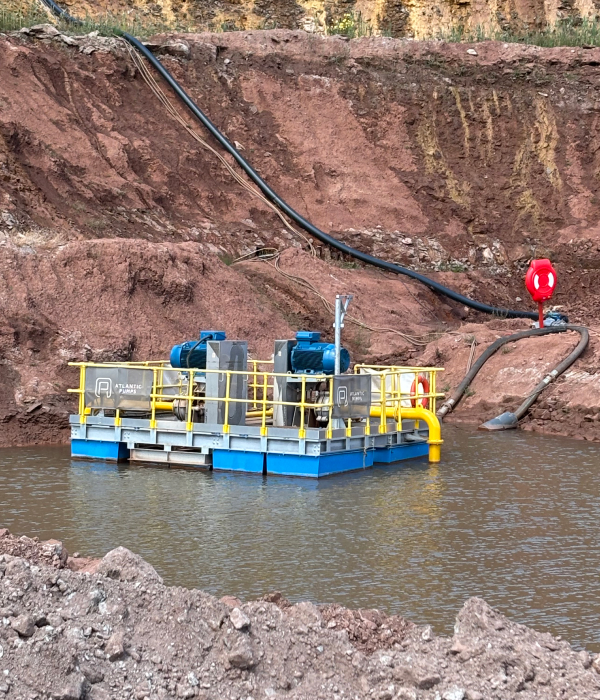
- Switch to Submersible: If your suction lift consistently exceeds 6.5 metres, do not force an above-ground unit beyond its limits. Transitioning to a dedicated electric submersible completely removes suction lift and NPSH issues by putting the impeller directly into the fluid.
- Gear up: Some gear pumps have good suction-lift capabilities, although are not ideal for suspended, abrasive solids due to their close tolerances.
- Peristaltic Hose Pumps: LSM Peristaltic pumps overcome many pumping issues, naturally handling suction lifts of up to 4m, or 8m with the vacuum assist module. They offer good solids passage, viscosity capacity, and wear resistance.
Have a question? Drop us a line…
Reliable site pumping comes down to engineering out the points of failure before commissioning. If you are struggling with chronic seal failures, priming problems, or need help calculating Net Positive Suction Head Available (NPSHa) for an awkward lift, give our technical team a call on 0800 118 2500 or complete our contact form.
We also take a sustainable approach to our work and are committed to reducing energy waste from pumps. Our expert knowledge allows us to reduce energy usage by 20% on the average site!
Call us today on 0800 118 2500 for more information.