May 13 2026
 3 min read
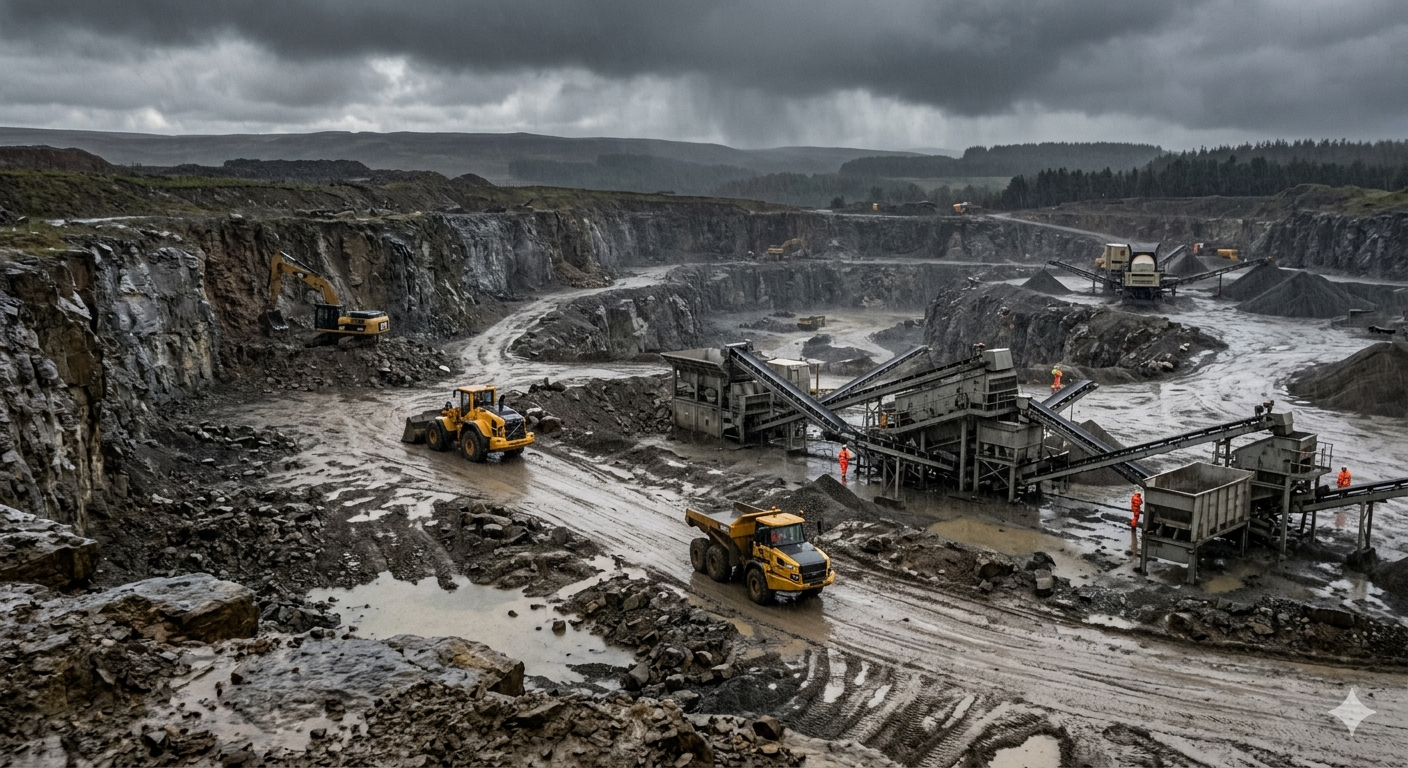
Quarry operators are under increasing pressure to improve sustainability performance while maintaining output, as stricter discharge limits, rising energy costs, and environmental scrutiny reshape how sites are expected to operate. Sustainable quarrying companies have achieved average dividend growth of around 5% over five years, showing a compelling financial incentive to adopt sustainable quarrying practices. However, how can quarrying operations become more sustainable without compromising productivity and cost effectiveness? The answer increasingly lies in how energy and water are managed across your entire site.
In this article, we explore how energy consumption and water management have become two of the most pressing sustainability challenges facing the sector today.
Why quarry operations must adapt their water sustainability practices
The reason many operations are being forced to adapt their water sustainability practices is that quarry water systems built around continuous abstraction and simple discharge, which struggle to cope with higher throughputs and tighter discharge limits.
As regulatory expectations tighten and permitted discharge conditions become more demanding, these traditional approaches are becoming increasingly difficult to sustain without impacting compliance and cost.
For example, using excess water to keep material moving lowers the slurry density, so pumps move more liquid per tonne of solid. This increases energy use and accelerates wear through higher velocities and unstable solids loading. Inefficient solids separation also allows fines to pass into settlement lagoons, where they accumulate, reducing retention time and returning turbid water to the process. In a vicious cycle, this degrades screening and hydrocyclone performance, leading to off-spec material and further recirculation.
Rethinking sustainable quarrying
These challenges, which blur the line between sustainability and operational issues, have prompted a rethink of sustainable quarrying in many operations. One of the outcomes is that some quarries are shifting from passive water handling to actively controlled process systems, where flow rates, solids concentration, and pump performance are continuously managed rather than fixed. This shift is not just about reducing environmental impact, but about improving control, predictability, and long-term system performance. So, instead of relying on oversized pumps and excess water to maintain throughput, operators are tightening process control; using variable speed drives and instrumentation to match flow to real demand, which reduces energy consumption and carbon footprint at the same time.
Suspended solids and sand are also being seperated out at an earlier stage of the processing stages using cyclones and screens to remove abrasive silt before long-distance transfer, reducing the volume handled downstream. Lagoons are no longer treated as primary separation assets but as contingency storage, with mechanical recovery systems used to prevent fines accumulation. By removing solids at the source, you reduce the need to pump “thick” water long distances to lagoons, which is one of the most energy-intensive tasks on-site.
These changes reduce rehandling, stabilise plant performance, and limit the cycle of dilution and separation inefficiency that traditional systems create. In practice, achieving this level of control depends on reliable, well-specified pumping and fluid handling systems that can operate efficiently under variable conditions.
Ultimately, water recycling through a closed-loop system helps conserve fresh water and safely treat discharge, reducing environmental impact in quarry operations. Without closed-loop control, operators have a very limited ability to stabilise flows and solids concentration, resulting in inconsistent processing conditions, higher operating costs, and an increased risk of discharge non-compliance.
Quarrying water sustainability: a strategic approach to resource management
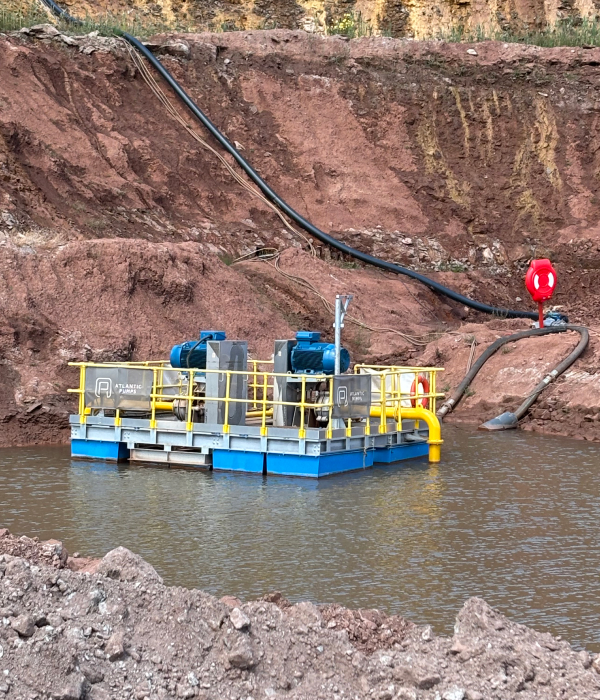
Optimised pumping systems can deliver fuel and energy savings of up to 20%, demonstrating a major efficiency opportunity for quarry operations. Transitioning from diesel to electric equipment is another important move, with clean electricity growth driving both cost and carbon reduction benefits. However, unlocking these gains consistently requires a more deliberate and system-wide approach to how water and energy are managed.
Sustainability isn’t just about global carbon; it’s a direct reflection of your Total Cost of Ownership (TCO). Every time you move water unnecessarily, or let a pump run inefficiently, you’re releasing carbon and cash. Managing your water sustainably means addressing three core pillars:
1. Reducing the “Abrasive Tax”
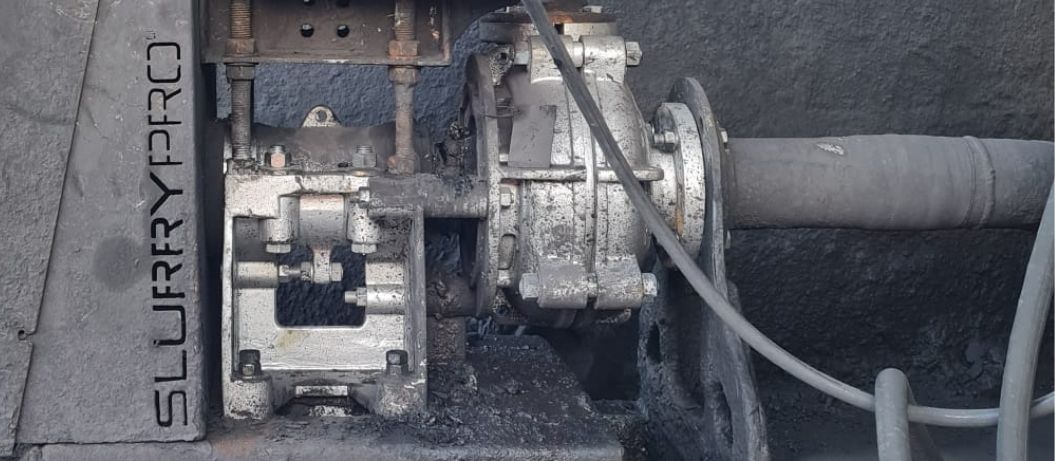
As a pump impeller is worn down by silt and sand, you’re losing the energy efficiency of that pump. As internal clearances increase due to wear, the pump has to work harder and longer to move the same amount of fluid.
- The Practical Fix: Using high-chrome or rubber-lined pumps specifically designed for slurry ensures the pump maintains its “sweet spot” of efficiency for longer, reducing both spare parts waste and electricity spikes.
2. The Closed-Loop Goal: Water Recovery
True sustainability in a quarry means treating water as a tool, not a waste product. Effective silt management—using equipment like filter presses or thickeners—allows you to reclaim up to 90% of your process water.
Similarly, reducing freshwater input by reusing process water lowers abstraction requirements, but introduces variability in water quality that can impact downstream processes and increase maintenance demands. Operators therefore have to balance throughput, equipment life, and product quality by applying targeted treatment, allowing systems to run more consistently and efficiently even under variable conditions. By taking a more integrated approach to energy and water management, supported by robust equipment and well-designed pumping systems, quarry operators can reduce environmental impact while improving reliability and long-term operational efficiency.
Download our free Sustainable Quarrying Guide
If you would like to find out more about sustainable quarrying practices and how water handling systems could be improved on your site, please download a free copy of our Ultimate Guide to Quarry Sustainability today by clicking here.
Alternatively, if you have a topographical map of your site and some basic flow/fluid data, Atlantic Pumps can provide you with a free pump efficiency appraisal. Get in contact with us today.
We also take a sustainable approach to our work and are committed to reducing energy waste from pumps. Our expert knowledge allows us to reduce energy usage by 20% on the average site!
Call us today on 0800 118 2500 for more information.