August 11 2026
 3 min read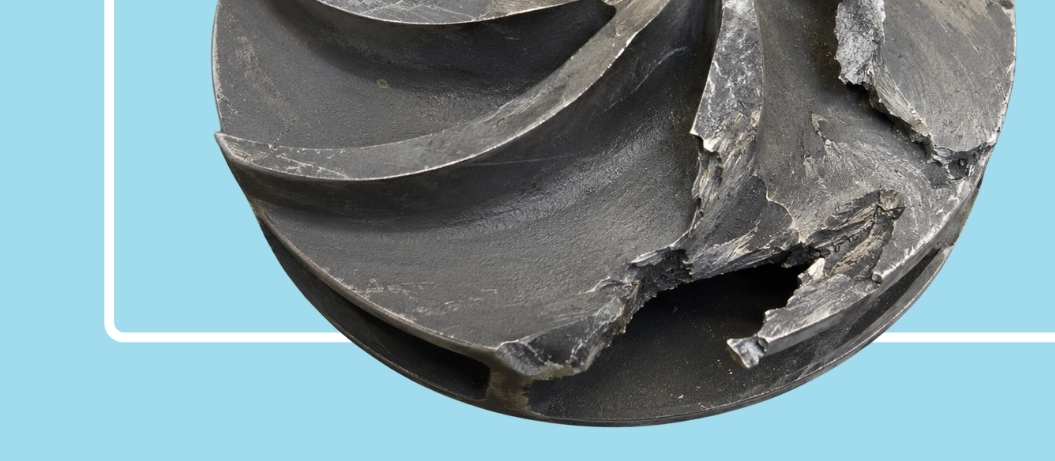
If you’ve worked with abrasive slurries, you know wear is an inevitable part of life. But not all wear is created equal, and at Atlantic Pumps we’re constantly challenging the meaning of “acceptable” wear-rate. Knowing how your slurry pump is being attacked is the key to selecting the best pump design and materials, and influencing system characteristics to dramatically extend your pump’s service life.
Here’s a breakdown of the three primary modes of wear in slurry applications:
Erosion (Abrasive Wear)
Erosion occurs when solid particles suspended in the fluid slide or impinge against the pump’s internal surfaces (impeller, casing, and wear plates) at high velocity.
- The Mechanism: Particles act like tiny chisels, gouging and scoring the wet-end components, or sandblasting media that polishes critical surfaces down.
- Key Drivers: Particle hardness, size, shape (angular vs rounded), and fluid velocity.
- Best Defence: High-chrome alloys (like 27% Chrome), or heavy-duty elastomeric liners, depending on the particle size and sharpness. Hardened tool steel can provide protection against fine particle sliding abrasion, however it can be too brittle for some slurry duties, and has weak corrosion resistance.
Corrosion (Chemical Attack)
Corrosion is the electrochemical degradation of the metal matrix caused by acidic, alkaline, or reactive chemical environments.
- The Mechanism: The fluid attacks the metal directly, stripping away its protective oxide layer.
- The Danger: Corrosion and erosion work together in a destructive cycle – this erosion-corrosion strips a layer of protective coating off the metal, exposing fresh material to further corrosive attack, which accelerates wear exponentially.
- Best Defence: Austenitic stainless steels such as 316 grade, duplex alloys, or specialised chemical-resistant rubber/polyurethane liners.
Impact (Mechanical Degradation)
Impact damage occurs when large, heavy solids strike the impeller or volute wall with high kinetic energy.
- The Mechanism: Instead of fine gouging (erosion), large particles deliver localised shocks that cause brittle materials to pit, micro-crack, or chip away.
- Key Drivers: Large particle sizes, such as rocks or metallic solids, and high impeller tip speeds.
- Best Defence: Tougher materials with high impact resistance, such as lower-hardness ductile alloys or thick elastomeric liners that absorb kinetic energy without cracking.
The Triple Threat: Metal Foundry Applications
Is it possible to face all three at once? Absolutely.
Take a look at metal foundry pumps handling spent quench water, cooling lubricants, and washdown sumps:
- Impact: Fine slag and large-scale particles deliver severe mechanical shock loads.
- Erosion: High concentrations of grit and metal fines scour the casing.
- Corrosion: Thermal shocks, alkaline quench salts, coolants and chemical additives create a harsh corrosive environment.
In “triple threat” scenarios like these, standard high-chrome or basic rubber pumps fail prematurely. You need hybrid material selection which combines tough, corrosion-resistant alloys or heavy-duty rubber compositions, to withstand the combined assault.
Key Takeaway for Process Managers
Diagnosing the primary wear mechanism on a failed component is the fastest route to lower your total cost of ownership (TCO). Don’t just replace like-for-like—look at the failure pattern. Is it gouged (erosion), pitted (corrosion), or cracked (impact)?
Struggling with short pump wear life or frequent wet-end replacements?
Call our technical team at Atlantic Pumps on 0800 118 2500 or send us a message via our Contact Us page.
We also take a sustainable approach to our work and are committed to reducing energy waste from pumps. Our expert knowledge allows us to reduce energy usage by 20% on the average site!
Call us today on 0800 118 2500 for more information.