December 5 2025
 6 min read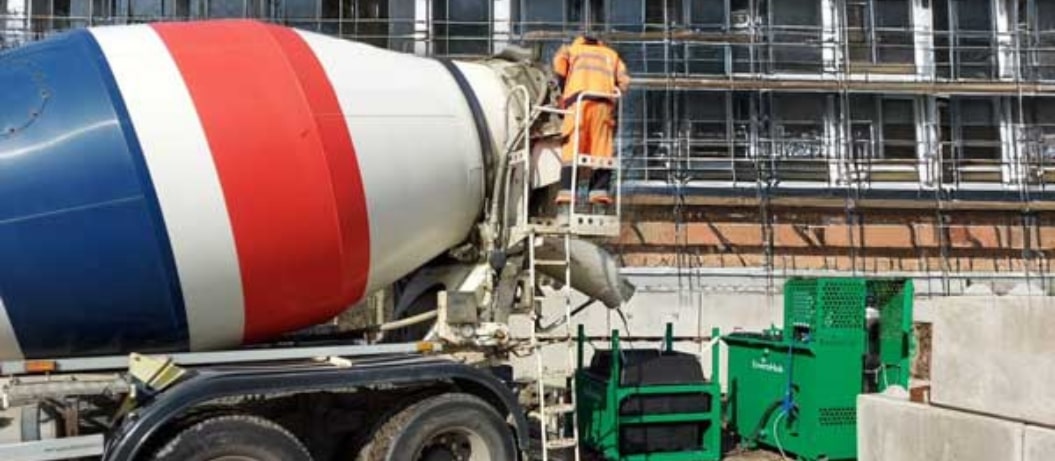
Inner-city soil health hasn’t received much attention in the past, but this is changing fast. The UN’s theme for World Soil Day 2025 is “Healthy Soils for Healthy Cities” and with urbanisation accelerating, it’s vital that we improve relations between the built environment and soil resources.
Urbanisation continues to accelerate, doubling globally since 1970 and with around 85% of the UK population now classed as city-dwellers.
For a city to be sustainable, we need to – quite literally – work from the ground up. Protecting and regenerating soils beneath our cities is more critical than ever, so let’s get into how we can do this at a practical level:
What are the Key Actions for Stakeholders?
Urban Planners
– Integrate soil health into early planning stages (site assessments, soil reuse plans)
– Prioritise green infrastructure: rain gardens, bioswales, street trees, green corridors
– Specify permeable pavements and reduced soil sealing
– Plan developments around natural drainage and soil retention zones
Developers
– Mandate soil-protection requirements in contractor briefs
– Invest in water harvesting and reuse systems for landscaping
– Reuse reclaimed topsoil within the project footprint
– Favour designs that integrate green space and reduce soil sealing
– Commission soil testing and environmental risk assessments early
Civil Engineers
– Design drainage and water-handling systems that maximise infiltration (Sustainable Urban Drainage – SUDS)
– Select materials (e.g., permeable surfaces, recycled aggregates) that protect soil function
– Specify washout treatment systems and sediment control methods
– Minimise compaction during construction through controlled vehicle access and ground protection mats
– Specify recycled aggregates
Local Authorities
– Set soil protection standards in planning policy
– Require management plans for concrete washout, excavation water, and erosion control
– Incentivise reuse of cleaned topsoil and recycled aggregates
– Maximise food and green waste recycling, and use of the by-products from this (PAS110 compliant compost and anaerobic digestate)
– Monitor compliance and emissions from active construction sites and industry
– Prevent fly-tipping, illegal discharges, and inappropriate activity on public land. Designate areas of protected green space
Construction Firms
– Implement contained, compliant concrete washout systems
– Treat excavation and groundwater before discharge (especially sediment, pH, and oil)
– Stockpile topsoil safely and prevent contamination
– Reduce soil compaction through designated haul routes, low-impact machinery, and lightweight blocks
– Segregate waste, offcuts and demolition material for effective recycling
– Use recycled/reclaimed materials where their performance is sufficient
Businesses, Facilities Managers, Tenants
– Maintain green areas with soil-friendly practices (mulching, low compaction, reduced chemical use)
– Install rainwater harvesting for irrigation
– Use permeable surfaces for car parks, courtyards, and delivery areas
– Support biodiversity by planting native vegetation
– Participate in urban greening and soil-improvement initiatives
How does soil health impact city-living?
Soil is largely out of sight in built-up areas, but it plays a vital role: absorbing rainwater, recharging groundwater, regulating temperature, storing carbon, supporting urban greenery, and even filtering pollutants. When soil is sealed beneath impervious surfaces, many essential functions are lost, leading to costly remedial actions and the need for mitigation against the detrimental effects.
Preventing soil pollution: treat concrete washout and excavation water
Construction sites often need to wash equipment, mixers, chutes or wheelbarrows after concrete or cement work. The resulting “washout water” is highly alkaline, and may contain cement fines, heavy metals or other leachates. If discharged directly onto soil or into storm drains, it can raise pH, damage soil chemistry, harm plant life, or pollute groundwater – not to mention the damage to the drainage system itself.
Similarly, groundwater pumped out from excavations — particularly in urban redevelopment — may carry fine sediments or contaminants. Uncontrolled discharge can degrade nearby soils or contaminate watercourses.
Tips for builders and civil construction firms
- Set up an area for concrete mixing and washing. This makes the protection of other areas easier and enables containment, plus dedicated cleaning and treatment equipment.
- Concrete washout water can be treated for reuse onsite (other than dust suppression), or compliant discharge.
- Prevent discharge of contaminated water to ground or controlled waters. Treat and/or dispose of correctly.
- Licensed discharge to the sewer system is better than discharging to the environment. Where discharge to controlled waters is necessary, check that your activity is covered by an RPS (Regulatory Position Statement), or obtain a permit from the Environment Agency
- Discuss your options with your local wastewater company/sewage undertaker. Cost varies depending on contamination and volumes (psst -pre-treatment might save you money).
- For groundwater or site drainage water from excavations, test for contaminants/sediments (turbidity) and, if needed, treat or manage discharge through appropriate channels.
Contact your local flood authority, Environment Agency, or Internal Drainage Board for project-specific advice.
Many of the water-associated risks of soil pollution can be avoided by deploying on-site treatment systems that correct the water via filtration, settlement, approved flocculants, and pH correction. EnviroHub is an example that offers a compact, modular system which can be optimised to the site’s situation and treatment needs.

Above: Copyright RVT Group. Used with permission
Reclaiming topsoil from demolition and construction for reuse
In many building or demolition projects, valuable topsoil — rich in organic matter and microbial life — is stripped and discarded or buried under inert fill. This results in loss of a reusable resource and destroys soil ecosystem services.
Instead, developers can treat topsoil as a valuable urban resource:
- Stockpile topsoil carefully, protect it from contamination, and test it if necessary (e.g. for heavy metals or pH), particularly if it comes from demolition or brownfield sites.
- Where soil needs to be cleaned of contamination or debris, mobile soil screening plant can be brought to site, or the soil taken to a nearby aggregate recycling facility.
- Once confirmed safe, reuse it in the same development or nearby green spaces rather than exporting it off as waste: planters, community gardens, street-tree pits, landscaping, or pocket parks are examples of urban green infrastructure which enhance biodiversity and wellbeing.
This approach reclaims a vital resource and aligns with circular, sustainable urban development — reducing reliance on imported soil or compost. It helps build cities where soil remains alive and capable of supporting green space, trees, and water absorption.
Water harvesting and reuse — supporting soil health and urban greenery
Soil without water can’t sustain much biodiversity.
Urban construction and redevelopment often involve alterations to rainwater runoff, or site drainage flows. Instead of letting that water immediately run off and be lost, developers are increasingly integrating water-harvesting systems: underground storage tanks, attenuation ponds, or infiltration features.
Such water can be used to support landscaping, irrigate urban greenery, feed rain-gardens or bioswales, or maintain newly planted soil and saplings. In turn, this helps keep the soil moist, supports microbial and plant life, and enhances the capacity of soil to support vegetation — important for cooling, biodiversity, carbon-absorption and soil resilience in built-up areas.
Harvested water also helps reduce pressure on mains water supply for non-potable uses, making developments more sustainable.
Using recycled aggregates and permeable surfaces — reducing soil sealing & improving infiltration
One of the greatest threats to urban soil health is soil sealing — covering soil with impervious concrete and asphalt surfaces. This sealing halts infiltration, stops groundwater recharge, and eliminates soil’s ecological functions.
Use recycled aggregates — from demolition waste or screened materials — as a base under permeable pavements, footpaths, cycleways, courtyards, parking areas or shared surface areas in urban developments. Recycled aggregate base courses offer a sustainable, lower-carbon alternative to virgin material while supporting infiltration.
Use pervious concrete or permeable paving systems, designed to allow water to pass through pavement into underlying soil or a gravel base, supporting infiltration rather than runoff. Intersplicing these with bioswales, trees, and other planting schemes provides valuable ecological and societal benefits.
Use lighter weight construction materials where possible. Aerated aggregates can be used for concrete production, and light weight blocks are available that offer reduced compaction of underlaying ground.
Urban soils underpin a host of benefits: water regulation (preventing flooding), temperature moderation, air-quality improvement, carbon storage, biodiversity, and green space resilience.
By enhancing urban soil health, we can help cities adapt to climate change, reduce flood risk, support urban greenery, and contribute to public health and wellbeing.
Construction and development inevitably interact with urban soils — but with planned, responsible practices, they can become part of the solution rather than part of the problem. Today’s information knowledge, modern construction materials and methods, and new treatment technology releases great potential for soil reuse, regeneration, and sustainable living.
Atlantic Pumps offers proven solutions to companies working in aggregates, building material manufacturing, geotechnical consulting, developers, and civil engineers. Pumps for high-solids content water and abrasive silt transfer/treatment are a speciality, with equipment available through our specialist hire partner, or outright purchase.
We also take a sustainable approach to our work and are committed to reducing energy waste from pumps. Our expert knowledge allows us to reduce energy usage by 20% on the average site!
Call us today on 0800 118 2500 for more information.