September 19 2024
 5 min read
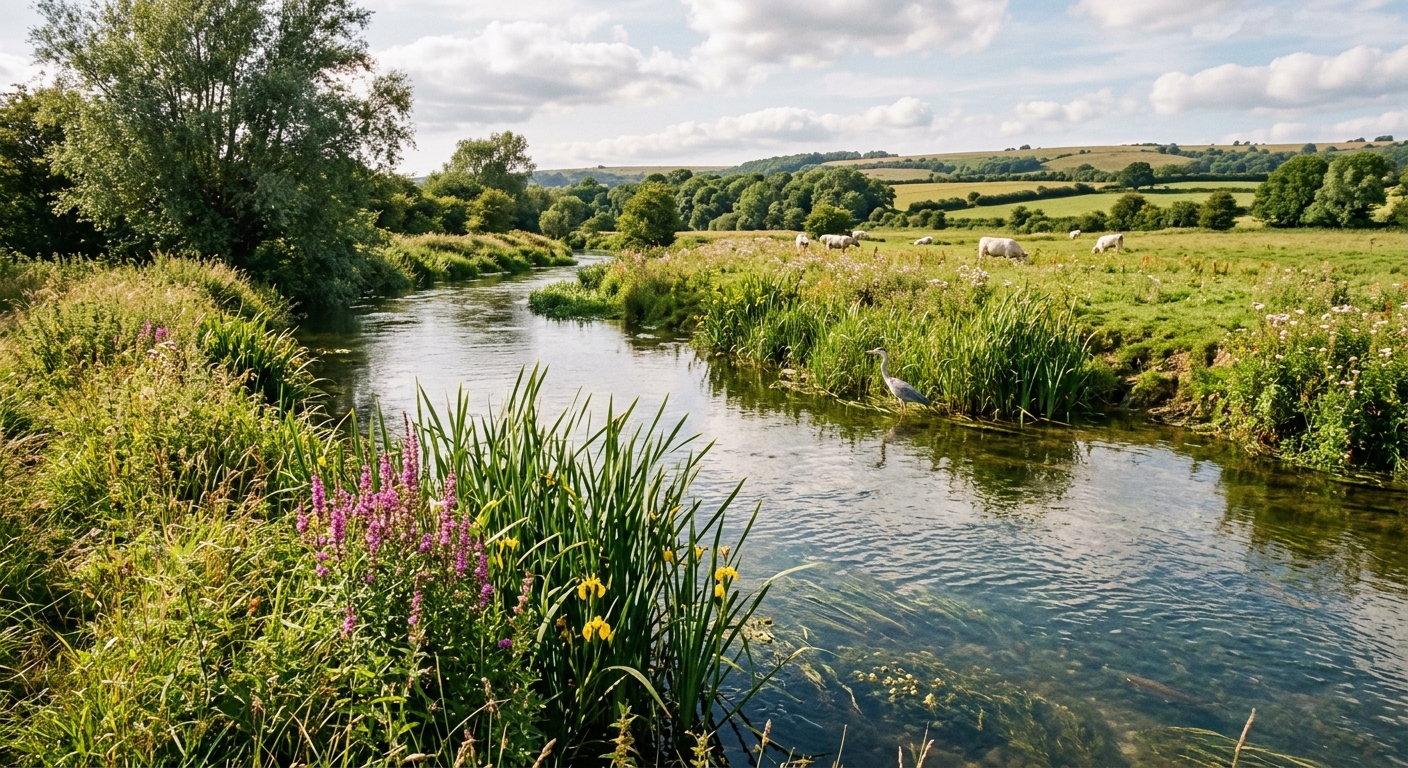
With World Rivers Day around the corner, let’s talk about the state of our river health.
Human civilisation has largely formed around the world’s rivers, with key cities developing at the conflux of larger waterways.
Having provided us with transport links, food, water, and washing facilities, rivers have suffered greatly from human activity.
Is UK river health declining or improving?
Without more monitoring capability, it is difficult to obtain a clear picture of river health changes on a year-by-year basis. Water quality surveys are patchy and are conducted officially only every 3 years. As new analytical testing technology is developed, we are having our eyes opened to what has been largely hidden previously. For example, it has only been in recent years that the level of environmentally damaging PFAS (Per- and polyfluoroalkyl substances) in river water has been realised. This led to a change in how chemical pollution inrivers is scored, resulting in many rivers that were previously labelled ‘good’ (in 2016) falling to a lower grade in the test results since 2019. However, some rivers during this period have seen a marked increase in biodiversity and abundance of invertebrates, which may be a better indicator of health.
The Centre for Ecology & Hydrology (CEH) linked this positive trend to improvements in the treatment of wastewater from sewage treatment plants, although they noted that the rate of improvement has plateaued. Furthermore, Ofwat restricted the infrastructure budgets of water companies during AMP7 (2020-205), resulting in sewer collapses and overflows that have caused some serious environmental damage, including to the river quoted in the CEH report.
What is concerning is the lack of sustained improvement from the 2019 to the 2022 river survey reports. The test criteria remained the same, although there was a reduction in the number of sampling tests due to Covid. What is clear is that we need to keep working hard for our life-giving rivers
There is still much that we don’t know, and we continue to encounter surprises along the way. The EU limited the use of glyphosate weedkiller in agriculture, assuming it was the primary source of the substance entering the environment. However, after levels of the substance failed to drop, further studies found that common household detergents were actually the primary culprit. This had been missed for years, as these products don’t contain glyphosate to begin with, but form this powerful herbicide as they break down in sewage treatment works.
England’s water treatment companies will be installing thousands of new sensors to monitor river health over the coming years, which will provide a better insight to the sources and causes of pollution, so we can better tackle it.
Since the Environment Act being passed in 2021, we are starting to see much more pubically shared data from water companies. The resulting knowledge has been a wake-up call on the frequency and volume of sewage overspills that have long long been occurring. This has established a base line from which to take action and should allow us see the progress rate going forward.
Great river health is within our reach – let’s do it now
The good news is that we’ve never had so much public awareness, ability, and opportunity to pay our rivers back with some TLC – particularly in post-industrial developed countries. With determined action to halt pollution, rivers have shown remarkable power to recover from past industrial damage and exploitation.
Water companies are undertaking many major projects to reduce sewage leaks from CSO (combined sewage overflows), and farmers are improving practices to prevent nitrates and pesticides entering watercourses.
The River Thames – a success story.
In the late 1950s the River Thames was biologically dead – unable to sustain any life. Yet, ongoing work to prevent rubbish and sewage entering it since then, coupled with the removal of over 200 tonnes a year of litter (Thames21.org.uk) has resulted in 125 species of fish returning, along with 400 species of invertebrates. Dissolved oxygen concentrations have shown a sustained increase, showing a good unlaying health.
Thames Water has concluded sewage treatment capacity projects costing £1.2 billion over the past three years and there’s more to come. The £5 billion Thames Tidesway opened in 2025, and Thames Water say it will decrease CSO (combined sewage overspills) by 80 – 90%.
All Rivers run into the sea
Let’s not forget the global picture; while in this isle, we are rightly concerned about the aquatic environmental health and even the ‘bathing quality’ of our rivers, millions of people living in poverty alongside rivers like the Ganges, or Citarum in Indonesia suffer thirst, disease and stench. Rivers that used to sustain a healthy fishing trade, can at best, provide traditional fishing families with ‘fishing for recyclables’ rather than food.
What can we in our everyday life do about it? Before diving for that next fast-fashion, cheap T-shirt take a moment to think about its providence and the wider cost of ‘cheap’.
The whole water cycle is one closed loop recycling system that effects us all eventually. Our rivers and seas help stabilise the climate, absorb CO2 and temperature extremes.
Get involved in the action this World Rivers Day
The last Sunday in September is World Rivers Day. Why not get out and about by your local river to reflect and gain inspiration for action. Many local organisations run events to celebrate and educate on World Rivers Day, from the Thames 21 Foreshore Clean-up, to West Cumbria’s family-friendly action day on the River Ehen estuary at Longlands.
The Rivers Trust run a citizen science river testing program twice a year, enabling a huge data pool of observations and test samples.
What can industry do to prevent water pollution?
There are many sources of water pollution and multiple reasons for the mounting pressure on our rivers, so there’s no ‘one-size-fits-all’ solution. Atlantic Pumps provide solutions for companies committed to protecting the environment, their reputation, and their financial sustainability. When it comes to pH, grit, silt, temperature, abstraction and discharge limits, on-site water recycling, monitoring and reporting, EnviroHub is a modular system that we recommend.
Are you involved in water monitoring and pollution control in a professional capacity? If so, please get in touch to explore how we can work together to provide more solutions for protecting our waterways from industry and urban pollution.
We also take a sustainable approach to our work and are committed to reducing energy waste from pumps. Our expert knowledge allows us to reduce energy usage by 20% on the average site!
Call us today on 0800 118 2500 for more information.