June 16 2026
 3 Minutes min read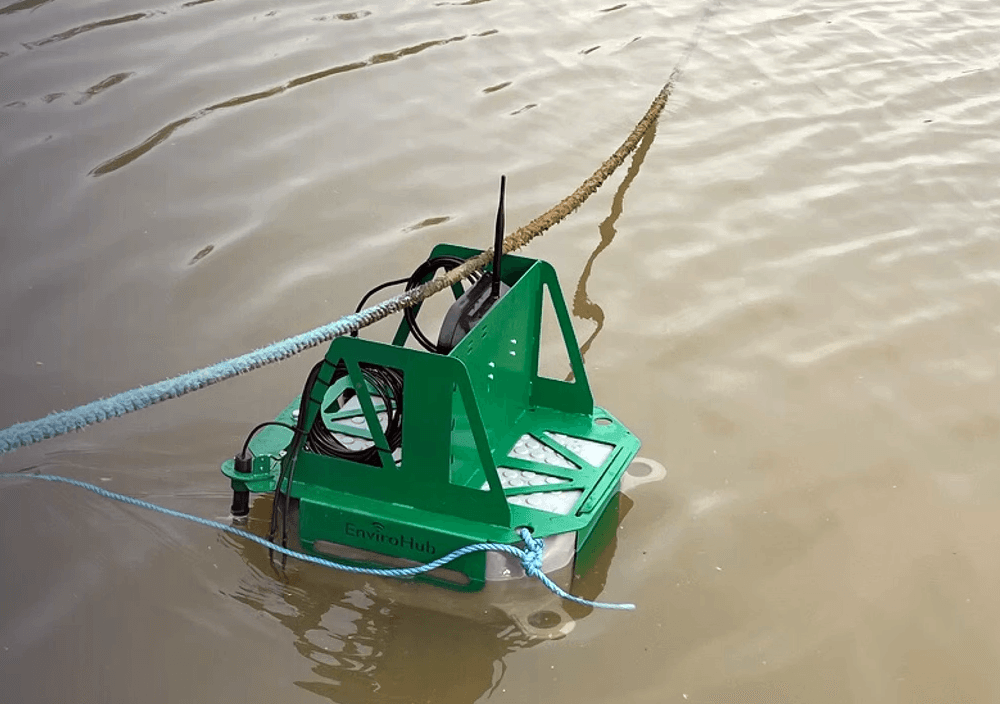
Effective water quality monitoring is an essential part of any dewatering and discharge operation, particularly where compliance, environmental protection, and operational continuity are tightly regulated. As UK discharge limits tighten and site conditions become more variable, the way monitoring is implemented is becoming just as important as the sensors themselves.
This article compares the two types of EnviroHub monitoring unit; the original inline monitoring unit (MU), and the newly launched floating monitoring unit (MU-F). In short, the original MU is ideal for measuring fluid parameters (including flow-rate) within the pipeline, while the floating MU is better suited for monitoring the quality of open waters.
Overview of the EnviroHub UK Monitoring Units
Before diving into the differences, it’s useful to know that both units provide rapid deployment, are compatible with many types of probes, and via the attached Control Module (CM-02), can send data and commands to directly connected or cloud-based systems. This makes them ideal for operating pumps and valves, recording data, and issuing alerts via text or email.
Below we discuss the differences in design, performance, and usability. We’ll also look at how the latest floating module addresses common challenges around reliability, data accuracy, deployment, and maintenance, and why these differences matter when monitoring open-water sources such as lagoons and settlement ponds.
How the Floating Monitoring Unit Improves Dewatering Performance
The original EnviroHub Monitoring Unit was developed primarily for inline monitoring of water/fluid properties, where sensors are installed directly within a pipework system. In this configuration, the unit proves highly effective for measuring fluid properties in closed systems where flow is controllable.
However, while the original unit could be adapted for use on open water bodies, this was not its primary design intent. As a result, additional measures were often required to ensure reliable and compliant monitoring.
The latest EnviroHub floating monitoring unit builds on the same core monitoring and control principles but introduces a dedicated floating module, specifically optimised for open-water sources. This design shift directly addresses several limitations associated with adapting inline systems to lagoon dewatering applications.
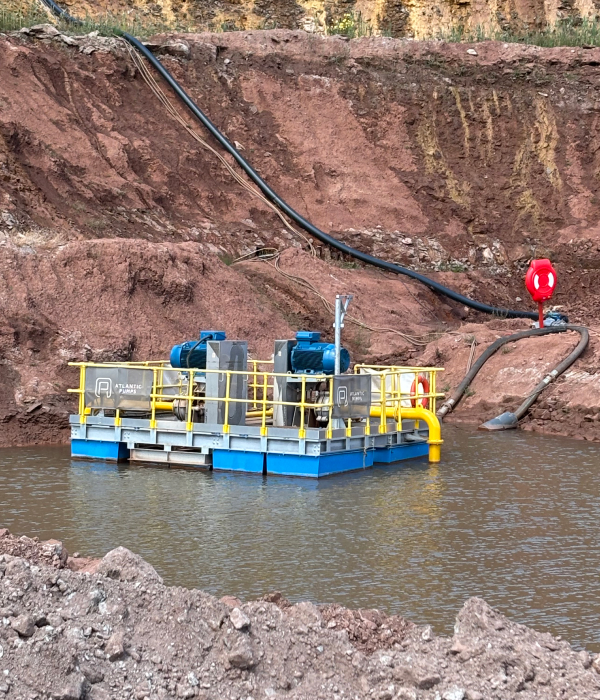
Water monitoring unit optimised for lagoon dewatering
A major distinction between the two EnviroHub models is how and where the water quality measurements are taken.
With the original inline monitoring unit, measurements were taken once water had already entered the pipework, making it highly accurate for flow rate and volume measurement. However, it meant that if water quality fell outside the permitted limits, corrective action was possible only after the water had been drawn into the system. In practice, this often required additional safeguards to be implemented. Depending on the site and consent conditions, out-of-spec water might be recirculated back to the source to allow further treatment or retention time, a dedicated sampling loop could be installed, or conservative buffer margins could be programmed into the control module. For example, alarm and control thresholds were sometimes set below the actual consent limits to make compliance easier, at the cost of reducing operational flexibility.
The floating pump monitoring unit fundamentally changes this approach. By positioning the sensors directly at the suction inlet within the open water body, measurements are taken at the point of abstraction. This allows the system to prevent out-of-spec water from being drawn into the pipe at all, rather than responding after the fact. For lagoon dewatering, this represents a significant improvement in both environmental protection and process efficiency.
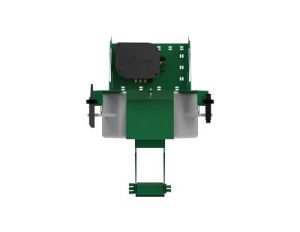
Simplified system design without a sampling loop
Another improvement introduced by the floating monitoring unit is the elimination of the sampling loop. Inline monitoring in open-water applications often requires a separate sampling loop, complete with an auxiliary pump and additional pipework, to deliver representative measurements. While effective, this added mechanical complexity to the system, increased installation time, and introduced more components requiring maintenance.
The floating MU removes the need for this arrangement entirely. By measuring water quality directly in the lagoon or settlement pond, the system avoids the need for auxiliary pumps and secondary pipe runs. This simplification reduces your potential failure points, lowers maintenance requirements, and makes system installation more straightforward, particularly on temporary projects or for rapidly deploymented when dewatering sites.
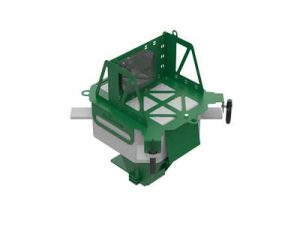
Why upgrade to the floating EnviroHub MU?
For sites that make regular discharges or need to dewater from large lagoons, there are several benefits of making the upgrade. For instance, in real-world dewatering projects, a more accurate monitoring process directly supports better operational decision-making. By preventing non-compliant abstraction at source, you can run your systems with greater confidence, reducing the need for conservative safety margins and minimising unnecessary shutdowns. A simpler system layout also streamlines installation and maintenance, which is particularly valuable on temporary sites or where rapid deployment is required. Over time, the reduced mechanical complexity and improved control stability of the new MU also contribute to more efficient water management and stronger environmental performance.
Ultimately, both EnviroHub MUs still have important roles to play in dewatering applications. The original MU remains the preferred solution for inline monitoring in closed or controlled systems, while the floating pump monitoring unit is better optimised for open-water sources.
What next?
If you are considering an upgrade or reviewing your monitoring options for a dewatering or water management project, please get in touch with Atlantic Pumps for support in selecting the right configuration for your application.
We also take a sustainable approach to our work and are committed to reducing energy waste from pumps. Our expert knowledge allows us to reduce energy usage by 20% on the average site!
Call us today on 0800 118 2500 for more information.