January 26 2026
 3 Minutes min read
Today, as we observe the UN’s International Day of Clean Energy, the global conversation is nobly focused on the transition to renewables. But there is an “elephant in the room” that we need to address if we are serious about hitting our 2050 targets.
This article isn’t meant to be a cosy read – but a wake-up call and reality check.
The biggest constraint to Net Zero? Minerals – building a green future requires some serious digging.
The Mineral Reality of Renewables
Energy-saving homes need minerals for weatherproofing, passive cooling and insulation materials like glazing, concrete and mineral-wool. Wind turbines, solar panels, and EV batteries don’t grow on trees.
And what doesn’t grow, has to be mined.
Any practical solutions to climate change rely on extracted metals and minerals; From copper, lithium, cobalt, and rare earth elements – to limestone, granite, and sand.
- A single wind turbine can require up to 5 tonnes of copper.
- To meet 2050 Net Zero targets, we will need to mine as much copper in the next 20 years as we have in the last 3,000 years combined.
- Data centres needed for our increasingly digital lives are driving an immense appetite for these raw materials, from their hardware components to the associated electricity generation and storage.
- Some elements, such as lithium, are particularly sort after as they are required in large volumes for energy storage batteries and inverters. There are thousands of recently built homes with unused solar panels on the roof – for lack of an invertor and battery.
Where Does Recycling Fit?
Many long-established mining and mineral processing companies are using their infrastructure and expertise to recycle construction and demolition (C&D) waste – it’s even been termed as “re-mining”.
Anaerobic Digestion (AD) plants are generating clean energy from bio-waste; food waste, sewage, farm manure and crop residue. However, even AD plants that are dedicated to recycling waste often have to supplement their ‘diet’ to keep the process going. These supplements include mined minerals and specific crops, providing essential ‘balancing’ nutrients for the biological digestion process.
Increasing the circularity of our materials, via reuse and recycling is important, but will only scratch the surface of demand. A growing population, a ‘levelling up’ across global economies, and innovative products crucial for clean, renewable living need the addition of fresh material. The dramatic speed of de-carbonisation means that minerals once too low in value to be worth digging, are simply not available in the recycling stream.
The Case for Local Mineral Sourcing & Manufacture
Currently, Europe relies on importing critical minerals and the finished green-tech, often from regions with lower ESG standards. This isn’t just a socio-economic theme; it’s a huge emissions problem.
The early methods of rare earth processing came at significant environmental cost, prompting developed countries like the UK to off-shore the dirty work elsewhere. This famously allowed China to take control of 85-90% of the critical ‘rare-earth’ global supply chain.
They, in turn, are now cleaning up their act – by off-shoring to highly troubled Myanmar.
Over the past few years, China has taken significant steps against illegal mining and poor ecological practice within their own borders. This, alongside their long-standing quota system for domestic mining, has resulted in them becoming not just the world’s largest exporter of rare earths, but also the largest importer.
While the geological siting of known mineral deposits makes some importing and exporting inevitable, shortening the chain makes ecological sense.
Operating only with countries that share the same high ESG standards will arrest the race-to-the-bottom, cheapest-wins cycle that is propelling us all to climate doom.
Importing heavy minerals adds massive pressure to global fuel demand and shipping emissions. By revitalising UK mining and quarrying, we can:
✅ ⚓Drastically cut “sea miles” and transport emissions. Although ‘rare-earth’ elements are dense, the bulk ore they are extracted from typically travels halfway around the world to be processed.
✅ ⚖️Ensure materials are extracted under world-leading environmental and ethical standards.
✅ ⛔Secure our own supply chains against geopolitical risk.
✅ 🏘️Create a realistic chance of solving the housing shortage, without energy-intense importation of bulk building materials like sand, clay, lime, and stone.
The fundamental energy factor and embodied carbon of any building remains: it is far more efficient to construct buildings and infrastructure primary from locally available sources.
Smart Mining for a Clean, Secure Future
For truly clean energy, we cannot rely on the mining methods of the past. Modern UK mining is efficient, ethical, and low-carbon. From Lithium mining and refining in Cornwall and North-east England, to the Woodsmith project, the UK is already proving that domestic extraction can be done responsibly.
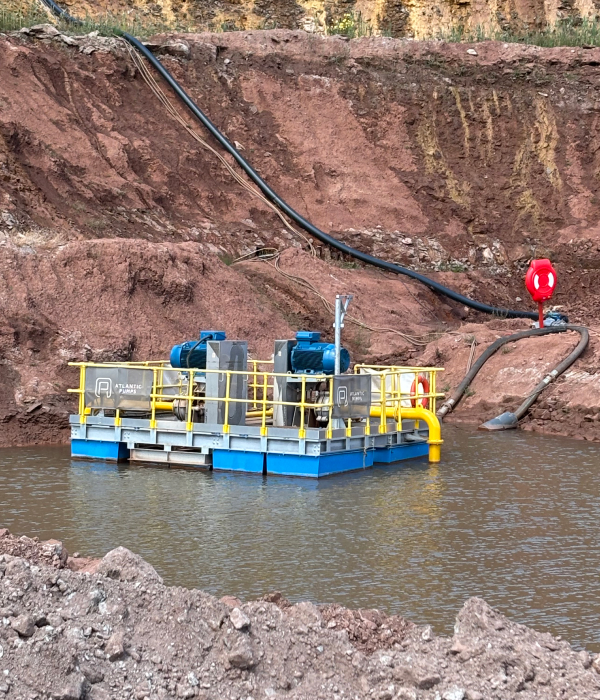
At Atlantic Pumps, we are heavily involved in supporting sustainable, clean mineral production. Using energy-efficient pump systems and sustainable tech such as solar powered dewatering controls, the extractives industry is reducing its own footprint – while delivering the essential building blocks of the green transition.
Net Zero won’t be built on wishful thinking, off-shoring eco-damage to less developed nations, nor voter-stroking kick-the-problem-down-the-road policies that ignore reality. It will be built on lithium, copper, and steel. Let’s take charge of extracting and refining them where we can see it; ensuring it’s done responsibly, locally, and efficiently.
We also take a sustainable approach to our work and are committed to reducing energy waste from pumps. Our expert knowledge allows us to reduce energy usage by 20% on the average site!
Call us today on 0800 118 2500 for more information.