July 2 2026
 4 min read
Here, the Atlantic team looks at some of the key reasons why submersible pumps can fail; an essential read that’ll help you avoid expensive downtime.
| Pump issue symptom | Possible reason |
| Motor runs, excessive noise (sounds like pebbles are being pumped). | Insufficient or restricted supply of fluid to the pump inlet, causing intake cavitation. |
| Motor runs, loud noise from the water discharge end. | Excess friction or blockage in the discharge piping. The flow rate/head ratio is outside the pump’s capability. |
| Motor runs, little to no water discharge despite adequate supply. | Incorrect wiring, causing the motor to run in reverse. Pump or its strainer has become blocked with solids/sand sludge. Valves are closed/restricted. |
| Pump motor starts, then stops. | Check voltage and frequency supply matches the electric motor. If a Soft-Start system is used, have it checked. Check for damaged wiring. Check pump for blockage. |
1. Reverse Rotation
This is where the pump is wired incorrectly, meaning the motor runs backwards. When this happens to a centrifugal pump, you will experience lower flow – and more seriously, it does serious damage to the pump, wearing down the impeller and increasing the risk of cavitation. Cavitation can sound like marbles or rocks being pumped, and is highly damaging to pumps.
2. Dry Running
This is where the water level drops to a point where the pump cannot draw a decent amount of water and the lack of intake pressure starts to create a lot of disturbance in the water. This will quickly lead to cavitation, damaging the impeller and diffuser, and can soon destroy the pump. Dry-running also causes rubber impellers and seals to expand, deform and crack from overheating, allowing water into the motor.
3. Running on the Right of the Curve
This is where there is less vertical head than the pump is designed to handle, which makes the pump less efficient. At an extreme this causes suction cavitation, which results in pitting around the centre of the impeller, further degrading efficiency.
4. Specific Gravity
Submersible pumps that are not designed to deal with high levels of solids will usually quickly fail in slurry applications. Exceeding 1.1 – 1.2 specific gravity is a no-go; this effectively constitutes a sand slurry. See our article “Pump Choice for Longevity” if you’re dealing with highly abrasive fluids.
5. Cable Damage
This includes internal damage often unseen when the cable is jarred externally. It is vital that if a cable has been gashed or yanked, that this is checked. The seal arrangement where the cable enters the pump body is a weak spot and the air seal can very easily be broken. It doesn’t take much moisture in the electrics to make the pump fail.
6. Dead Head
This is where the pump has to work against more vertical head than it is capable of, i.e. a valve on the discharge has been closed, or the outlet height has increased beyond the pump’s maximum pressure. This causes something called discharge cavitation, which again is indicated by the sound of marbles being pumped, causing pitting around the impeller tips and inside of the pump casing. Deadheading a pump causes heat buildup as the fluid recirculates inside the pump, and at an extreme level, the pump shaft can go out of alignment or even break.
7. Not allowing for Discharge Piping
Discharge piping creates friction loss, so it is vital that this is calculated and taken into account when specifying submersible pumps. Excessive friction losses will lead to flow issues or even dead-heading; see above.
8. Blocked or jammed impeller
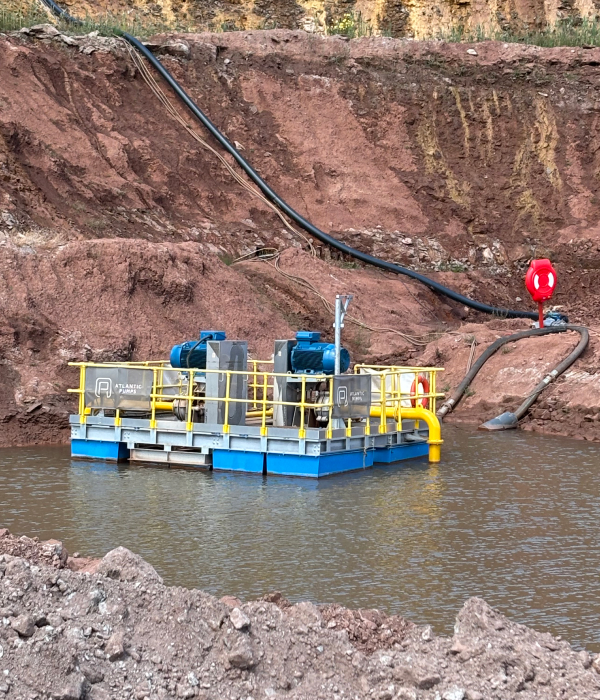
A jammed impeller will likely trip an electric motor and could cause mechanical damage. To reduce the risk of fouling or blockage, use a suitable strainer and suspend the pump/intake pipe off the floor via a floating pontoon.
9. Starting too frequently
The largest strain on a motor is normally at start-up. The extra power draw is typically six times normal current and can cause the circuit breaker to trip. To reduce the number of starting cycles of a submersible pump, consider which of the following might be applicable:
- Increasing the sump capacity (horizontally) so the pump stops and starts less frequently, running for longer periods at a time.
- If the circuit breaker is tripping at start-up, change from a DOL to a soft-start, or inverter/VFD (variable frequency drive). A VFD drive can also be controlled via a level sensor, speeding the pump to maximum during peak periods, then returning it to the best efficiency point (BEP) of its flow range.
- Prevent water backflowing after pump cut-off (e.g. fit non-return valves)
- Change the pump for a smaller one (lower flow-rate), so its volume per hour better matches requirements.
- Add a high-level and a low-level switch control, so that the pump only starts when a higher level is reached. Adjust the gap between level sensors to suit the desired pump cycle.
*A note on cavitation – this is the formation and sudden collapse of bubbles caused by pressure fluctuations around a pump impeller. This can form in liquids of any viscosity as they are being accelerated through and around a pump system. When each of these tiny bubbles burst, it creates a high-energy shock wave that ‘bangs’ against the surface. This creates pitting and holes – even in hardened metals.
Atlantic Pumps offer servicing, replacement parts, replacements and upgrades for many brands of industrial pumps. Check out our training resources or contact us directly for rapid solutions to your demanding pump issues.
We also take a sustainable approach to our work and are committed to reducing energy waste from pumps. Our expert knowledge allows us to reduce energy usage by 20% on the average site!
Call us today on 0800 118 2500 for more information.