April 29 2026
 5 min read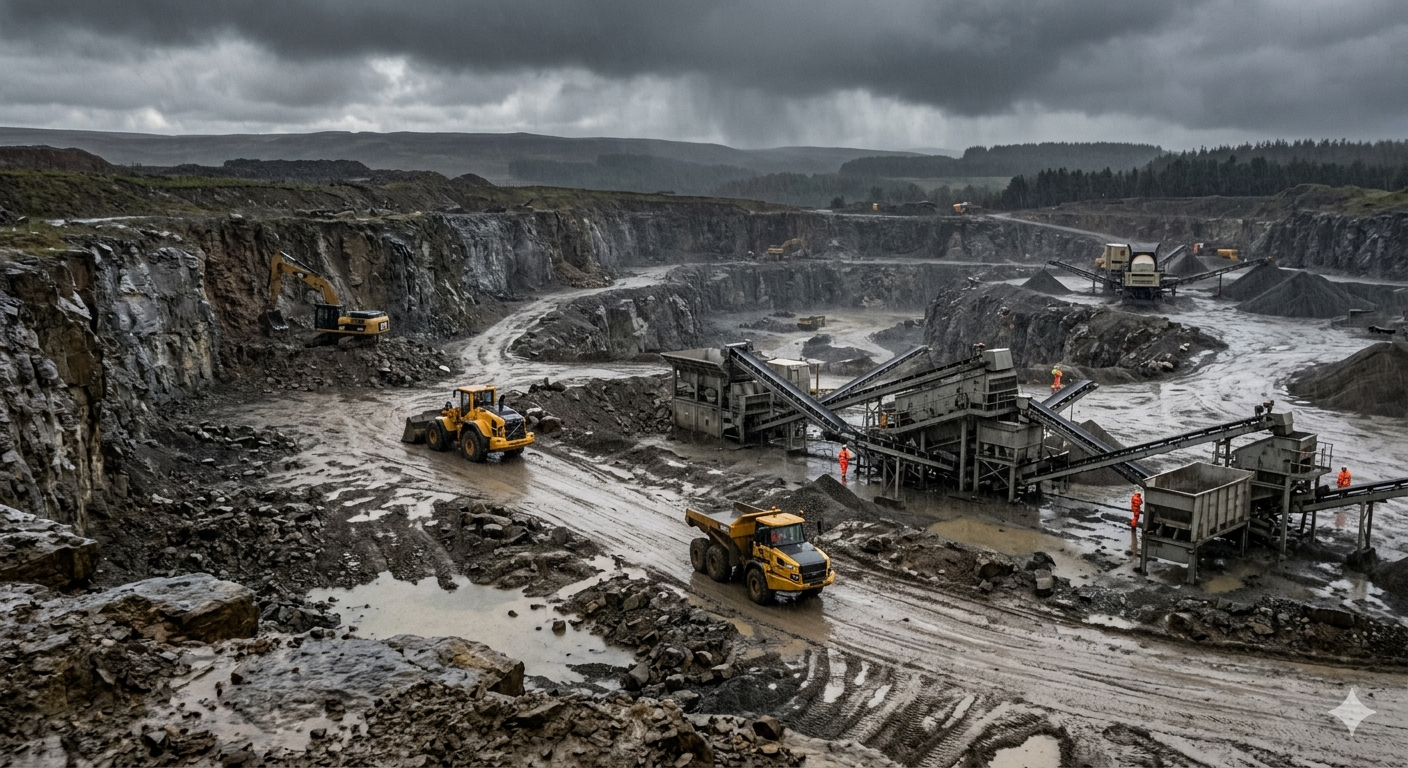
No site manager wants to turn up at the quarry after a rainy weekend to find the primary crusher underwater or the face inaccessible. Rising water wreaks havoc on electrical systems and sensitive control networks, forcing downtime while electricians and other specialists repair, reset, and inspect the system. Hidden water damage can haunt systems with sporadic glitches for months following a flooding of production machinery.
Water management is about as old as mining itself, with access to valuable mineral seams often dependent on our ability to dewater shafts and workings. Today, we have the collective knowledge and technology to achieve more effective water management than ever before.
However, our changing climate, already hard to predict in the UK, is now seeing “1-in-100year” rain events happening every 24 months or so. Dewatering strategies and equipment need to adapt to this, along with the increasing depth of workings, quarry extensions, and high energy/operational costs.
You don’t want to be left helpless, waiting for the next pump to fail or storm to hit; uncontrolled water ingress poses risks to productivity, safety, and brand reputation, leading to avoidable costs and losses. Atlantic Pumps have a long history of working with quarry and mine managers who are moving from costly reactive action to proactive, planned flood-risk mitigation and more effective water management.
How does flooding affect active mining sites?
Although heavy rainfall can quickly inundate quarries (open-cast mines), we could say that most flooding isn’t caused by ‘too much water’ but rather that we’re penetrating natural groundwater levels and subterranean water bodies.
Such waters can be mineral-heavy, requiring responsible environmental management. At Wheal Jane mine in Cornwall, reopening this former tin mine entailed nearly two years of pumping. As the water had been slowly seeping into the mine over time, it wasn’t abrasive and they were able to use high-volume ‘clean-water’ pumps. However, as the standing water had been in contact with metal-bearing ore for many years, it needed to be treated to remove dissolved metals and acidity before discharge.
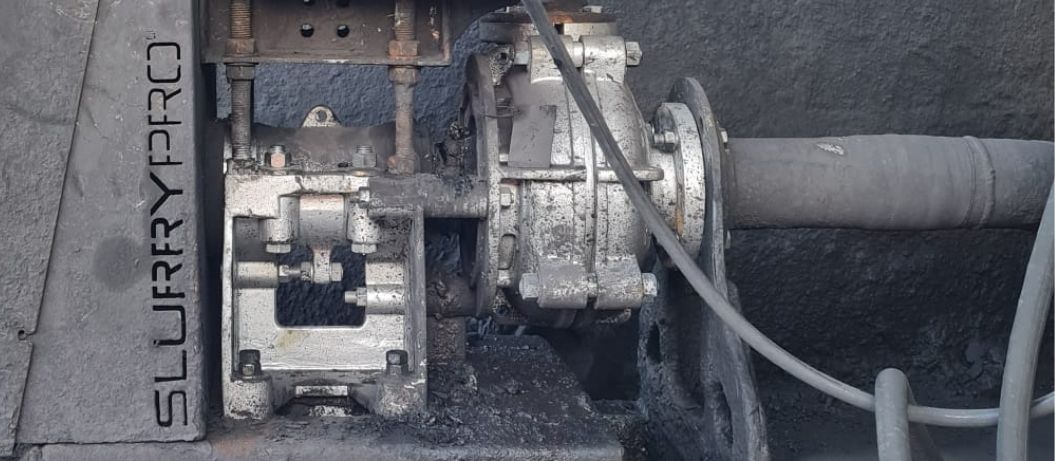
When dewatering active mines and quarries, there is likely to be a high volume of suspended solids involved, particularly from surface water runoff. This should be directed to sumps or lagoons via gravity or pump to prevent pollution, erosion, or silting up of neighbouring environments. Pumping such runoff water usually requires abrasion-resistant slurry pumps, oil-separation traps, and solids removal before final discharge or site use.
The HSE (Health and Safety Executive) identifies uncontrolled water as a leading cause of face and stockpile instability. Haul roads and berms are weakened by excessive water, increasing the risk of landslides as soil becomes oversaturated.
Flooded surfaces can obscure uneven ground, voids and the boundaries of working areas, bringing work to a stop for safety reasons.
That’s not to say that permanently flooded quarries can’t be worked – the excavation technique can switch to dredging, such as at Crown Farm sand quarry.
Flood prevention strategies
Hydrology is an essential part of quarry planning, as natural groundwater levels, permeability, and siting of water management systems affect long-term outcomes. Space-hungry settlement lagoons and tailing dams are interdependent on access to mineral deposits, environmentally friendly and compliant discharge points, and post-quarry habitat creation or restoration.
Groundwater introduces a different challenge to surface water. As pits deepen or underground workings extend, they intersect permeable strata, fractures, or historic workings that can drastically change water flows. Groundwater often increases as the excavation alters local hydrogeology. Pumping systems that were adequate earlier in the site’s life can end up running constantly, with no spare capacity to handle inflow spikes. The risk of flooding increases when water management does not keep pace with excavation. Longer pumping distances, higher lift heights, and relocated sumps all increase system demand and friction loss. If dewatering layouts remain static while the operation changes, water levels – and often running costs – inevitably begin to rise.
Stage the Dewatering Lift: Single-lift Pumping Fails With Deepening Floors
Trying to push water from the bottom of an increasingly deep pit to the surface in one go is a battle against physics. As your head height increases, a single-lift pump is forced to operate farther from its Best Efficiency Point (BEP). This doesn’t just waste energy; it causes excessive vibration and heat, leading to premature bearing and seal failure.
The most reliable way to manage deepening excavations is to stage the lift. By using intermediate sumps and modular dewatering stations, you can move water in manageable ‘steps.’ This allows you to size your pumps for the specific head and flow rates required for the quarry’s current life stage, rather than trying to “future-proof” with a massive, inefficient unit that struggles to perform during the early and later stages.
The Benefits of a Modular, Staged Approach:
- Scalable Capacity: Instead of oversizing equipment from the outset, you can add modular mine dewatering skids as the floor depth increases. This keeps your capital expenditure (CAPEX) aligned with the actual site development.
- Operational Redundancy: Staged systems with intermediate storage act as a buffer. If a pump at the face needs a quick seal change, the rest of the system can often keep the upper benches clear, preventing a total site shutdown. Atlantic Pumps also manufactures pump station skids with twin pumps in a duty-standby arrangement for optimal resilience.
- Reduced Wear and Tear: Operating a pump in its “sweet spot” (BEP) significantly extends the life of wear parts. When you aren’t forcing a pump to fight extreme head, your impellers and motors last longer – and your energy bills are kept in check.
Select Pumps based on actual operational conditions
Effective flood mitigation and prevention depend on pumps that perform reliably across the realistic operating range. Variable flows, suspended solids, and changing duty points are the norm rather than the exception in mines and quarries. Robust construction, stable hydraulic performance, and ease of relocation and maintenance often matter more than peak flow ‘clean water’ figures on a datasheet.
Speak to your pump advisor about your duty requirements – what’s being pumped, how often, how much and how high.
Proven Success in Deep Dewatering Operations:
We have successfully transitioned several high-pressure sites from reactive “brute force” pumping to controlled, staged systems:
- Dewatering A Deep Quarry: Adopted mine-style staged dewatering for an open excavation, ensuring consistent flow even as the pit reached depths that would have choked a single-stage setup.
- European Polymetallic Mine: Deployed a mobile dewatering rig that allowed the site to scale its pumping capacity in lockstep with the decline, preventing “pumping lag” during rapid development.
- Efficiency Upgrades: By replacing a struggling single-lift system with an Audex pump setup designed for rising head conditions, one operator eliminated the “snoring”, frequent cycling, and cavitation issues that were destroying their previous units.
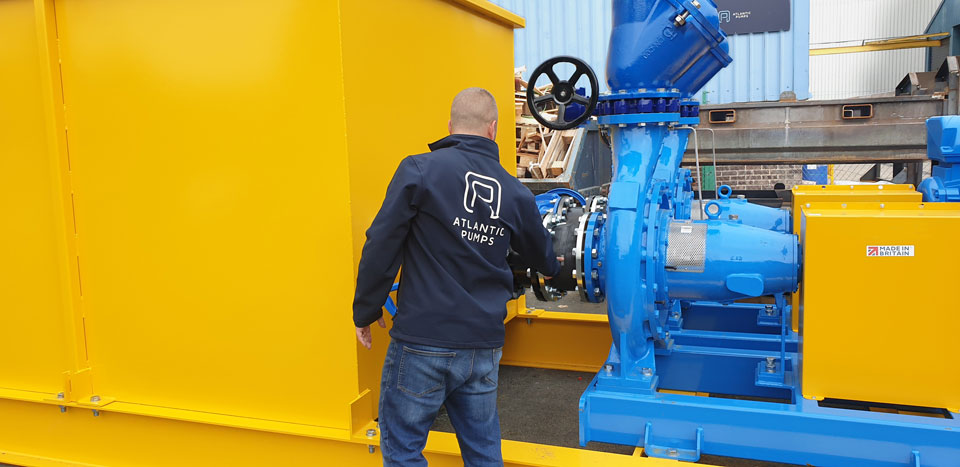
Mine dewatering extension skid. Note the buffer holding tank and duty-standby pump arrangement.
The importance of dewatering equipment reliability
Full uptime availability is important for any quarry and essential for mines, where confined spaces and potentially rapid influxes can compromise safety by affecting egress routes and ventilation systems. Even short pumping interruptions can allow water levels to climb suddenly, so in high-stakes environments like deep mines, a duty/standby pumping system is usually employed. One pump or system is running while the other is at rest or being serviced, providing redundancy to deal with high demand or an outage.
Practical Tips for Flood Resilience and Robust Dewatering
Here are a few quick tips to guide your strategy:
- Settlement Sumps: Where possible, avoid pumping directly from the dig face or where heavy traffic movements occur. Dig a settlement sump 50 metres away from active workings to allow heavy grit and some silt to settle out naturally. This may not be possible if you need to directly dewater stockpiles to preserve their integrity. In these instances, we have supplied pumps for sandpile dewatering; pumps that are about as grit-proof as you can get.
- Stage the Lift: Where total dynamic head pressures (height & pipe friction) are expected to vary, it is often more efficient to use multiple pumps in stages rather than trying to use a ‘one-size-fits-all’ approach.
- Float your pumps: Dry-sited pumps are at risk of drowning during high water levels. Positioning them too high above the water can reduce NPSHr (net positive suction head available) to levels below acceptable limits. Submersible pumps that are anchored in place can draw in too much silt. The best practice is to suspend submersible pumps from floating pontoons and link their controls to low-level sensors so they don’t suck from off the lagoon bed or suffer intake cavitation.
- Audit your pipework: If you’ve added 300 metres of additional pipe length since your pump was specified, your friction loss has likely tanked your efficiency. Avoid sharp bends and unnecessary friction points. A smooth-walled pipe at a suitable diameter for the flow rate is best.
Summary
There are many innovations and solutions to tackle the challenges of flooding and water management that UK mines and quarries are facing. Tackling these challenges proactively is the best approach, as it saves time and money in the long run, while reducing your operations’ carbon footprint and environmental risk.
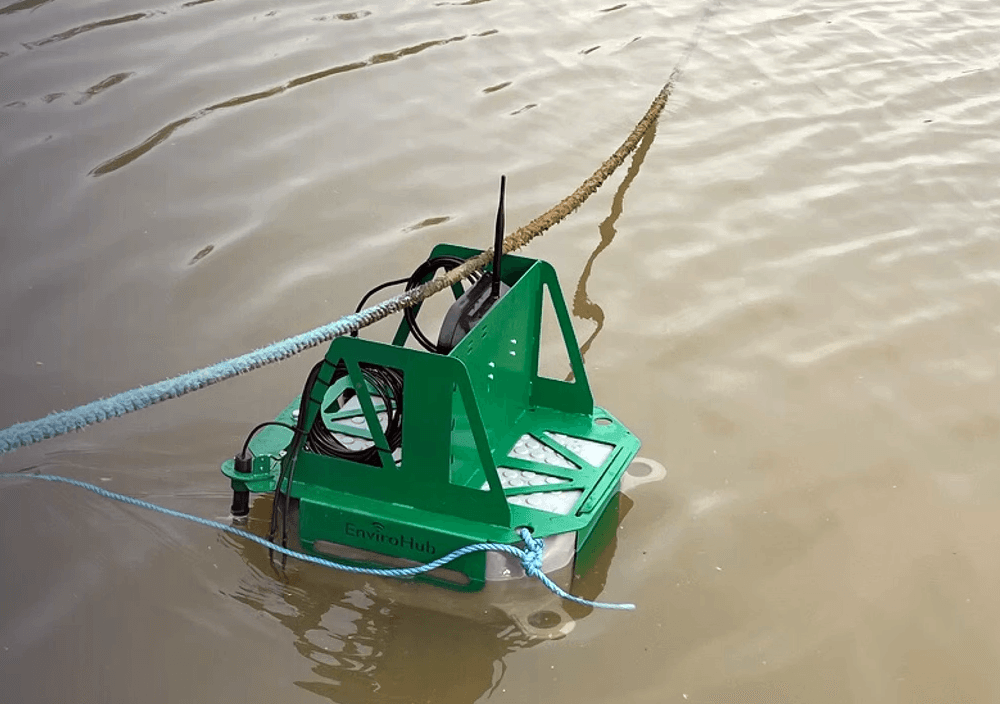
Water that has remained in contact with exposed geology for long periods may require monitoring and treatment, adding environmental and compliance considerations to your flood mitigation and prevention planning. EnviroHub is a modular solution for addressing site-specific suspended solids and pH extremes.
Dewatering systems should be designed with scalability in mind, considering final excavation depth, assessed hydrogeology and groundwater response, and extreme inflow scenarios, rather than being fixed to short-term requirements. This includes planning space, power supply, and infrastructure for additional pumps and pipework as the active workings evolve. Pump specifications should account for the slurry/water characteristics, site risk factors, total dynamic head and operational efficiency.
Atlantic Pumps has years of experience solving complex water management issues on the harshest quarrying and mining sites, with systems installed in sand quarries, garnet mines, lime refineries, and critical mineral and aggregate processing facilities throughout the UK and Europe.
Speak to our pump experts about reducing your flood risks and lowering your dewatering costs.
We also take a sustainable approach to our work and are committed to reducing energy waste from pumps. Our expert knowledge allows us to reduce energy usage by 20% on the average site!
Call us today on 0800 118 2500 for more information.