January 21 2026
 3 min read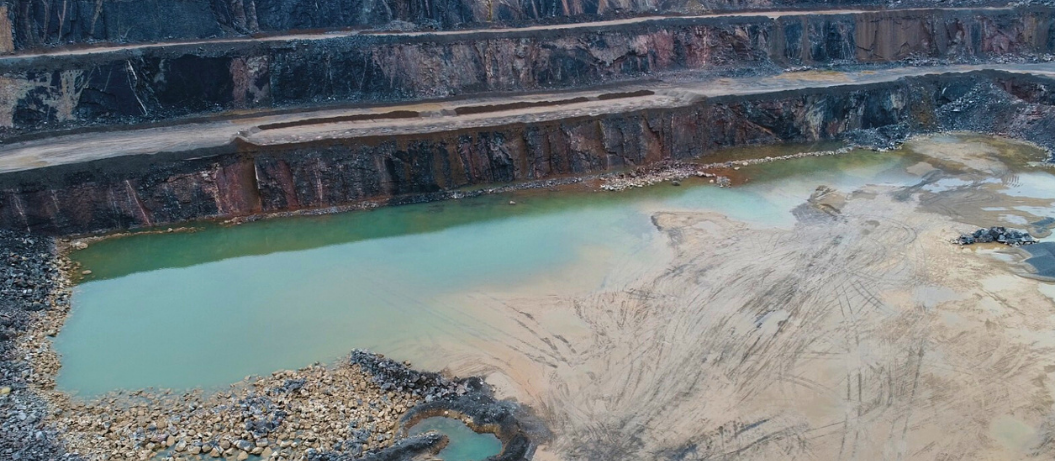
Introduction
Water management is a fact of life in most UK quarries. Groundwater ingress and stormwater runoff naturally collect at the lowest point of the excavation, making active dewatering essential. Alongside volume, however, quarry operators must manage turbidity — the cloudiness caused by suspended silt, clay, mud and other fines.
While these suspended solids are often chemically inert, turbid water can still cause environmental harm if discharged into rivers or other “controlled waters”. For this reason, maximum mg/l of solids are mandated in discharge permits, and quarry managers are careful to control, monitor, and treat turbidity.
This article outlines the risks, regulatory drivers, and practical solutions — with a focus on reducing risk, unnecessary costs, and time burdens. We’ll go from basic practices suitable for low-risk, non-problematic quarries to high-risk, high-flow, high turbidity water treatment with fully automated control.
The Legal and Environmental Imperative
In the UK, quarry discharges are tightly regulated, primarily under the Water Act and Environmental Permitting Regulations (EPR), derived from EU directives such as the Industrial Emissions Directive (IED) and Mining Waste Directive.
Most quarries require both an abstraction licence and a discharge permit. Abstraction limits revolve around volume, whereas the discharge permit also sets acceptable limits on pH and contaminants, including location-specific turbidity limits, typically expressed as suspended solids (mg/l).
Failure to comply can result in:
- Reputational damage, including strained community relations and ESG impacts
- Legal consequences, such as fines, enforcement action or civil claims
- Operational disruption, including permit suspension or site shutdowns
Beyond compliance, turbid water can harm aquatic environments by blocking light, increasing heat gain, and smothering riverbeds and fish spawning areas. Even where minerals are inert, responsible quarrying means preventing disruption to natural ecosystems.
Practical Challenges in Quarry Dewatering
Managing turbidity isn’t also easy, especially with clay and sand extraction. Quarries face:
- Highly variable inflows, from clear groundwater seepage to sudden, high-volume stormwater surges
- Space constraints, as settlement lagoons require land, maintenance and long-term planning
- Non-settling solids, particularly in clay and silty sites where fines remain suspended
- Remote infrastructure, making manual sampling and valve operation difficult
- Human risk, with out-of-hours events and extreme weather increasing the chance of missed actions.
These challenges make reliance on manual monitoring and intervention increasingly risky and time-consuming.
Measuring, Monitoring and Reporting Turbidity
Discharge permits specify suspended solids limits in mg/l, but laboratory testing is slow and impractical for real-time decision-making. By the time results are available, site conditions may have changed.
For this reason, quarries commonly use turbidity meters, which provide live readings in NTU (Nephelometric Turbidity Units). While NTU is not a direct mg/l measurement, calibrated meters can reliably correlate turbidity with permit limits when verified against lab tests.
Modern electronic meters outperform visual methods such as X-tubes by offering objective, continuous and networkable monitoring.
A Staged Approach to Turbidity Control
1. Prevent
Reduce water–soil interaction wherever possible:
– Design effective drainage and erosion control
– Segregate clean and dirty water
– Use sumps, silt traps, wheel washes and vegetation
– Plan lagoons, tanks or tailings dams for controlled settlement
2. Contain and Control
Ensure turbid water cannot discharge off-site:
– Pipe flows to a nominated discharge point
– Use shut-off valves and default-off pumps
– Sample and record water quality before release
3. Monitor and Automate
“If you can’t measure it, you can’t manage it.”
Continuous monitoring reveals trends, headroom and risk periods that manual checks miss. Automated systems can:
– Log turbidity, pH and flow in real time
– Trigger alerts when soft limits are reached
– Automatically stop pumps or close valves when limits are at risk of being exceeded
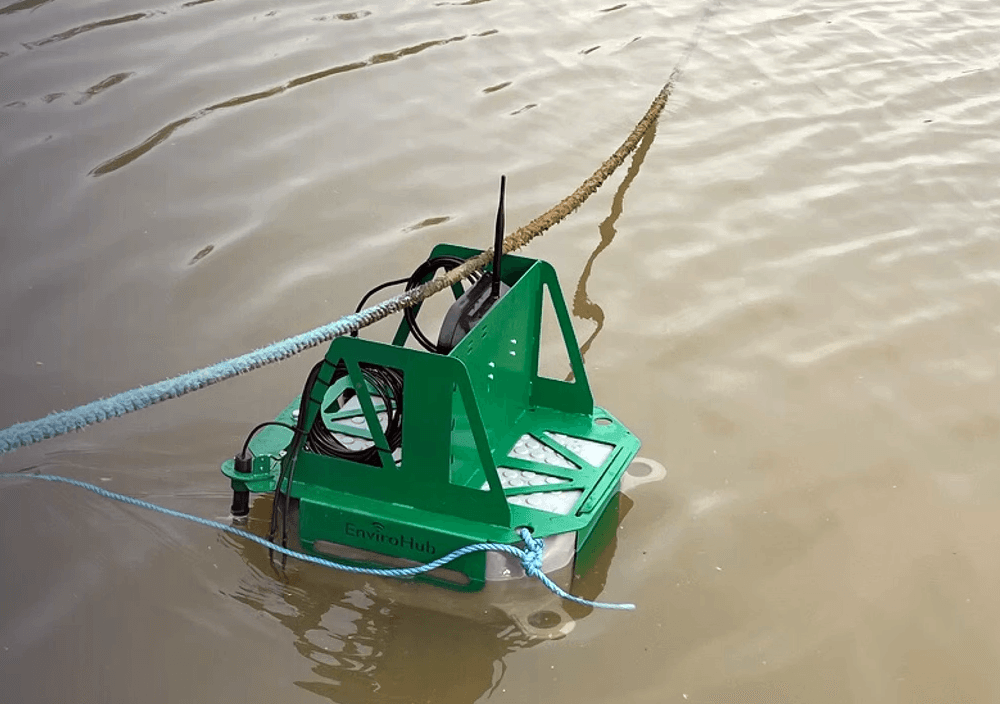
A floating Monitoring Unit with probes and telemetry
EnviroHub Monitoring Units and Control Modules enable quarries to automate compliance, even when sites are unmanned.
4. Treat (When Required)
Active treatment is needed where solids won’t settle or time and space are limited. Options include:
– Filtration and filter presses
– Hydrocyclones and centrifuges
– Lamella settlement and clarifier tanks
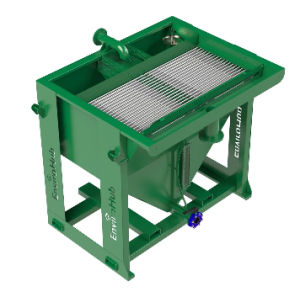
Above: EnviroHub Lamella Settlement Tank
For fine, non-settling solids, coagulation and flocculation is often essential. By neutralising particle charge and forming strong flocs, solids can be efficiently removed using compact, high-throughput systems.
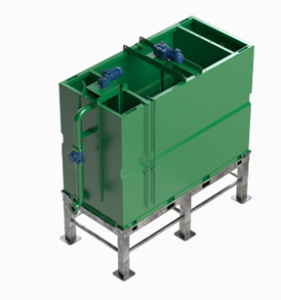
Above: EnviroHub Coagulation and Flocculation tank
Conclusion
Turbidity challenges evolve throughout a quarry’s life — from planning and active extraction to care-and-maintenance and remediation. Some sites may only need basic monitoring, while others benefit from fully automated, networked treatment systems.
Wherever you are on that journey, Atlantic Pumps can help design and deliver a compliant, efficient solution. If you’re concerned about turbidity risk or want to optimise your dewatering strategy, speak to one of our specialists today.
We also take a sustainable approach to our work and are committed to reducing energy waste from pumps. Our expert knowledge allows us to reduce energy usage by 20% on the average site!
Call us today on 0800 118 2500 for more information.