Turning Waste into Watts⚡
Project Overview
Reliability upgrade saves pump-related energy and maintenance costs at this Energy-from-Waste (EfW) Anaerobic Digestion Plant.
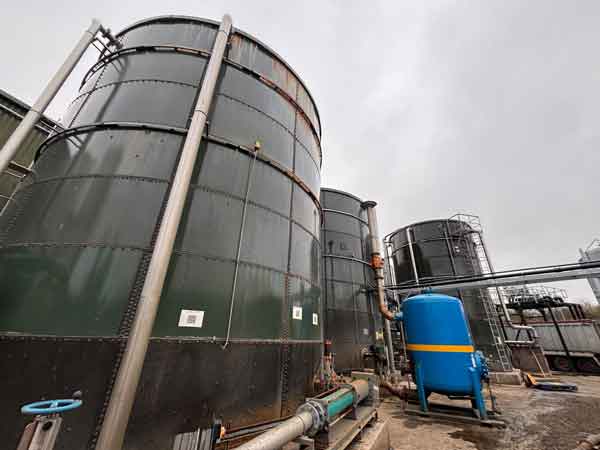
Bio Dynamic, a leading East Midlands anaerobic digestion plant that recycles food waste into green energy, appointed Atlantic Pumps to advise and implement a range of robust pumping solutions to meet the growing demands of its biogas centre in Nottingham.
Processing over 13 million litres of abrasive slurry, the site generates around 43,000 megawatt-hours (MWH) of sustainable energy per year. Continual improvement in energy efficiency and carbon footprint reduction are key aims for the company as it seeks to increase output of clean energy.
Challenge
The cost of maintenance and the reliability of existing pump performance were impacting downtime.
⚙️High wear rates – replacing parts monthly
⚙️High operating and maintenance costs
⚙️Cost and availability of spare parts
⚙️Poor reliability – frequent pump stalls
Cumulatively, these were restricting outputs and increasing inputs. Fast-wearing pumps consume exponentially more energy, as well as increasing downtime and engineering costs.
The Desired Outcome
✅Lower whole life costs
✅Ability to pass highly abrasive waste containing grit and glass
✅Consistent flow rate regardless of wear
✅Reduce the cost of maintenance and wear parts
Solution
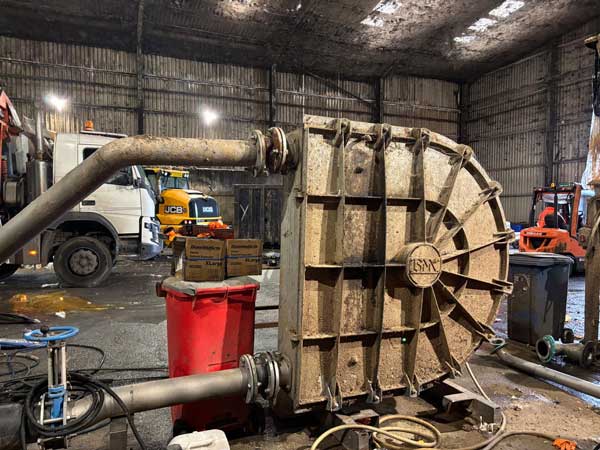
Atlantic Pumps worked to understand the site’s operational and commercial requirements, then advised on a strategy to reduce the total cost of ownership. Following successful trials, 3 pumps were upgraded to two better-suited pump types: LSM Peristaltic and Toro Progressive Cavity.
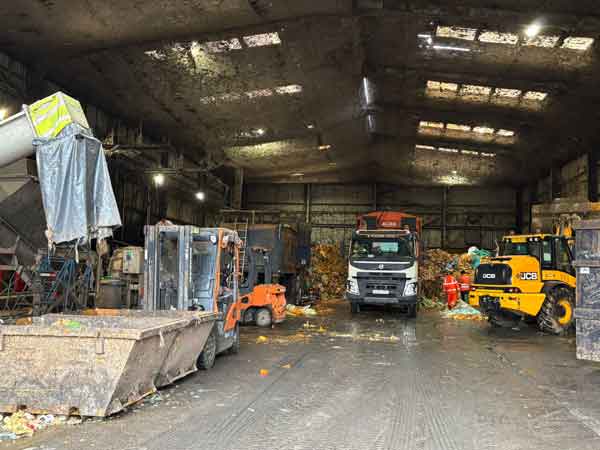
Like in many recycling and waste-to-energy facilities, the biggest pump challenge is at the front end of the waste plant, pumping materials from the de-packing machine. Pumps working in the intake hall typically have the harshest duty, with large solids, settling silt and highly aggressive, abrasive liquid.
Based on the parameters and experience in similar situations, Atlantic Pumps recommended a heavy-duty peristaltic and a robust progressive-cavity type of pump. To determine proof of concept, a trial was conducted with pumps supplied on a hire basis.
Following the trial’s success, two peristaltic pumps were then purchased – an LSM 100 & 150 – alongside a Toro Progressive Cavity (PC) pump.
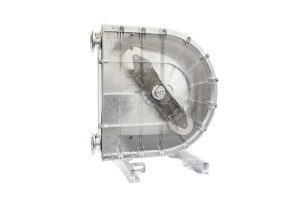
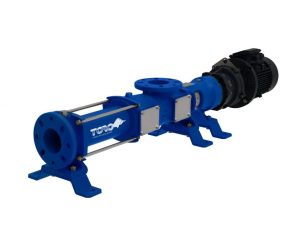
These two pump designs are well-matched to the duty, with them sharing the following characteristics:
- Low speed/friction = lower power requirements
- Passes grit and manages mixed food waste
- Reliable pumping over a wide range of densities/viscosities.
In particular, the Toro Progressive Cavity pumps stand out for:
- Double Cardan joints significantly outlast standard universal joints
- Short-pitch, deep cavity geometry enables larger solids to pass through.
- Higher flow per revolution = lower RPM = reduced wear
While the LSM Peristaltic Pumps feature:
- No rotating parts in the slurry = limits abrasive wear and rag entanglement
- Reversible – can pump either way
- Can run dry – ideal for variable flows and inconsistent supply
- Self-sealing – no mechanical seals to wear
- Full-bore passage, with no ‘wet-part’ components to restrict the flow
- Passes large solids and fibrous rag with ease
- Simple, quick, wear-part change (hose life typically 6 – 18 months depending on duty)
Results
Long wear life – more uptime – less maintenance – energy savings
Delivering consistent, reliable performance, the selection of the correct pumps has added immediate value, reducing costs by circa £2k per month.
Fewer blockages, longer mean-time-between-maintenance (MTBM), and reduced downtime have increased site capacity and business resilience.
Reduced wear rate directly improves energy efficiency – maximising energy-to-grid output.
Atlantic Pumps are always on hand, easy to work with, and deliver a great service. Providing what we need when we need it