
 0800 118 2500
Pump Replacement Eliminates Seal Failures and Impeller Wear on Abrasive Silica Duties
A switch to a peristaltic hose pump on this highly abrasive duty saved £13k repair costs per year on a single pump.
Project Overview
A leading global building chemicals manufacturer reduced pump maintenance costs by 80% after transitioning from centrifugal units to wear-resistant positive displacement pumps. By eliminating frequent seal failures on demanding micro-silica slurries, this enabled consistent tank emptying and filling schedules 24/7.
Following this trial on a single pump, this manufacturer has standardised on this type with various sized models across the factory on similarly abrasive applications.
Background and Operational Context
Our client is a global multinational producer of advanced chemical-mineral formulations, trusted worldwide across the construction and automotive sectors for critical bonding compounds, high-performance grouts, cement admixtures and technical sealants.
At their main UK manufacturing facility, maintaining continuous uptime is vital for meeting rigorous delivery schedules. Marc, an experienced Engineering Manager specialising in continuous improvement, change management, and project optimisation, worked with Euan Noakes at Atlantic Pumps.
Challenge
The final process line required transferring a dense micro-silica mineral paste from production to IBC shipping units. Required to operate at various flow rates at up to 82 m³/hr to match demand, through 3-inch pipework against an 8-metre static head, the pump was supplied with an inverter. The fluid is a finely processed silica quartz-based product with a specific gravity of 1.4 and a viscosity of 50–110 mPa·s (depending on shear) at the plant’s ambient temperature.
Although the viscosity levels meet conventional centrifugal pump capability, the combination of high fluid velocities and micro-silica solids generate aggressive abrasion.
Key challenges included:
Accelerated Abrasive Wear: The high internal velocities of the existing 3×2 centrifugal slurry pump caused rapid erosion of internal impellers and volutes.
Repetitive Seal Failures: Fine silica particles routinely penetrated seal faces, causing recurring leaks, fluid containment issues, and clean-up overheads.
Escalating Maintenance Spend: In the year prior to the upgrade, repair and replacement costs on the incumbent pump reached £13,000.
Production Disruption: Unplanned maintenance frequently interrupted packaging schedules, complicating production planning and pulling engineering resources away from proactive plant improvements.
Recognising that repeated repairs were treating symptoms rather than the root cause, Marc sought a low-shear, positive-displacement solution engineered specifically for highly abrasive mineral media.
Solution
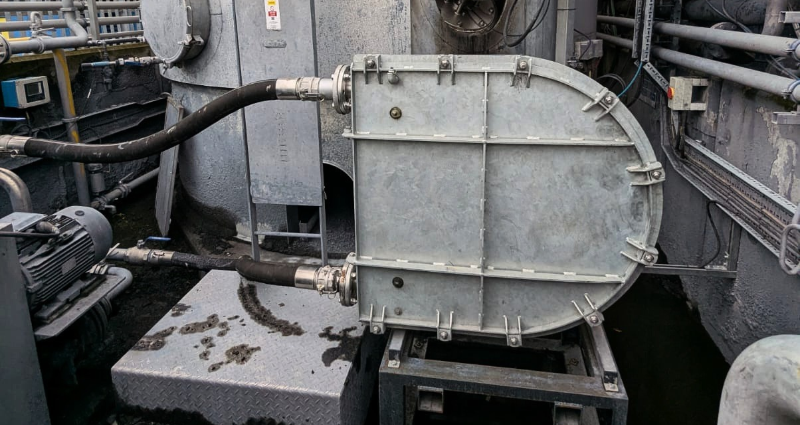
Marc partnered with Atlantic Pumps to review alternative pumping methods, consulting with technical sales Euan Noakes to evaluate the options. The team specified an 80mm peristaltic pump from the heavy-duty LSM Pumps range, driven via a variable speed inverter and configured with an abrasive-resistant natural rubber hose.
Peristaltic displacement directly countered the abrasive mechanism:
Zero Seals or Valves in the Wetted Path: The pumped media remains entirely contained within the internal hose bore, completely eliminating mechanical shaft seals and gland packing.
Gentle, Low-Velocity Action: Running at controlled rotational speeds via the inverter, the pump avoids the high-velocity shear that eroded centrifugal components.
Predictable Wear Dynamics: Atlantic Pumps provided transparent wear guidance based on duty cycles, indicating the heavy-duty hose would deliver up to three years of life on intermittent operation and around a full year under continuous 24/7 service.
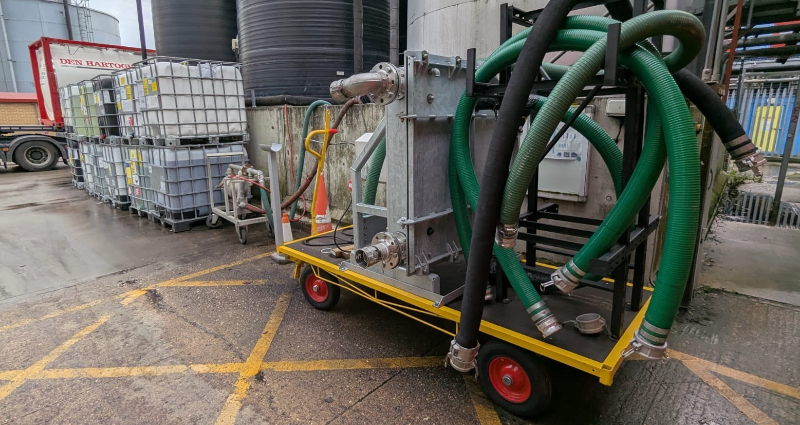
Atlantic Pumps delivered the new pump to dovetail with Marc’s improvement timeline and associated projects going on across the facility. Following the successful trial, Marc was able to demonstrate the broader operational benefits of standardising around this pump type across similar plant duties. The identical pump is available in various sizes to match the flow requirements, and Marc had one fitted to a trailer which works well as a mobile bulk tanker offloading pump.
Results
The new pump technology delivered immediate gains in uptime, line efficiency, demand variation, and maintenance savings, delivering the client’s continuous improvement objectives
80% Reduction in maintenance costs: Swapping out one centrifugal pump cut £13,000 annual repair bill out, reducing operating costs by over four-fifths.
Zero part replacements over 12 months: Periodic inspections found the pump to be performing without noticeable drop-off. By the time the main wear-part needed replacing, the pump had surpassed 7,000 hours; a year of continual operation.
Accurate, Reliable Wear Forecasts: The first replacement hose change aligned with the annual service and oil change, matching Atlantic Pumps’ initial expectation and allowing maintenance to be scheduled proactively.
Process Flexibility & Site Standardisation: The success of the initial improvement project enabled he client to replicate the setup across similar applications with confidence. With versatile pump capabilities, streamlined operator training and simplified maintenance, the improvement project has resulted in wide-ranging repeatable benefits.

Found this article useful?
To discover the optimal pumping solutions for your heavy industry processes, contact Euan Noakes or your account manager at Atlantic Pumps.