August 9 2021
 4 Minutes min read
Atlantic Pumps’ key focus is on “keeping abrasive fluids moving”, as their strap line goes. With the key pump families of Audex and SlurryPro, plus Gromatex heavy duty rubber lined products, they work to provide a comprehensive, efficient pumping solution for all quarry water handling needs.
According to Atlantic Pumps Managing Director Andy Smith, the most pressing need for quarry operators now, and probably looking over the next two to three years, is energy supply cost. For commercial and environmental sustainability, many quarries are urgently seeking to optimise their equipment, ahead of the rapidly increasing energy costs expected this winter.
Whilst heavy plant decisions are often years in the making “Pump operations is an area that can deliver substantial cost performance improvements, fast” Andy points out.
The daily work of Atlantic Pumps is optimising dewatering operations by reducing downtime, maintenance costs and fuel use by correct specification of newer, more energy-efficient pumps. A typical customer story is an independent quarry in the Scottish Lowlands, who recently approached Atlantic Pumps for help with a problematic dewatering pump. Their diesel-powered pump was suffering repeated breakdowns, with multiple (and expensive) trips back to the manufacturer failing to sort the issue.
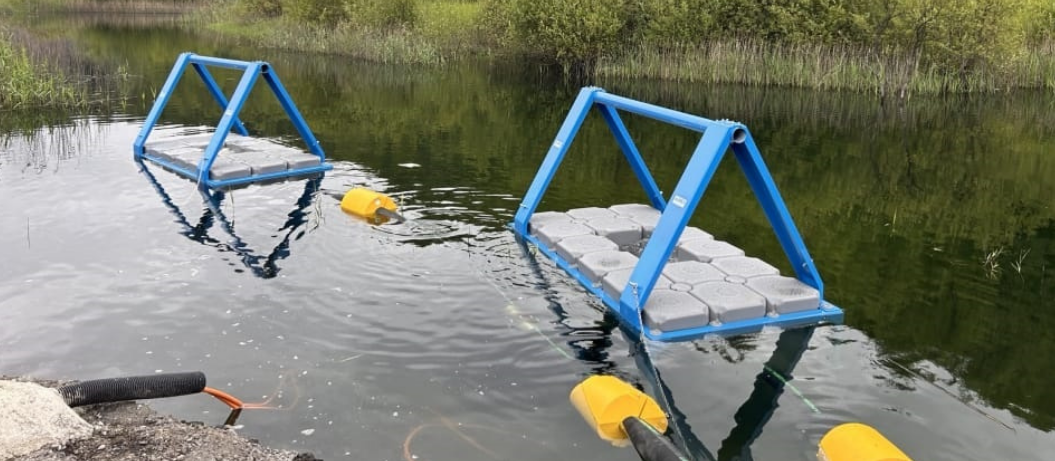
Pump technicians from Atlantic studied the site’s dewatering needs afresh and recommended a solution involving two 37kW 6” electric submersibles from the Audex AS range. With these suspended from a pontoon on the lagoon and being managed by a modern control panel, the optimum running efficiency and uptime made for vast operational savings.
Like many established quarries, they had traditionally relied on diesel power so the recommendation of electrically powered pumps may have surprised them somewhat; especially as the location meant mains power was out of the question. Before making the move, the buying team went through all the details in consultation with Atlantic Pumps. Consideration was given to pump wear life, maintenance routines, volume and head variation, sustainability, and lifetime cost plus of course, return-on-investment.
Even despite the electrical power being supplied by a generator, this setup provided more flow capacity than the previous diesel pump – for just 60% of the previous running cost. This level of cost reduction was obviously a huge win for the quarry, aside from solving the original reliability issue that triggered their consultation with Atlantic Pumps.
A frequent phenomenon that Atlantic’s technicians come across is pumps that have been vastly over-specified (“P is for Plenty” as the sappers used to say). Whilst this might cover the backs of someone guessing which pump size they need, it always leads to unnecessary fuel wastage for the pump’s entire lifetime. Considering that an average of 80% of a pump’s lifetime cost is in its running, this is probably one of the most important considerations when replacing a pump. So, doing some maths and reading the pump flow curve diagrams, running your needs past a pumping consultant, or at least asking the pump supplier for advice is, in our opinion, a wise approach.
The other major consideration on quarry operators’ minds is water reuse and compliance with Environment Agency discharging permits. Undoubtedly, if it wasn’t for the current energy crisis, the management of water resources is the next most pressing issue. The EnviroHub system featured at Hillhead this year received a lot of orders and interest from firms involved with a variety of dewatering scenarios. EnviroHub filters, monitors, and treats turbid & out-of-gauge pH wastewater using the latest smart technology and cloud-based communication. It reports (and logs) volume, clarity and pH value data to enable site managers to demonstrate compliance with licencing requirements. It can also be integrated into other dewatering components and control pump switches or valves for extended automatic water control. Examples of its success are found on HS2 sites recycling concrete washout water, to a Gloucestershire project supporting the recovery of salmon breeding by further cleaning ‘clear’ brook water as it enters the river Frome.
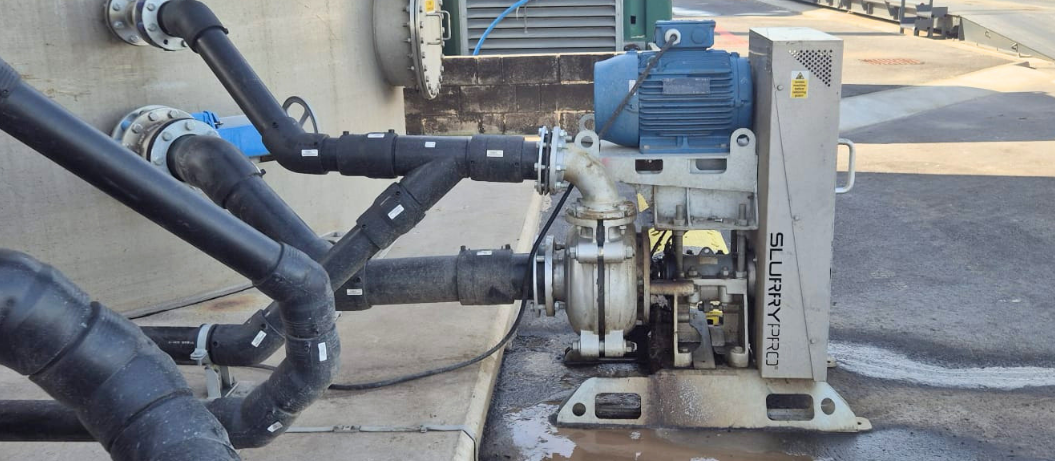
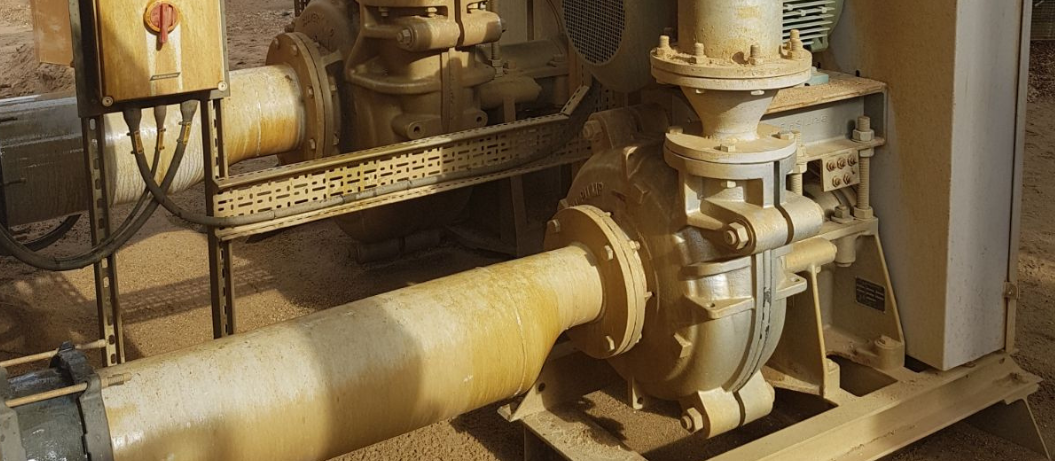
One of the most difficult quarry water types is sand-laden slurry; the heavier-than-water sand particles are both aggressive on pipe and pump linings and, with their angular facets, prone to ‘lock’ together as a near solid bed wherever they can. Such slurry is often encountered in wash-plants and quarry runoff. Atlantic Pumps are likely to recommend one of the Audex AW submersible pumps for this turbid slurry, or a surface mounted pump from SlurryPro.
The Audex AW submersible pumps have an agitator built in to keep the sand/solids in suspension to prevent clogging and use abrasion resistant metal alloys for the pump chamber and impellor blades. SlurryPro are powerful centrifugal type pumps which, depending on the circumstances, are fitted with either rubber or high chrome impellers to resist the abrasive nature of quarry slurries. SlurryPro also make a sliding base which makes cleaning out and replacing impellor linings on split-case type centrifugal pumps much easier, safer and quicker.
We also take a sustainable approach to our work and are committed to reducing energy waste from pumps. Our expert knowledge allows us to reduce energy usage by 20% on the average site!
Call us today on 0800 118 2500 for more information.