June 9 2026
 4 min read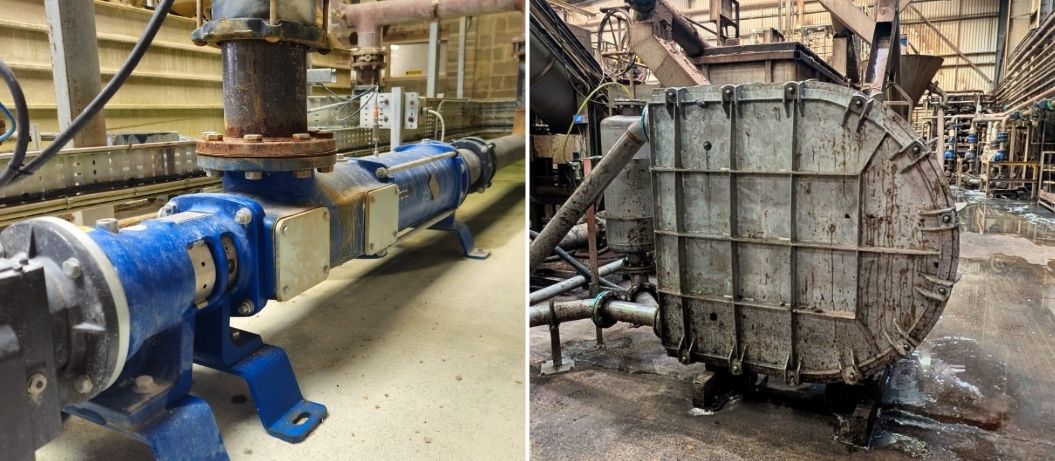
When dealing with heavy-duty sludges, abrasive pastes, or demanding industrial pumping applications, choosing the right positive displacement pump directly impacts your site’s uptime, energy bills, and maintenance budgets.
Two of the absolute heavyweights in this space are Progressive Cavity (PC) pumps – specifically the premium Toro T-Line series and heavy-duty peristaltic (hose) pumps, led by LSM. Both are known to excel where other positive-displacement pumps or standard centrifugal types fail, making the difference in applications hard to define at first glance. However, by examining the differences in how they achieve their pumping action and their effects on performance, we can see how each is best suited to distinct process environments.
Here is a practical site manager’s guide to choosing between them based on eight critical metrics.
The Core Mechanisms
Before looking at the data, it helps to visualise how these units handle media:
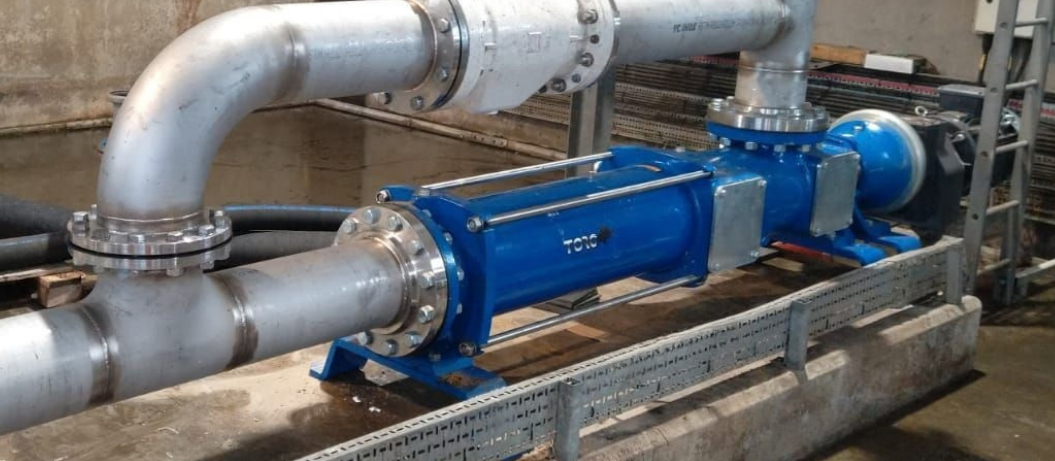
- The Progressive Cavity (PC Pump): Uses an internal single-helix steel rotor turning inside a double-helix rubber stator. This creates moving, sealed cavities that smoothly push fluid forward. Toro upgrades this classic design with a longer pitch and an advanced dual-cardan transmission joint for higher durability.
- The LSM Industrial Pump (Peristaltic): A remarkably simple design. The fluid is completely contained within a heavy-duty, flexible hose. External rollers on a central rotor rotate, squeezing the hose flat and pushing the fluid through. Crucially, the fluid never touches mechanical parts, seals, or bearings.
Comparison Overview
| Feature | Toro T-Line Series (PC) | LSM Peristaltic Series |
| Dry matter (DM) | Outstanding. | Good, 12 – 18% DM, depending on flowability (viscosity) |
| (up to 40% DM) | ||
| Viscosity Handling | Exceptional. | Great. |
| Efficiency remains high. | Exceptional suction lift for thick underflows. | |
| Max Solids Passage | Limited by cavity size (longer pitch helps). | Large (limited only by the hose’s internal diameter). |
| Abrasive Wear | High friction/high speed wears the rotor/stator sealing line. | Very low wear on moving mechanical parts. Only the flexible hose wears. |
| Max Flow Rate | Current models up to 150 m3/h | Up to 300m3/h (the world’s largest peristaltic pump) |
| Max Pressure | Up to 6 – 24 bar models | 10 – 16 bar |
| Dry Running | No. Friction heat destroys the stator instantly | Yes. One of the few pumps that can run dry without damage |
| Seals & Gaskets | Uses mechanical seals | Seal-less design. No seals to leak or replace. |
Dry Matter & Viscosity
Both pumps eat thick fluids for breakfast, but they behave differently under extreme stress:
Progressive cavity pumps such as the Toro T-Line are engineered specifically for high dry matter duties (up to 40% DM content), such as heat-pasteurised sludge or dewatered digestate cake. Because it uses a tight fit between rotor and stator (interference fit), it provides low-to-no pulsation, and highly accurate metering of thick pastes regardless of back-pressure.
- Peristaltic pumps rely on the natural rebound elasticity of its hose to create a vacuum. They excel at drawing heavy, thick thickener underflow out of deep tanks or lagoons due to their powerful suction lift. The slow, large-diameter rotation is good for moving rag content, although the pulsation can be very pronounced. A dampener can be fitted where pulsing is an issue.
Solids Size & Abrasive Wear
- Large peristaltic pumps come out tops when it comes to large and abrasive solids. If your fluid contains unpredictable, harsh solids like pebbles, wood fragments, rags, or even whole fish in aquaculture, the LSM is the clear choice. Because it contains no internal restrictions, valves, or rotors, anything that fits in the pipe will pass through.
The flexibility of the internal pipe makes it very forgiving to grit and angular solids. Since the medium never touches expensive metal components, abrasive sand or grit cannot score a shaft or ruin a rotor.
We’ve seen wear parts last 4–5 times longer when an LSM replaces another type of positive displacement pump.
- The PC challenge: chamber size restricts solids size. Standard PC pumps often struggle with solids because their usual low-pitch screw geometry restricts the opening size. Toro counters this by using a longer-pitch screw design. This creates larger internal cavities that drastically reduce blockages. It also allows lower rotation speeds, which in turn reduces wear. However, highly abrasive grit will still cause wear along the tight metal-on-elastomer sealing line over time.
Flow, Pressure & Duty
Pressure Duty: Toro T-Line – If you have heavy media to push through long discharge lines or to high head heights, the Toro T-Line is the ideal candidate. Multi-stage configurations and mechanical seals can hold pressures up to 24 bar. Peristaltics typically top out between 10 to 16 bar.
- Flow volume: While Toro PC pumps have models capable of up to 150 m³/h, LSM build huge peristaltic pump units that can move 300 m³/h, making them ideal for high-volume storm tank clearing, quick emptying of digester sludge tanks, or ship-to-shore transfer.
- Intermittent vs Continuous Feed: LSM peristaltic pumps can safely run dry. If a complete blockage cuts off fluid supply, or a tank empties unexpectedly, the LSM will keep rolling happily. This feature is unique to peristaltic pumps – with virtually any other pump, dry-running leads to friction between moving parts, which creates catastrophic heat within seconds, melting or tearing the stator or impeller.
Longevity & Maintenance
- Toro T-Line Upgrades: PC pumps have a reputation for being complex to fix. Toro addresses this by utilising modular drive shafts, large access hatches, and a quick-disassembly system to reduce on-site turnaround times. They also feature a dual-cardan shaft with needle roller bearings to absorb massive radial loads, heavily extending the Mean Time Between Failures (MTBF).
- LSM Simplicity: Maintenance on an LSM pump is famously straightforward because the hose is the only wear part. There are no mechanical seals to leak or packings to tighten. If a hose fails, the fluid is safely contained within the grease-filled pump casing. Best of all, LSM units are designed so that the hose can be replaced without dismantling the pump body or drive, dropping maintenance windows from hours to minutes.
The Verdict: When to Specify Which?
Every site and application has unique features, which can make choosing the best pump a balance of trade-offs.
An experienced pump technician from Atlantic Pumps can be invaluable in choosing a pump that will deliver the results you want without risking a maintenance headache – or even a complete change of pump – down the line.
It’s wise to think from a ‘total cost of ownership’ rather than raw base price, especially in heavy-duty applications where energy costs and wear parts are likely to be significant.
To set you on the right direction, here’s a high-level verdict between PC and PS pumps:
Choose the Toro T-Line PC Pump if:
- You need to push thick, high dry matter sludge over long distances, requiring high discharge pressures.
- Your process requires low-pulsation flow.
- The solids size is predictable.
Choose an LSM Peristaltic Pump if:
- The fluid contains aggressive abrasives, rags, or large, unpredictable solid objects.
- The pump is likely to run dry regularly or face intermittent suction feed (e.g., automated sump/tank emptying).
- You want a seal-less design to guarantee zero leakage of hazardous or unpleasant slurries.
- Your site priority is minimising maintenance complexity
Contact us today for site and duty specific pump choice guidance.
We also take a sustainable approach to our work and are committed to reducing energy waste from pumps. Our expert knowledge allows us to reduce energy usage by 20% on the average site!
Call us today on 0800 118 2500 for more information.