October 6 2026
 2 min read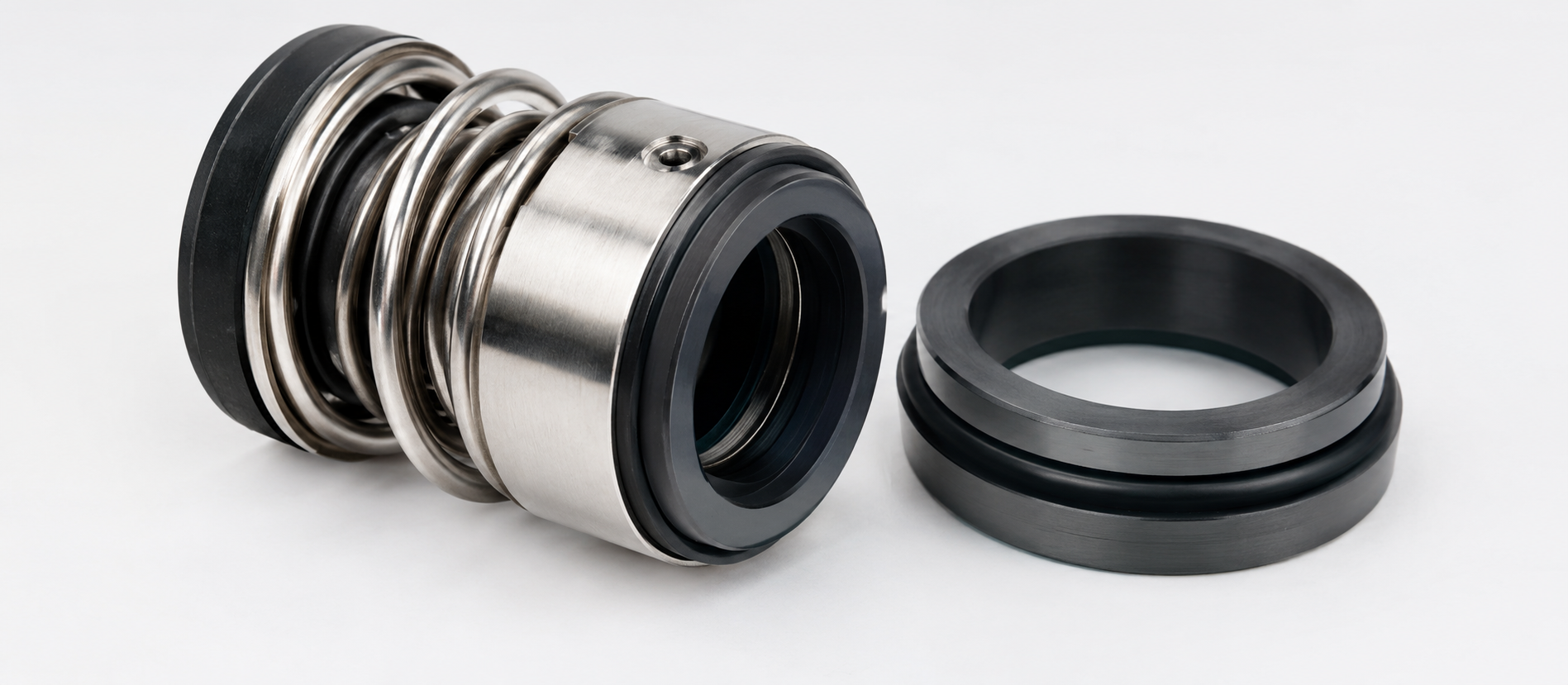
A pump starts spraying fluid across the plant floor, the breakdown report comes in: “Mechanical seal failure.”
A replacement seal is ordered, fitted, and the pump goes back online. Three weeks later, the exact same thing happens.
Why? Because a mechanical seal is almost never the root cause of its own demise.
In industrial pumping, the seal is your canary in the coal mine. It is precision-machined with face flatness measured in light bands, making it the most sensitive component in the entire assembly. When system conditions go wrong, the seal is simply the first part to tell you.
If you want to stop burning through seals and budget, you need to look past the symptom and investigate the real culprits:
1. Radial Thrust & Shaft Deflection
Are you running your pump throttled back, far to the left of its Best Efficiency Point (BEP)? At low flows, internal hydraulic pressure becomes uneven around the impeller. This generates massive radial thrust that flexes the shaft. Just a tiny micro-deflection opens up the seal faces, lets solids intrude, and quickly wrecks the faces as abrasive media goes to work.
2. Dry Running & Thermal Shock
Mechanical seals rely on a microscopic fluid film to lubricate and cool the faces. If your pump experiences transient dry-run conditions or air pockets during suction lift, friction causes rapid heat buildup. When fluid suddenly hits those hot faces, thermal shock can crack even silicon or tungsten carbide.
3. Pipe Strain & Misalignment
Is your pipework properly supported, or is the pump casing acting as an anchor? Pipe strain twists the pump housing, pulling the shaft out of true alignment. Even the best flexible coupling cannot compensate for the resulting angular misalignment inside the stuffing box.
4. Flush Plan & Quench Failures
Handling abrasive slurry? If your external seal flush pressure drops below the seal chamber pressure, dirty process liquid enters the seal cavity. The slurry acts like liquid sandpaper between the faces.
The Proactive Takeaway:
Next time a seal fails, don’t just scrap it. Inspect the faces:
- Heat checking (fine radial cracks)? Look for dry-running or poor cooling.
- Uneven wear track? Check for shaft runout or misalignment.
- Chipped edges? Suspect cavitation or severe vibration.
- Fixing the seal stops the leak today. Fixing the root cause keeps the plant running all year.
Struggling with repeat pump failures or seal issues on tough duties? Call our applications team on 0800 118 2500 or message us here to see how Atlantic Pumps can support your site reliability.
We also take a sustainable approach to our work and are committed to reducing energy waste from pumps. Our expert knowledge allows us to reduce energy usage by 20% on the average site!
Call us today on 0800 118 2500 for more information.