July 14 2026
 4 min read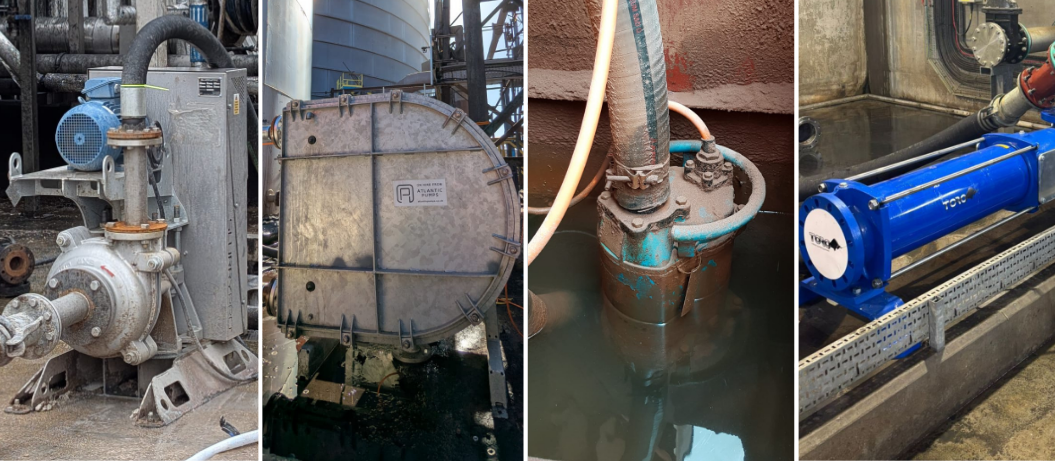
Choosing the right pump for your site can feel a bit like trying to buy the perfect car without knowing if you’ll be driving on a racetrack or through a muddy quarry. In the industrial world, picking the wrong pump doesn’t just mean underperformance; it can rack up costly downtime, premature component wear, energy consumption and stress for site managers.
Understanding your fluid characteristics and the duty is the absolute foundation of engineering excellence. This guide breaks down the core pump types, how they match up to real-world industrial applications, and how to look past the initial price tag and headline performance to secure the lowest long-term cost.
Centrifugal vs. Positive Displacement: The Core Choice
Before diving into specific designs, every pump operator needs to understand the fundamental fork in the road: Centrifugal versus Positive Displacement (PD). Choosing between these two families depends heavily on how your fluid behaves and what your system demands.
1. Centrifugal Pumps
Centrifugal pumps use a rotating impeller to add energy to the fluid, slinging it outward and converting velocity into pressure. They are the absolute workhorses of high-flow applications.
- Flow & Pressure Relationship: Centrifugal pumps are highly sensitive to pressure changes. As the system resistance (head) increases, the flow rate drops.
- Fluid Types: Best suited for clean or lightly contaminated liquids with low viscosity (like water or thin chemicals).
- Design Adaptability: The simple centrifugal principle enables many configurations of design, even within the same core model. Impeller and motor options allow the best balance of cost and capability.
- The Low-Flow Danger: A common pitfall with centrifugal pumps is operating them too far to the left of their Best Efficiency Point (BEP). Running a centrifugal pump at low flow converts energy into destructive radial thrust, internal recirculation, and intense thermal heat, which can quickly ruin bearings and seals.
2. Positive Displacement (PD) Pumps
Instead of using velocity, PD pumps capture a fixed volume of fluid and physically force it through the discharge pipe.
- Flow & Pressure Relationship: A PD pump delivers a virtually constant flow regardless of the system pressure or discharge head.
- Fluid Types: These pumps excel when moving highly viscous, or shear-sensitive fluids that would stall a standard centrifugal impeller.
- Design Variety: Within the PD classification, many specialist types have been developed. Selecting the right design makes all the difference to success.
Which PD Pump is Best for What?
Positive displacement isn’t a one-size-fits-all category. Different mechanical designs offer distinct advantages depending on the physical nature of your sludge, slurry, or chemical feed.
Progressive Cavity (PC) Pumps
PC pumps use a single-helix rotor turning tightly inside a double-helix elastomer stator to move fluid smoothly through “progressing cavities”.
- Best For: Heavy sludge handling, wastewater treatment, and many biogas applications.
- Key Advantages: They offer highly predictable, smooth flow and excellent handling of high-viscosity or shear-sensitive fluids.
- Keep in Mind: Correct specification of the stator elastomer material and rotor coating is critical, as dry-running or abrasion can quickly destroy the stator.
Read more about choosing a progressive cavity pump.
Peristaltic (Hose) Pumps
Peristaltic pumps work by compressing a flexible hose with rotating rollers or shoes, pushing the fluid forward in a manner similar to how our digestive tracks move food.
- Best For: Highly abrasive slurries, lime dosing, and chemical transfer where fluid isn’t to contact the mechanical components.
- Key Advantages: The fluid is completely contained within the hose, meaning there are no mechanical seals or valves to clog, leak, or wear out. They can handle incredibly high solids content, and some designs can run dry without damage.
Diaphragm Pumps
Air-Operated Double Diaphragm (AODD) pumps use compressed air to cycle two flexible diaphragms back and forth, using check valves to direct fluid.
- Best For: Portable utility pumping, explosive environments (ATEX zones), and variable transfer duties.
- Key Advantages: They are highly versatile, self-priming, can run dry safely, and their flow can be easily adjusted simply by regulating the air supply.
Dry-Sited vs. Submerged: Where Does the Pump Sit?
Another critical operational decision is deciding where to position your asset physically.
Dry-Sited Pumps
Installed outside of the liquid source, these pumps pull fluid up through a suction line. They are highly accessible for maintenance, condition monitoring, and routine inspections. However, you must carefully calculate your Net Positive Suction Head Available (NPSHa) to avoid suction cavitation and lift limitations.
Submerged (Submersible) Pumps
Designed to be completely lowered into the fluid, submersible pumps—such as the heavy-duty Audex range—eliminate suction lift worries because they are naturally primed. They save footprint space but require careful installation.
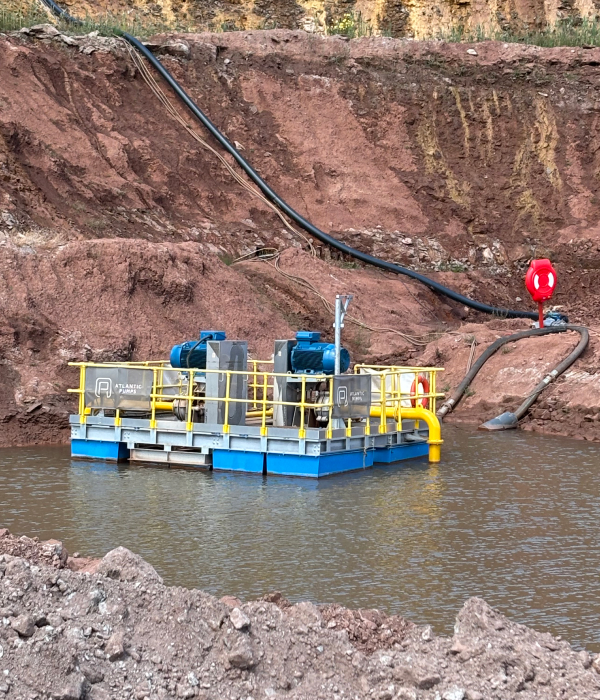
Site Manager Warning: Never lower a submersible pump by its power cable, and never drop it directly into “sump sludge” or a lagoon bed. It will quickly bury itself, causing intake blockages, motor overheating, and premature failure. Always use a proper lifting chain and consider floating pontoon solutions for open sumps.
Matching the Pump to the Application
Apples for Apples: Look at Lifetime Costs (TOTEX), Not Just the Price Tag
When looking at a row of pump quotes, there is a dangerous temptation to simply choose the lowest upfront purchase price. However, capital expenditure (CAPEX) typically accounts for only 10% to 15% of a pump’s total lifecycle cost. The rest is eaten up by energy consumption and maintenance.
This is why we champion a Total Expenditure (TOTEX) approach:
TOTEX = Initial Cost (CAPEX) + Energy Consumption + Maintenance & Parts Over Asset Lifetime
- The Oversizing Trap: Buying a larger centrifugal pump than you need “just in case” forces you to throttle the valve or run at low flow. This drastically reduces efficiency, skyrockets your energy bills, and causes rapid internal damage.
- Reactive Maintenance Extravagance: Waiting for a pump to fail before maintaining it might feel cheaper upfront, but unplanned downtime routinely costs 10x more due to halted production and emergency shipping. A pump designed for easy wear-component replacement, combined with proactive monitoring, easily saves thousands over its lifespan.
Investing slightly more upfront for a pump exactly specified to your duty point pays massive dividends in reliability, safety, and slashed energy bills.
Working with Your Pump Supplier: How to Get The Best Outcome
To ensure you don’t end up with an unreliability nightmare, treat your pump supplier as a collaborative engineering partner, not just a parts catalogue. Consulting with a supplier that understands your application is key. The following duty data will steer the choice towards the correct specification:
- Detailed Fluid Characteristics: Where does “dirty water” become slurry? We need to establish the specific viscosity range, chemical type, solids composition (size, hard or soft), dry-solids percentage, and abrasiveness.
- True System Hydraulics: Calculate your required flow rate (duty point) and total dynamic head (differential pressure) accurately. Don’t guess or add a generalised “safety margin” – this will likely push the pump away from its Best Efficiency Point with an impact on running cost or longevity.
- Environmental & Suction Constraints: What are your suction lift limitations or available NPSH? Are there extreme temperature fluctuations or special conditions we must account for?
- Operational Goals: Is this pump running 24/7 or intermittently? Do you want to build in condition monitoring or performance baselines (like pressure and vibration tracking) from day one?
It’s mapping out these factors which can guide you to an engineered pump solution that keeps your processes’ heartbeat strong, efficient, and under your control.
Are you planning a major dewatering installation or struggling with a high-wear sludge process? Contact our team of technical experts at Atlantic Pumps on 0800 118 2500 to discuss your project.
We also take a sustainable approach to our work and are committed to reducing energy waste from pumps. Our expert knowledge allows us to reduce energy usage by 20% on the average site!
Call us today on 0800 118 2500 for more information.