March 17 2026
 2 min read
Understanding the different parts that make up your pump equipment enables you to implement effective, best-practice maintenance procedures.
What are bearings?
Bearings make up only a small part of your pumping system, yet they play a critical role.
Bearings are mechanical assemblies that consist of rolling elements, a cage, and inner and outer races. These are used for rotating or linear shaft applications. They must be properly lubricated, and the temperatures must be monitored to prevent failure.
The Installation Failure
If a bearing fails within hours or days, the root cause is usually found in the workshop.
Misalignment: Can be the number one killer. Even a fraction of a millimetre of misalignment between the pump and motor creates loads that cook bearings.
Over-Greasing: It sounds counterintuitive, but too much lubricant causes “churning,” leading to rapid heat build-up and seal rupture.
Indentation (Brinelling): Using a hammer instead of a press during installation creates microscopic “divots” in the raceway.
The Operational Failure
If a bearing has been running well but fails prematurely, the system is likely out of balance.
Cavitation & Vibration: As we discussed in our recent technical guide, cavitation sends shockwaves through the shaft directly into the bearing housing.
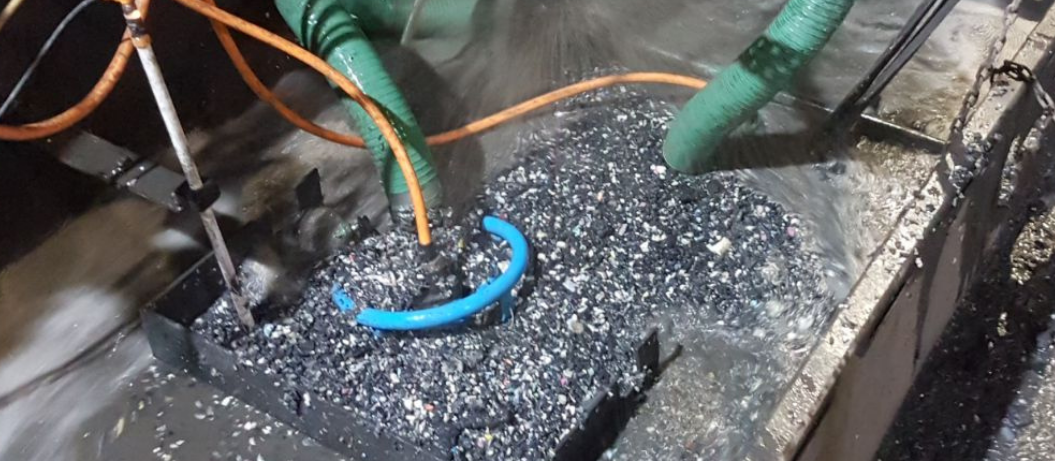
Contamination: In “nasty fluid” applications, if the gland packing or mechanical seal fails, abrasive slurry can enter the bearing housing, turning the lubricant into “grinding paste.”
Operating Off-Curve: Running a pump too far to the left or right of its Best Efficiency Point (BEP) creates radial thrust that pushes the bearing beyond its design limits.
Get in Touch
Is your site suffering from repeated bearing failures? Talk to our technical team today: call us on 0800 118 2500 or click here to message us.
We also take a sustainable approach to our work and are committed to reducing energy waste from pumps. Our expert knowledge allows us to reduce energy usage by 20% on the average site!
Call us today on 0800 118 2500 for more information.