September 30 2026
 3 min read
All pumps vibrate to some degree, but when vibration levels rise unexpectedly, it’s a warning sign that something’s wrong. Excess vibration can come from mechanical faults like rotor imbalance, bent shafts, or misalignment, or from hydraulic issues such as cavitation or flow pulsation. Left unchecked, these problems can cause costly damage and downtime.
The good news: most vibration issues can be diagnosed early and prevented with the right approach. Vibration analysis provides valuable insight into the root cause, while steps like precision alignment, system design improvements, and proactive maintenance help keep your pumps operating smoothly and efficiently.
Monitoring vibration trends isn’t just good practice; pro-active maintenance is one of the most effective ways to extend pump life, improve reliability, and maintain consistent performance across your site.
Introduction
All pumps vibrate to a certain extent, but there is an important difference between a normal background hum and the warning signs of a potential issue. Changes in vibration, especially unusual shaking or rattling, or noise levels above the expected threshold, should never be ignored. Pump vibration is often the first and most obvious indicator of an underlying problem within the pump and its surrounding system. In this article, we look at the primary causes of pump vibration, how to diagnose the root of the problem, and the solutions available to keep your operation running smoothly and reliably.
What is pump vibration?
Pump vibrations are caused by the mechanical oscillation or movement of the pump during operation. Again, all machines, including pumps, produce some level of vibration; oscillating shafts are constantly being thrown off balance and returning to their original state. Another way to put it is that they are being displaced from and returning to equilibrium. This amount of movement (amplitude) is so small in normal ranges that it isn’t noticeable. However, an excess or sudden change could indicate a problem. By establishing a baseline for normal vibration levels, your maintenance team can quickly identify deviations that point to potential trouble. Troubleshooting and addressing these changes can often prevent minor issues from escalating into major mechanical faults, saving you time, money, and operational downtime.
What are the main causes of pump vibration?
Pump vibration causes can be complex and not immediately obvious, stemming from either mechanical faults or hydraulic instabilities within your system. Pinpointing the origin of the vibration is the first step towards a solution.
1. Mechanical causes
Mechanical vibrations from the physical components of the pump and its assembly. Common culprits for pump vibration include:
- Rotor imbalance: if the rotating part of the pump (e.g. the rotor or impeller) is not perfectly balanced, it could create a centrifugal force that results in vibrations. The imbalance could be caused by a manufacturing defect or an uneven buildup of solids on the rotor.
- Bent shaft: A bent pump shaft will cause the entire rotating assembly to wobble, putting immense stress on the bearings and seals and creating vibrations as it rotates. Operational stress and improper handling are the two main causes of bent shafts.
- Misalignment: if the pump is not perfectly aligned with its motor, the connecting shaft will ‘flex’ with each rotation, increasing the risk of premature bearing and seal failure.
- Rotational speed: every oscillating shaft has its own natural frequency and ‘critical speed’ at which resonance will cause an increase in vibration. Pump engineers avoid resonance by adjusting a parameter to move the frequency away from the operating speed, for instance, by lengthening the shaft.
2. Hydraulic causes
Hydraulic vibrations stem from the behaviour of the fluid as it moves through your pump, such as:
- Cavitation: cavitation occurs when the pressure of the fluid drops below its vapour pressure, causing small bubbles to form. As these bubbles travel to a higher-pressure area within the pump, they implode violently. This collapse creates fluid shock waves that cause vibrations and noise, and can quickly damage your pump components.
- Flow pulsation: unsteady or variable pressure and flow can create pulsations that reverberate throughout your system, causing excess vibrations. Fitting your pump with a purpose-built vibration dampener will reduce your risk profile.
Diagnosing the cause of pump vibration
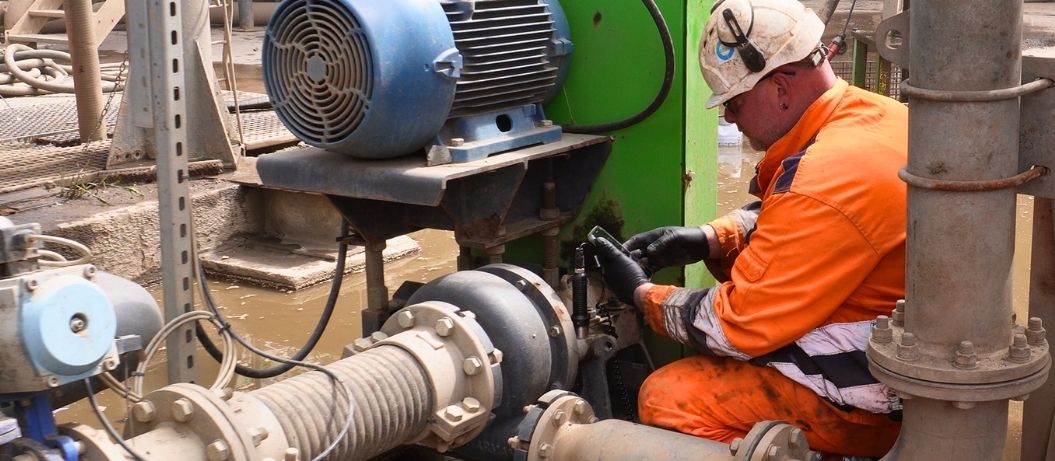
The first step to fixing pump vibration is to accurately diagnose the cause, and as we have seen, this can arise from several issues. The most effective, non-invasive diagnostic method for pinpointing a fault is vibration analysis. This process uses a calibrated monitor to measure and analyse vibration data from various points on the pump and motor. The frequency and amplitude of the vibrations provide distinct signatures that can identify specific problems, such as a misaligned pump, bent shaft, imbalanced rotor, and so on.
Can pump vibration be avoided?
Unfortunately, mechanical faults are an ever-present risk in a pumping system. However, excess pump vibrations can be minimised by taking the following steps:
- Precision alignment: Using a laser alignment tool during installation and maintenance will help ensure that your pump and motor are correctly coupled, eliminating one of the major sources of vibrations. Some progressive cavity pumps have a flexible cardan joint to help absorb any vibrations caused by their characteristic eccentric rotation.
- System design modifications: If the vibrations arise from a hydraulic cause, your system may require some design changes, such as installing a suction stabiliser to smooth the flow of fluid into the pump, or a vibration dampener to absorb pulsations in the discharge line. If your pump has a VFD (variable frequency drive), see if the RPM can be adjusted, as vibrations are worse when the pump operates close to its natural (resonance) frequency.
- Proactive maintenance: Regular inspections for wear and tear, lubrication of bearings, and keeping your mounting bolts tightened can prevent many common mechanical issues. For dewatering pumps, keep your suction filters and intake lines clear to prevent blockages that can lead to cavitation.
What next?
Pump vibration levels are a critical indicator of your system’s health, and by understanding the causes of pump vibration and implementing effective solutions, you can reduce the risk of component failure. If you are experiencing issues with pump vibration or would like to find out more, please contact one of the experts at Atlantic Pumps today by clicking here. You can also explore our range ever-growing series of free training resources.
We also take a sustainable approach to our work and are committed to reducing energy waste from pumps. Our expert knowledge allows us to reduce energy usage by 20% on the average site!
Call us today on 0800 118 2500 for more information.