PC Pasteurisation Pump Upgrade Proves Its Worth
Project Overview
With concerns over the short lifetime and high maintenance costs of the sludge pasteurisation pump, this STW trialled three progressive cavity pumps from different manufacturers. The Toro-Kronoa PC proved itself to be the best solution, outlasting the previous pump by over 3x
Challenge
The site’s pasteurisation system is critical to ensure compliance with ABPR and PASHO standards. It sterilises
45 mJ/hr of municipal co-digested sludge digestate (6% DS), at 70 °C. Continuous system pressure is 8-bar.
Frequent failures of the existing pump – a WIMES-compliant 12-bar rated progressive cavity (PC) pump – caused repeated downtime. Wear-rate required rotor replacements every3 – 6 months, leading to extended maintenance interventions and process instability.
Although the rating plate appeared to cover individual system parameters, the combination of heat, pressure and abrasiveness resulted in failure in as little as 3 months – pushing OPEX and risk beyond acceptability.
Solution
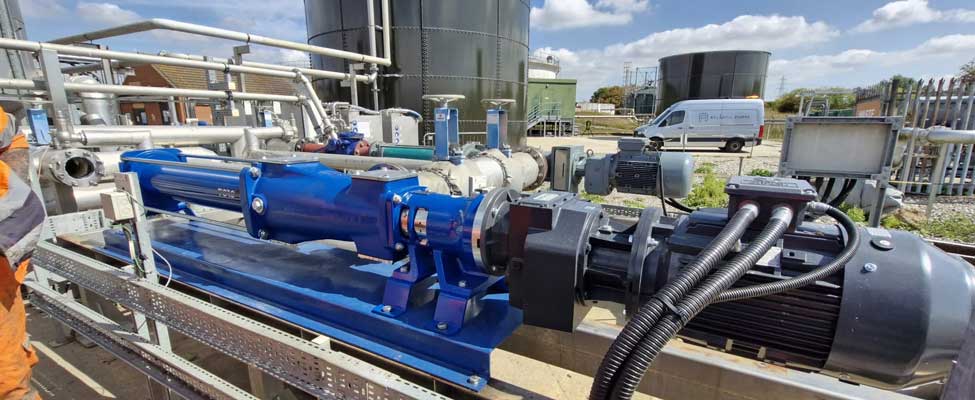
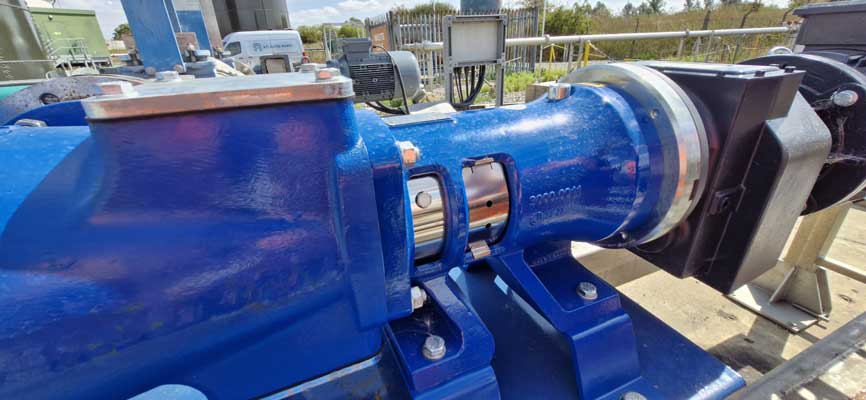
Atlantic Pumps configured a Toro S65 225-12 Progressive Cavity Pump for high-solids, high-temperature municipal sludge applications. It has the same 12-bar rating as the incumbent, but the difference lies in its design duty for demanding applications.
Key technical features:
- Two-stage PC pump down-rated to 12 bar for system headroom in the demanding application.
- Stator: NBR-based elastomer suitable for 70 °C continuous and 90 °C peak operation.
- Rotor: Hardened tool steel for superior wear resistance and compressive strength.
- Bearing Assembly: Bearing and Mechanical Seal Assembly added to bear the pressure and increase the life of the motor and gearbox.
- Short-pitch (S-type) geometry providing improved solids handling, reduced shear, lower internal velocities, and extended service life.
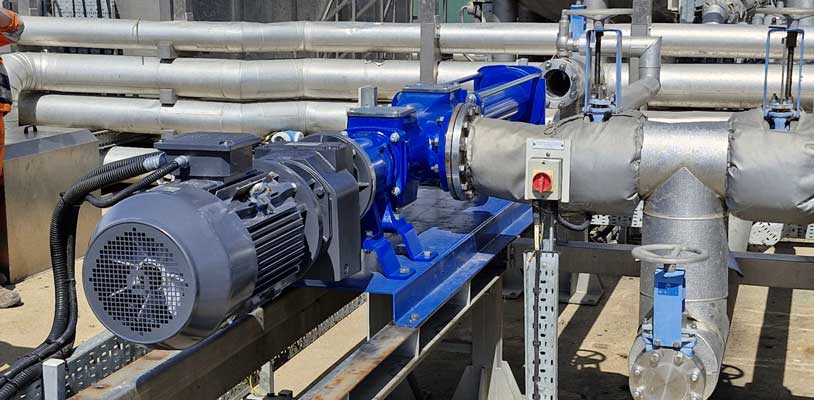
The Toro S65 PC pump was installed as a direct replacement, fitting within the same space without significant pipework modifications. Commissioning was completed with support from Atlantic Pumps and site maintenance teams.
Results
Within a few months, it was clear the project had improved reliability, vastly reduced maintenance frequency, and enhanced the pasteurisation process stability while maintaining compliance and throughput volumes.
Pressure testing of the pump shows little wear after 9-months, with the motor running at a consistent 38 Hz.
- Unplanned downtime: Non-to-date; only condition monitoring checks performed.
- Component longevity: Wear parts still performing to duty-rate; lifespan increased from 3 months to 9+ months.
- Maintenance interventions: Reduced frequency; minimising the cost, time and risk associated with major part replacements..
- Process performance: Improved stability and control across the pasteurisation system.
- Financial outcome: Higher initial CAPEX soon offset by tangible OPEX savings and reduced operational risk.
To discuss how your pasturisation or other process pumps might be improved, reach out to our water lead, Martin Gillman via email: [email protected] or phone: 0800 118 2500
Contact us via the website here