Quarry Installs Automatic Dewatering Compliance
Project Overview
Effective quarry water management is vital for ensuring environmental compliance, and Cemex pursue best-practice in this area.
Extending the quarry, Cemex took the opportunity to install the latest turbidity monitoring and discharge control system. The robust monitoring and automated ‘lock’ ensures only clear water gets discharged, without relying on manual intervention.
Challenge
Managing quarry water involved frequent lagoon visits to sample water quality, and manually operating the outlet valve. This puts pressure on staff, especially during ‘high turbidity’ events such as storms, when resources are already stretched.
As the quarry expanded, it became clear that automation was the way forward. However, the distance made power connection challenging, and carbon-intensive generators were not an option.
The quarry management wanted to automate the testing, reporting, and preventative actions for 24/7 coverage. To ensure full oversight, they also wanted to be alerted if turbidity reached a specific mg/l, well before it came near to the compliance maximum.
Another requirement was a positive feedback loop showing the actual discharge valve position, in addition to quick visibility of live and historical quality and quantity data.
Solution
The hydrogeologist, quarry manager and Deryck Harmer, dewatering advisor at Atlantic Pumps, engineered a simple, robust solution using EnviroHub modules and Senteos, the online monitoring and control system for quarry and mine water.
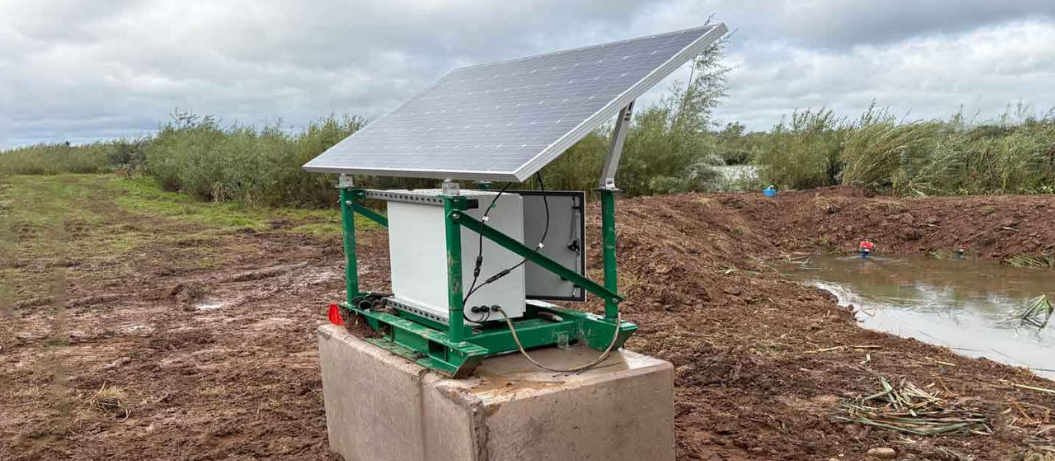
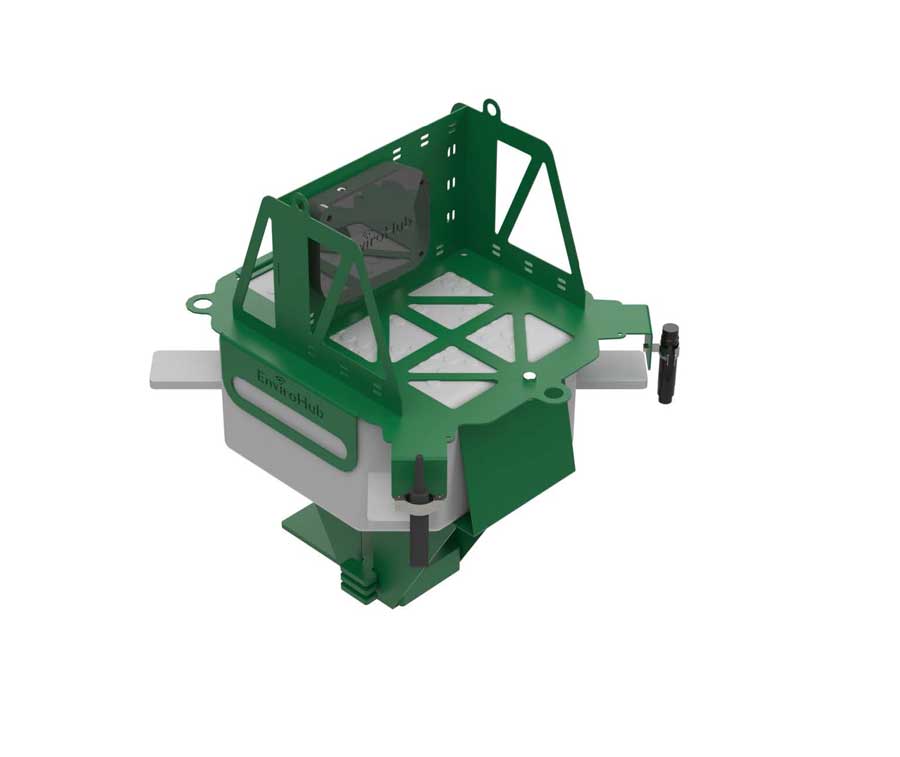
Using EnviroHub’s floating monitoring unit (FMU) and the latest low-energy Control Module (CM02), enabled solar-powered operation (using the EnviroHub Solar Skid) for both the water testing and the valve operation.
The floating MU takes turbidity readings from within the lagoon, right at the discharge point. This is connected to the CM02 which operates the discharge valve and communicates the data to Senteos.
The CM02 is built for use in mines, quarries and similarly exposed or remote environments. Telemetry is available to bridge low-connectivity spots.
Senteos displays the live data feed – in this case the mg/l of solids content – alongside valve position on a management dashboard. It also keeps a log, and sends out email or text alerts when a set ‘soft-limit’ is reached. The soft limits can be set by management to trigger alerts well before the hard limit is hit and the discharge valve closes. This combines human oversight with machine-based preventative action.
Results
This has been a success in relieving pressure on site staff, reducing the amount of time collecting and recording the data needed as a requirement of their discharge license.
It has also reduced risk of an environmental incident occurring, strengthening the company’s ESG value.
EnviroHub is a modular system that natively links to Senteos, so this solution leaves options for future process additions and expansion if required in the future.
As the sampling point is immediately before the discharge pipe, there is no need to purge the line of ‘failed’ water; flow ceases within seconds of a ‘turbidity trigger.’ This provides a high quality of discharge water.